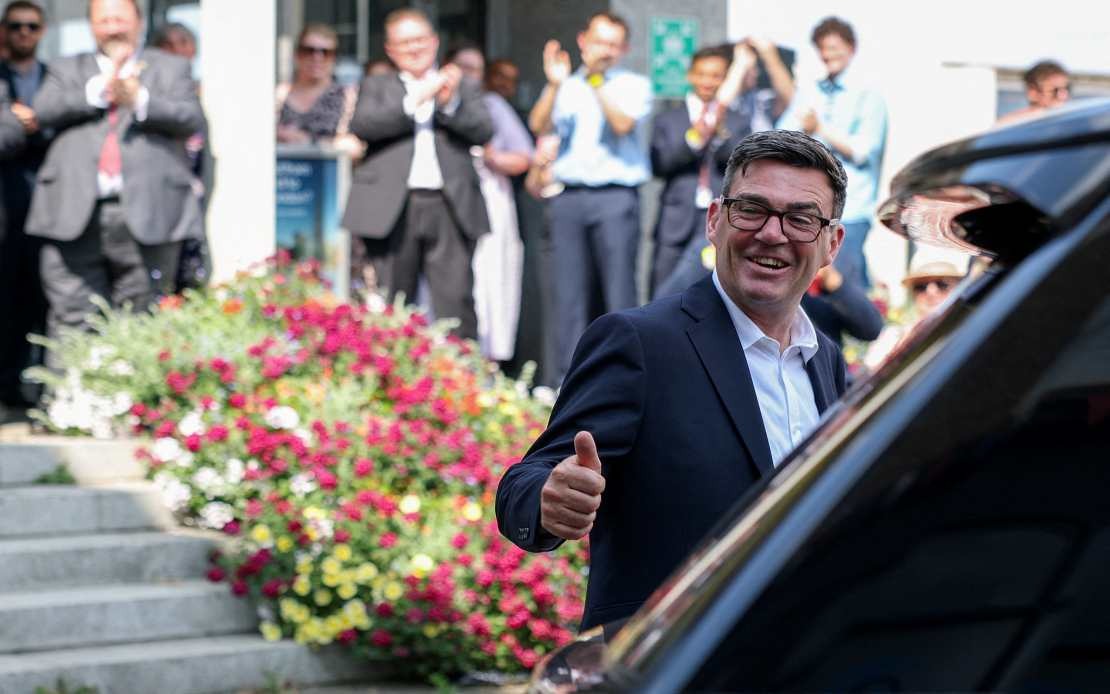
Singapore Prime Minister Lawrence Wong has formally extended congratulations to Andy Burnham following his appointment as British Prime Minister, signalling Kuala Lumpur's readiness to strengthen the long-standing partnership between the two nations during a period of significant international flux. Burnham's ascension to the top office comes as both countries navigate heightened geopolitical tensions and economic uncertainty, making bilateral cooperation increasingly important for regional stability and prosperity.
In his official message to the newly installed prime minister, Wong expressed confidence that Britain's fresh leadership will steer the United Kingdom through its current challenges whilst advancing the interests of its people. The Singapore leader's tone reflected genuine optimism about the trajectory of UK governance under Labour, setting a constructive foundation for diplomatic engagement in the months ahead. Wong's choice to personally pen congratulations underscores the significance Singapore attaches to Commonwealth relations and London's broader role in Asia-Pacific affairs.
The Singapore-UK relationship operates on a Strategic Partnership framework that has been cultivated over decades, creating multiple layers of institutional cooperation and mutual trust. This arrangement extends far beyond ceremonial exchanges, encompassing substantive collaboration in defence, trade, investment and people-to-people connections. Wong's letter deliberately emphasised this depth of engagement, suggesting that the relationship has weathered various international storms precisely because both nations understand the value of sustained partnership even amid global turbulence.
Wong specifically highlighted three domains where Singapore expects to intensify cooperation with Britain: innovation, science and technology, and defence. These sectors reflect contemporary strategic priorities, particularly as technological advancement becomes intertwined with national competitiveness and security. Singapore, as a leading financial and technological hub, has positioned itself as an attractive partner for British firms and institutions seeking Asian markets and collaboration opportunities. Defence cooperation carries particular weight, given the UK's renewed commitment to maintaining military presence and influence in waters far from home.
The Singapore leader's reference to "trusted partners" achieving more through collaboration carries implicit meaning in the current global context. With rising protectionism, great power competition, and shifting alliance structures, Wong appears to be signalling that mid-sized nations like Singapore and the UK benefit enormously from maintaining strong bilateral and multilateral frameworks. This message is particularly relevant as both face pressure from larger powers seeking to reshape regional and global orders according to their own interests.
Wong also underscored Singapore's appreciation for Britain's ongoing presence in Southeast Asia through its role as an ASEAN Dialogue Partner. This designation reflects Britain's formal recognition as a stakeholder in regional affairs, allowing it to participate in various ASEAN meetings and initiatives. The Five Power Defence Arrangements, which include Singapore, the UK, Australia, Malaysia and New Zealand, represent a tangible military commitment that Britain has maintained to regional security for decades. This arrangement helps maintain a balance of power in waters crucial to global commerce and has grown increasingly important as tensions in the Indo-Pacific mount.
Looking forward, Wong identified a particularly opportune moment for enhanced cooperation. Singapore is set to assume the rotating chairmanship of ASEAN, whilst the UK holds the G20 presidency in 2027. These dual positions create complementary platforms for driving multilateral dialogue on shared priorities. Singapore's ASEAN role gives it influence over regional agenda-setting across Southeast Asia, whilst the G20 presidency allows the UK to shape discussions among the world's largest economies. By working in tandem, the two nations can amplify their voices on issues ranging from climate change to trade and technological governance.
The convergence of these leadership positions reflects an emerging strategy where smaller powers leverage their temporary administrative roles within multilateral structures to exert disproportionate influence. Singapore has consistently demonstrated skill at this diplomatic balancing act, using ASEAN platforms to advance regional consensus whilst maintaining close relationships with major powers. Britain's upcoming G20 presidency offers it comparable leverage, and Wong's message suggests Singapore intends to position itself as a valuable partner in Britain's efforts to navigate global economic and political challenges.
Wong's letter also carries implicit acknowledgment of Britain's evolving foreign policy under the Labour government. Following years of Brexit-related introspection, the UK appears to be recalibrating its global engagement strategy, with Asia-Pacific featuring prominently. The new administration has signalled commitment to strengthening relationships with established partners like Singapore whilst exploring fresh opportunities across the region. This reset presents both challenges and possibilities, as Britain seeks to demonstrate that it remains a serious stakeholder in regional security and prosperity despite having exited the European Union.
For Malaysia and the broader Southeast Asian community, Singapore's proactive engagement with the new UK administration carries strategic implications. As a fellow ASEAN member with closely aligned interests in maritime security, free trade and regional stability, Malaysia shares many of Singapore's concerns regarding Britain's continued commitment to the region. The Five Power Defence Arrangements, which include Malaysia, benefit from Britain's involvement, and sustained British engagement helps ensure that no single power dominates regional security arrangements.
The letter also reflects practical considerations regarding economic ties and investment flows. British companies and financial institutions have long maintained significant operations across Southeast Asia, with Singapore serving as a crucial hub for regional expansion. Burnham's government will face decisions about trade, investment promotion and regulatory alignment with Asian partners. Wong's early engagement signals Singapore's interest in maintaining favourable conditions for bilateral economic cooperation and broader British involvement in the region's economic architecture.
As international relations continue to be characterised by uncertainty and competing interests, Wong's measured but substantive message to Burnham reaffirms Singapore's commitment to pragmatic, interest-based diplomacy. By emphasising shared values of multilateralism and partnership, Wong positions Singapore as a stabilising force in an increasingly fractious international environment. The letter extends beyond mere courtesy, serving as a strategic signal of Singapore's priorities and expectations for Britain's regional role during a critical period in global affairs.

