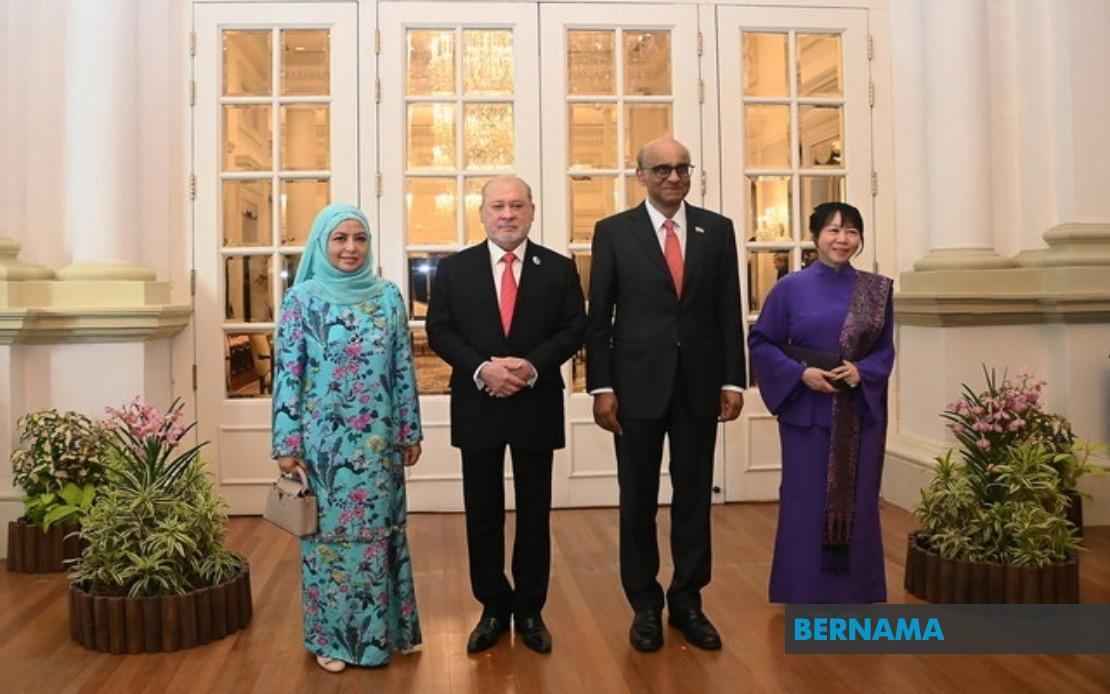
Singapore President Tharman Shanmugaratnam arrived in Kuala Lumpur this week for a state visit at the invitation of His Majesty Sultan Ibrahim, King of Malaysia, bringing with him a message of renewed commitment to one of Southeast Asia's most consequential bilateral relationships. In extensive remarks shared ahead of his visit, the Singapore leader articulated a vision of Malaysia-Singapore cooperation that extends far beyond conventional diplomatic niceties, framing the partnership as fundamentally rooted in centuries-old cultural ties, economic interdependence, and a shared stake in regional stability at a moment when geopolitical turbulence is reshaping the international landscape.
The relationship between the two nations, separated by the Johor-Singapore Causeway—the world's busiest land border crossing—represents a unique model of neighbouring-state cooperation. President Tharman emphasised that this partnership thrives on more than transactional interests or formal agreements. Rather, it is anchored in what he called the trust accumulated and continuously renewed over six decades of independence, a foundation built deliberately through successive governments' commitment to working through contentious issues rather than allowing them to fracture the broader relationship. This historical trust, he suggested, has become increasingly valuable precisely because it provides both nations with the diplomatic space to address disagreements candidly without undermining their overall cooperation.
Cultural and heritage initiatives have become a tangible expression of this deeper bond. The recent joint UNESCO inscription of the kebaya alongside Brunei, Indonesia, and Thailand represents a conscious effort to celebrate shared multicultural traditions. Similarly, ongoing efforts to secure UNESCO recognition for Chingay, the vibrant street procession that brings diverse communities together, demonstrate how Singapore and Malaysia are actively working to preserve and transmit cultural identity to younger generations. For Malaysia and Singapore, where rapid development and globalisation can sometimes overshadow traditional practices, these efforts carry symbolic weight—they signal that modernisation and cultural pride need not be contradictory.
Economic integration between the two countries has reached sophisticated levels. President Tharman pointed to the highly integrated nature of their economies and the mutual benefits this generates for citizens on both sides. Two major infrastructure projects exemplify this deepening commercial relationship. The Johor-Singapore Special Economic Zone (JS-SEZ) is positioned as a model for win-win cooperation, combining Singapore's financial and technological expertise with Malaysia's manufacturing base and land availability. The Rapid Transit System Link, meanwhile, promises to transform daily commuting for the hundreds of thousands of workers and citizens who regularly cross the land border, addressing a practical challenge that affects both nations' economies and labour markets.
At a regional level, Singapore and Malaysia face mounting pressure to deepen integration within ASEAN as the multilateral trading system fractures and great-power competition intensifies. President Tharman articulated the case for closer regional economic cooperation as a strategic necessity rather than merely a desirable outcome. By joining their markets more comprehensively and developing greater energy and supply chain resilience through partnership, both nations can increase their collective value proposition to the world economy. This approach resonates particularly with Southeast Asian policymakers concerned about maintaining relevance amid US-China competition and shifting global trade patterns.
The digital economy emerges as a critical frontier for bilateral cooperation. ASEAN recently concluded the Digital Economy Framework Agreement, scheduled for signing at the November 2026 ASEAN Summit in Manila. Current projections suggest ASEAN's digital economy could reach US$1 trillion by 2030 on its present trajectory, but implementing a high-quality DEFA could potentially double this figure to US$2 trillion. For Malaysia and Singapore, both increasingly dependent on digital services and technology sectors, this represents an enormous opportunity—but one that requires coordinated policy approaches and investment frameworks. Singapore's fintech expertise and Malaysia's growing tech sector could create significant synergies if properly aligned.
Climate change and energy transition present another dimension of shared challenge. As tropical nations facing complex climate risks, both countries have announced sustainability targets and possess strong incentives to collaborate on renewable energy development and carbon credit markets. President Tharman's emphasis on this area reflects a growing recognition that climate action, far from being a constraint on economic growth, can become a source of competitive advantage and new market opportunities. The region's abundant solar potential and growing demand for clean energy solutions create openings for joint ventures and technology transfer.
The management of bilateral disputes offers important lessons for the wider region. President Tharman acknowledged candidly that Singapore and Malaysia have navigated sensitive and complex issues over the years—a natural consequence of their shared history and geographic proximity. However, successive governments have consistently chosen to resolve these matters through dialogue and mutual respect rather than allowing them to poison the broader partnership. This disciplined approach to managing disagreement, rooted in recognition of each country's legitimate interests and commitment to international law, provides a model of responsible bilateral relations that carries implications for how ASEAN members interact more broadly.
The regional dimension of this partnership has gained urgency following Malaysia's successful ASEAN Chairmanship in 2025 under Prime Minister Datuk Seri Anwar Ibrahim. During that tenure, ASEAN welcomed Timor-Leste as its eleventh member, advanced trade agreements, and substantially concluded the digital economy framework. Malaysia's performance demonstrated ASEAN's continued relevance despite geopolitical complexity. Singapore, assuming the ASEAN Chairmanship in 2027, has every incentive to build on this momentum. By working closely with Malaysia, Singapore can help ensure ASEAN remains a coherent, reliable, and trustworthy partner to major powers while preserving its central role in promoting regional peace and stability.
People-to-people connections form the soft underbelly of this partnership, and President Tharman signalled particular concern about ensuring younger generations maintain the bonds that came naturally to their predecessors. The intensification of university exchange programmes, joint internships, youth leadership forums, and collaborative community projects require proactive facilitation rather than passive assumption of continuity. For Malaysian and Singaporean youth, particularly those who may have less direct experience with neighbours' cultural contexts due to digital mediation of experience, deliberate exposure and engagement becomes essential to sustaining the relationship's resilience.
President Tharman's reflections on his personal experiences in Malaysia—his appreciation of its evolving cultures, its hospitality, and its culinary traditions accumulated since his youth—add a humanising dimension to diplomatic discourse. These personal connections, replicated across thousands of official interactions, business relationships, and family ties, constitute the genuine substrate of bilateral goodwill that transcends formal agreements and institutional arrangements. As he prepared to meet Sultan Ibrahim and senior Malaysian leaders, Tharman was implicitly arguing that the Singapore-Malaysia relationship's true strength lies not in grand infrastructure projects alone, but in the accumulated trust, understanding, and affection cultivated across multiple generations and social strata.
The state visit itself represents a continuation of diplomatic tradition that both nations take seriously. By formalising high-level engagement at the presidential and monarchical levels, both Singapore and Malaysia signal to domestic audiences and regional observers that this partnership remains a cornerstone of their respective foreign policies. At a moment when regional geopolitics appears increasingly fragile, when economic competition is sharpening, and when great powers are pressing smaller nations to choose sides, the deliberate renewal of this bilateral relationship sends a message: ASEAN's smaller members can pursue sophisticated, mutually beneficial partnerships without sacrificing sovereignty or forcing painful choices between competing global powers. For Malaysia and Singapore, demonstrating this remains possible—and profitable—carries implications well beyond their borders.

