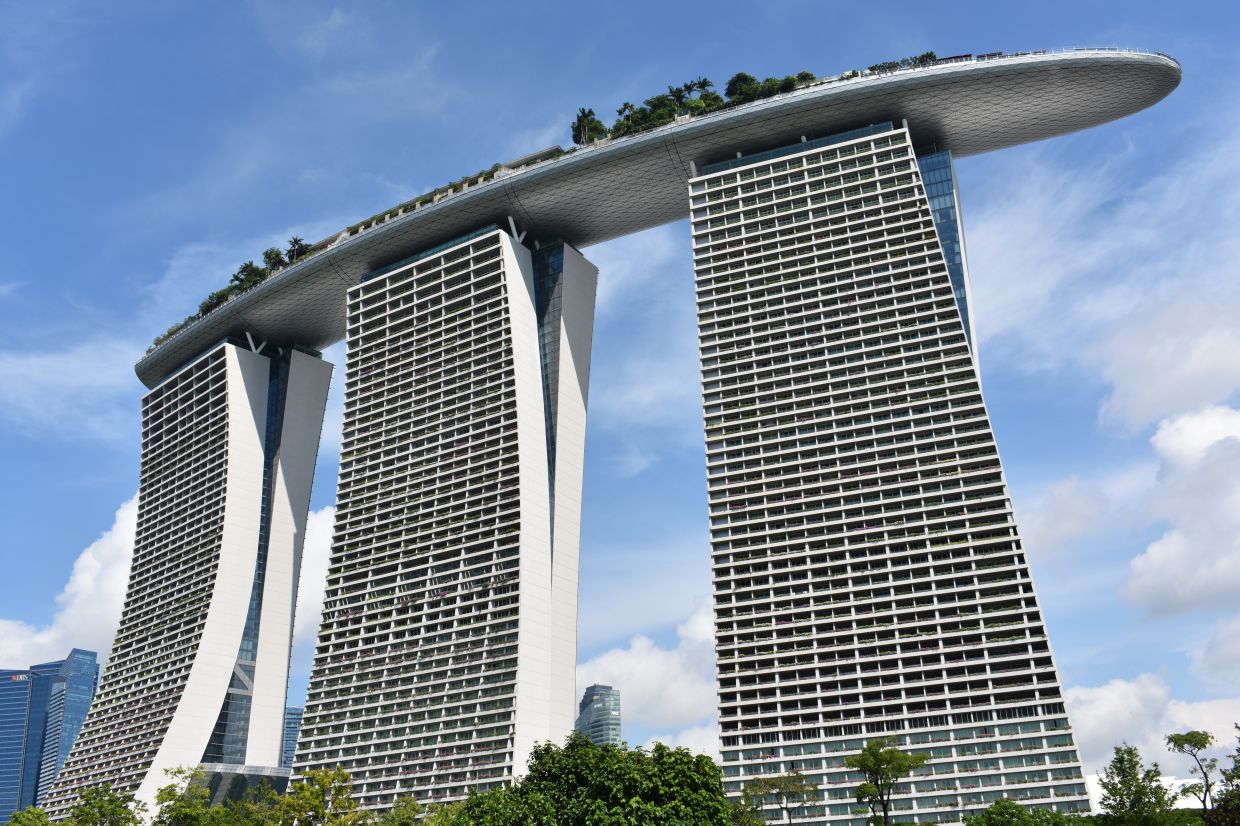
The contrasts between Singapore's two major casinos have become starkly apparent in recent years, revealing a widening performance gap that threatens the competitive balance in one of Asia's most important gambling hubs. While Resorts World Sentosa offered a bottle of Martell Cognac as its top Lunar New Year prize for high rollers earlier this year, Marina Bay Sands across the harbor provided a Mercedes-Benz CLA 200—a significantly more lavish gesture that encapsulates the growing disparity between the two rivals. These promotional choices reflect deeper financial realities: Marina Bay Sands generated casino revenues exceeding $2.1 billion in the first half of 2026, dwarfing Resorts World Sentosa's earnings of less than a third that amount.
The regulatory environment has begun to tighten around Sentosa's operations, signaling official concern about the property's ability to compete effectively in Singapore's evolving gaming landscape. Singapore's Gambling Regulatory Authority expressed particular dissatisfaction with Sentosa's tourism performance in November 2024, a judgment that translated into concrete action: rather than renewing its casino license for the customary three years, authorities granted only a two-year license taking effect in February 2025. This shorter renewal period effectively functions as regulatory pressure, with a decision on the next license cycle due before February 2027. Analysts interpret this move as a calculated signal to Genting Singapore's management that more substantial improvements are required to justify continued market access.
Singapore's position as a premier Asian gambling destination has been significantly strengthened by regional economic shifts and geopolitical factors. The post-pandemic recovery has brought surging tourist arrivals and wealthy gamblers from neighboring nations and mainland China, contributing to robust industry growth. A particularly significant development has been the displacement of gaming activity from Macau, historically the world's largest gambling center, following stringent Chinese government enforcement against casino junkets and irregular currency exchange operations. This regulatory crackdown has redirected high-value customers toward Singapore, which offers visa-free entry for mainland tourists alongside strict privacy protections that appeal to affluent gamblers concerned about data security and discretion.
However, Singapore's gaming renaissance has disproportionately benefited Marina Bay Sands, the property operated by Las Vegas Sands Corporation. The integrated resort's superior infrastructure, particularly its iconic design featuring three 57-story hotel towers topped with a distinctive boat-shaped rooftop, has established it as the market's premium destination. Beyond architectural distinction, Marina Bay Sands attracts visitors through an extensive entertainment ecosystem encompassing an art museum, high-end shopping, and diverse dining options. This comprehensive offering has proven particularly effective at capturing the lucrative VIP segment, where high-roller customers deposit minimum amounts of S$100,000 to access exclusive gaming suites, complementary accommodation, fine dining privileges, and invitations to premium events.
The VIP market represents a crucial battleground in Singapore's casino competition, as these customers generate outsized contributions to overall profitability despite their smaller numbers relative to mass-market gamblers. Market-share data reveals Marina Bay Sands' systematic advantage in this segment: Resorts World Sentosa held a larger VIP share in 2023 but saw it collapse to approximately 20 percent during the first quarter of 2026, though it recovered to 36 percent more recently, according to DBS Group analysis. These fluctuations underscore the intensity of competition and the volatility of customer loyalty, particularly when one property can offer substantially more attractive amenities and service experiences.
Complaints from Sentosa's VIP members have illuminated specific operational and infrastructural deficiencies hampering the property's competitive position. Club members have criticized outdated facilities, insufficient responsiveness to patron feedback, and cumbersome processes for currency and chip exchanges—operational friction points that contrast sharply with Marina Bay Sands' seamlessly integrated service model. These grievances extend beyond mere inconvenience; they reflect how infrastructure quality directly impacts customer perception and loyalty among high-value gamblers who possess abundant alternative entertainment options. In response to such concerns, Genting Singapore has emphasized recent enhancements to hospitality and gaming offerings, though industry analysts suggest these efforts remain insufficient to close the competitive gap.
Genting Singapore's parent company, the Malaysian leisure, real estate, and hospitality conglomerate bearing the same name, has undertaken substantial capital commitments to reverse Sentosa's declining market position. The property is currently undergoing a S$6.8 billion comprehensive revamp scheduled for completion by 2030, involving construction of an all-suite luxury hotel, oceanarium expansion, and addition of Super Nintendo World to the integrated resort's Universal Studios Singapore facility. These investments, while significant, must be evaluated within the context of Marina Bay Sands' parallel expansion trajectory. The Las Vegas Sands property has launched an ambitious $8 billion transformation encompassing a new 55-story hotel tower and live entertainment arena, ensuring that Sentosa faces an increasingly elevated competitive target even as it invests heavily in modernization.
Industry specialists largely express pessimism regarding Sentosa's ability to regain meaningful market share absent fundamental repositioning. Ben Lee, managing partner at IGamiX consulting in Macau, argues that Resorts World Sentosa simply cannot replicate Marina Bay Sands' capacity to deliver the "luxurious experience" that attracts and retains ultra-high-net-worth VIP customers. This assessment reflects a structural reality: Marina Bay Sands' first-mover advantage, superior capital resources, and demonstrated operational excellence have created substantial competitive barriers that are difficult for challengers to overcome. The gap appears particularly entrenched given Marina Bay Sands' profitability advantage, which provides continuous investment capacity for amenity improvements and customer experience enhancements.
Regulatory analysts have characterized the shortened casino license as a strategic pressure mechanism rather than an existential threat, though the distinction carries important nuance. DBS analyst Zheng Feng Chee described the move as a "soft threat" designed to motivate performance improvements while acknowledging that market realities limit genuinely viable alternatives. Few organizations worldwide possess the financial capacity and gaming expertise to acquire and operate a complex integrated casino resort, effectively insulating Genting Singapore from immediate replacement risk despite regulatory dissatisfaction. Nevertheless, continued underperformance relative to Marina Bay Sands could eventually trigger more drastic interventionist measures, including potential license non-renewal or operational restructuring.
Genting Singapore has responded to regulatory scrutiny with assurances of close engagement with authorities and expressions of confidence regarding the upcoming license assessment. Company spokespeople have highlighted recent attractions and experience additions while emphasizing commitment to sustainable growth trajectory extending through 2030. These statements, however, ring somewhat formulaic given the quantifiable performance disparities that regulatory authorities have already evaluated and found wanting. The upcoming license decision will reveal whether regulatory authorities view Sentosa's modernization plans as credible corrective measures or merely incremental refinements insufficient to justify extended market access.
The structural dynamics of Singapore's casino market suggest that dominance will likely continue concentrating around Marina Bay Sands absent dramatic strategic shifts by Genting Singapore's management. While recent quarters have shown modest fluctuations in VIP market share, the underlying momentum heavily favors Marina Bay Sands' continued expansion and premium positioning. Potential VIP customers evaluating gaming destinations inevitably compare comprehensive resort experiences, technological sophistication, and service caliber, dimensions on which Marina Bay Sands maintains clear superiority. For Resorts World Sentosa, achieving substantive market share recovery will require not merely matching existing Marina Bay Sands amenities but fundamentally exceeding expectations in ways that generate active customer preference.
The implications of Singapore's casino concentration extend beyond corporate competition metrics to encompass broader market dynamics affecting the entire Southeast Asian gaming sector. Success at attracting displaced Macau clientele and regional high rollers depends substantially on sustaining robust competition between flagship properties, as duopolistic structures risk complacency and service deterioration. Regulatory authorities appear acutely aware of this competitive necessity, suggesting that licensing decisions will remain calibrated to maintain viable market competition. Whether Genting Singapore's substantial investments in Sentosa modernization will suffice to restore genuine competitive balance remains an open question that will ultimately determine the sector's future configuration.

