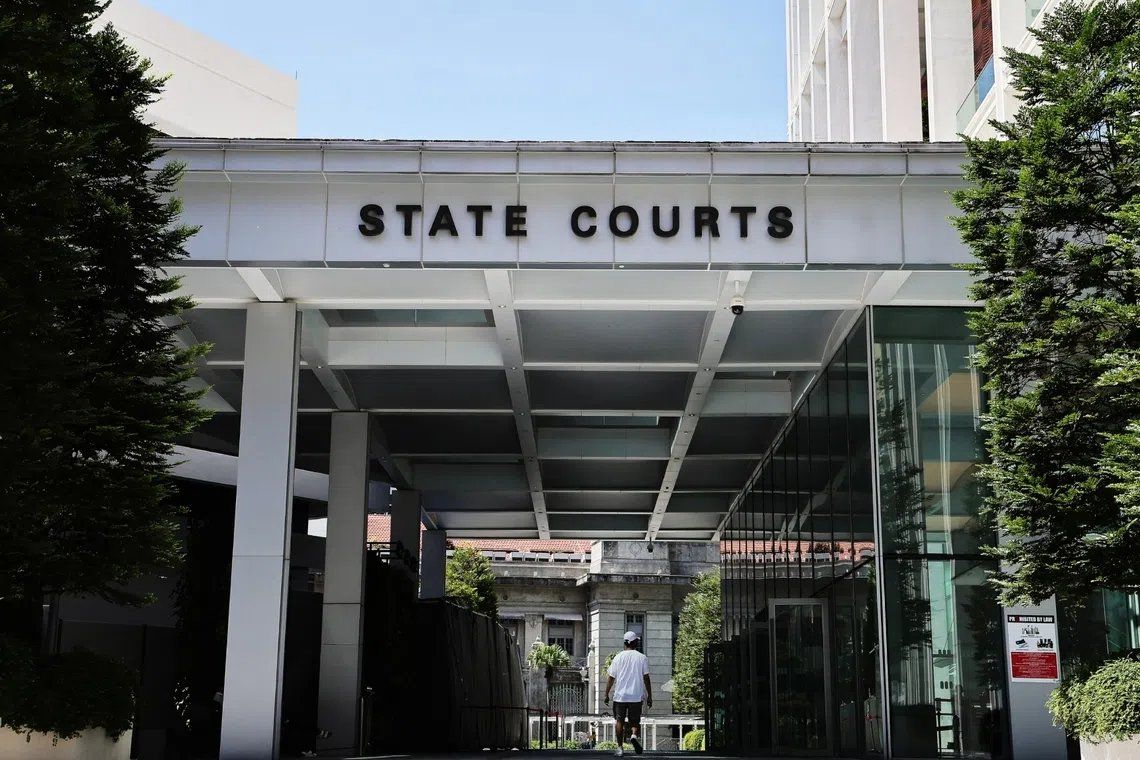
A Singaporean man who absconded to Malaysia over four years ago to escape prosecution for his involvement in a violent nightclub brawl has finally faced justice. Marcus Yeo Zhen Wei, 35, was handed a sentence of two years and three weeks' jail on Thursday (Aug 27) after pleading guilty to multiple charges including assault, performing a rash act, and unlawfully departing Singapore. His case underscores the reach of Singapore's legal system and the complications that arise when fugitives attempt to evade justice across international borders within Southeast Asia.
The sequence of events that led to Yeo's conviction began on the evening of March 21, 2021, at a nightclub located near Magazine Road and Havelock Road in Singapore's entertainment district. Around 9.30pm, Yeo and three male companions, all having consumed alcohol, initiated a confrontation with other patrons whom they accused of staring at them. The dispute quickly escalated into violence when Yeo and his associates hurled glasses and bottles at the other patrons, forcing the club's bouncers to intervene and eject the group from the premises.
However, the incident did not end with their removal from the establishment. One member of Yeo's group retrieved a baton from a vehicle and returned to the club entrance, while another associate armed himself with a knife. The pair then attacked two Vietnamese nationals who were departing the club, with the baton-wielding attacker striking one victim repeatedly. The injured man sustained severe injuries, including a collapsed lung, and required hospitalisation at Singapore General Hospital where he was granted 21 days of medical leave to recover. The other victim managed to escape with less severe injuries.
Yeo was arrested on March 26, 2021, just five days after the incident, and remanded in custody for six days. However, while released on bail awaiting trial scheduled for November 2021, he made the decision to flee Singapore rather than face the judicial process. In October 2021, Yeo travelled to Pulau Ubin, the small island off Singapore's northeast coast, and from there arranged boat transport across the Johor Strait into Malaysia—a common route for those seeking to evade authorities in Singapore.
His escape to Malaysia, however, provided only temporary respite. Malaysian authorities apprehended him in 2022 on drug-related charges, complicating his situation further and adding additional criminal exposure. After serving time in Malaysian custody or pending resolution of those charges, he was eventually handed back to Singapore in November 2025, more than four years after his initial flight from the city-state. Upon his return, he faced re-arrest for the original club assault offence and the related charge of illegally departing Singapore without authorisation.
The Immigration and Checkpoints Authority prosecuted the case, with Deputy Superintendent Wong Wai Yuen presenting evidence to the court regarding the circumstances of Yeo's departure and his time abroad. The prosecutor's account revealed the deliberate nature of Yeo's decision to flee, documenting his journey to Pulau Ubin and subsequent maritime crossing into Malaysian territory. Deputy Public Prosecutor Mark Chia presented details of the assault itself and the injuries sustained by the victims, emphasising the severity of the violence that occurred.
Yeo's conviction and sentencing now brings closure to a case that had remained unresolved for years due to his absence. His three associates who participated in the brawl had previously been dealt with through the courts, though the details of their sentences were not provided in the available court records. The resolution of Yeo's case demonstrates Singapore's persistence in pursuing fugitives across borders and reflects bilateral cooperation mechanisms between Singapore and Malaysia regarding the return of wanted persons.
For Malaysian residents and those familiar with cross-border issues in the region, this case highlights an important reality: fleeing to another country does not guarantee escape from serious criminal charges. The repatriation of fugitives through bilateral agreements remains an active component of law enforcement in Southeast Asia, and individuals who commit serious crimes such as assault cannot rely on geographical distance to evade indefinitely. Malaysia's cooperation in apprehending Yeo, whether through its own drug investigations or through formal extradition procedures, reinforces the region's commitment to cross-border law enforcement coordination.
The case also illustrates the intersection of alcohol-fueled violence, impulsive decision-making, and the severe legal consequences that can follow. A dispute that originated from perceived slights at a nightclub resulted not only in hospitalisation for victims but also in a lengthy criminal odyssey spanning multiple countries and nearly half a decade. For Yeo, what began as a brawl in March 2021 has culminated in a substantial prison sentence that extends well beyond what he might have received had he faced justice immediately after his arrest.
The sentencing sends a signal within Singapore and across the region that serious violent offences will be prosecuted regardless of how long fugitives remain at large. The complexity of Yeo's case—involving flight from justice, drug charges in another jurisdiction, and eventual repatriation—required coordination between multiple law enforcement agencies across borders. His return to Singapore in November 2025 and subsequent conviction demonstrate that regional cooperation mechanisms, while not instantaneous, ultimately succeed in bringing offenders to account.

