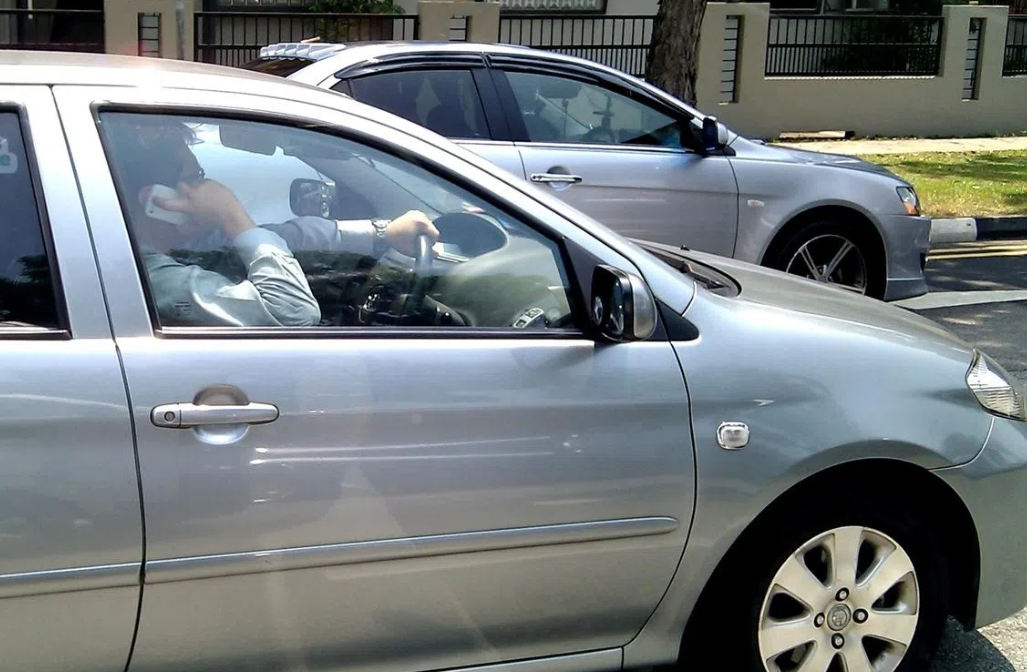
Singapore is moving to crack down on risky driving behaviour with a comprehensive overhaul of its road traffic legislation, marking a significant hardening of enforcement across the island's streets. The Ministry of Home Affairs tabled the Road Traffic (Miscellaneous Amendments) Bill on Tuesday, July 7, introducing stricter penalties for phone use behind the wheel, a new criminal offence for deliberately endangering others with vehicles, and enhanced sentences for drug-impaired driving. The legislative push reflects growing alarm among policymakers over deteriorating road safety conditions that have claimed more lives and injured more people than at any point in the recent past.
Singapore's roads have become demonstrably more dangerous over the past four years. Between 2021 and 2025, traffic fatalities surged by approximately 24 per cent, while traffic violations climbed by roughly 38 per cent. The number of deaths reached 149 in 2025, marking a ten-year high and representing an increase from 141 deaths in 2016 and 142 in 2024. Injury figures tell a similarly troubling story, with the number of people harmed on roads rising from 9,342 in 2024 to 9,955 in 2025. These statistics have prompted authorities to acknowledge that reactive measures are no longer sufficient and that the legal framework itself requires substantial strengthening to deter dangerous behaviour.
The most visible change for motorists will be the tightening of rules around mobile phone use. Currently, Singapore's laws already prohibit texting or calling while holding a device while driving, with offenders typically receiving 12 demerit points and fines ranging from $400 to $500. More serious cases can result in court prosecution, where first-time convictions carry penalties of up to six months' imprisonment and $1,000 in fines, while repeat offenders face up to a year in jail and $2,000 in fines. However, this approach requires authorities to prove the device was actively being used, a burden that has made enforcement difficult in practice. Traffic Police must either directly witness the violation or verify it manually through photographic or video evidence, limiting their capacity to catch offenders at scale.
The proposed amendment fundamentally shifts this enforcement framework by making the mere act of holding a phone while the vehicle is in motion an offence, regardless of whether the device is being actively used. The Ministry's reasoning centres on the distraction risk inherent in handling a phone, arguing that drivers holding devices are inherently less focused on the road regardless of intent. This change opens the door to technology-assisted enforcement, allowing Traffic Police to catch offenders using fixed cameras or to process photos and videos submitted by members of the public. The measure does, however, preserve protections for drivers using mounted devices or holding phones while vehicles are stationary, distinguishing between genuinely hazardous conduct and legitimate use.
Beyond phone regulations, the bill introduces an entirely new criminal offence designed to address what the Ministry characterises as vehicles being weaponised against other road users. Currently, drivers who deliberately endanger others cannot be prosecuted for murder or culpable homicide unless prosecutors can prove beyond reasonable doubt that they intended to kill or knew the act would likely cause death—an exceptionally high threshold. Such cases typically result in dangerous driving charges, which carry a maximum sentence of eight years' imprisonment. The inadequacy of this framework became evident in cases like that of Jarrett Tee Lee Kiat, who caused an 18-year-old's death during an expressway race yet received only five years and eight months' imprisonment despite showing no remorse.
To address this gap, the new legislation introduces the specific offence of purposeful endangerment using a vehicle causing death or grievous hurt. This new category carries substantially harsher penalties: offenders can face up to 15 years' imprisonment, fines, caning, and permanent disqualification from driving or disqualification for a minimum of ten years if extenuating circumstances exist. The creation of this intermediate offence category acknowledges judicial concerns that maximum sentences for dangerous driving may be insufficient to reflect culpability in the worst incidents. The approach mirrors sentencing practice in other common law jurisdictions where reckless or intentional endangerment with vehicles is treated as a category distinct from simple dangerous driving.
The bill also recalibrates penalties for other forms of dangerous and careless driving, particularly where grievous injury results. Cases have underscored the need for reconsideration of these thresholds. In December 2025, Yoong Kok Kai's sentence was increased from three and a half years to five years for an incident in which he drove while intoxicated after three consecutive drinking sessions, lost control of his vehicle at Tuas Checkpoint, and left an auxiliary police officer in a vegetative state. The presiding High Court judge remarked that there was no justification for drivers who consumed large quantities of alcohol and still chose to drive, and questioned whether maximum sentences adequately addressed the gravest incidents—a matter the judge noted was properly the legislature's responsibility.
Responding to such concerns, the bill raises maximum jail sentences for dangerous driving causing grievous hurt from five years to seven years for first-time offenders and from ten years to thirteen years for those with prior convictions. Aggravating circumstances, such as concurrent drug or alcohol impairment, will attract additional penalty increments. Serious offenders committing offences while under the influence of alcohol or drugs will face up to eighteen months' additional imprisonment, up from the current maximum of one year. These graduated enhancements reflect a philosophy of proportional culpability, ensuring that sentences more accurately reflect the seriousness of conduct and its consequences.
The legislative changes carry implications that extend beyond Singapore's borders, particularly for Malaysia and other Southeast Asian nations grappling with similar road safety challenges. Road fatalities and traffic violations have risen across the region in recent years, prompting neighbouring countries to examine their own enforcement mechanisms and penalties. Singapore's approach—moving from use-based proof to possession-based liability for phone violations, and creating intermediate criminal categories for vehicular endangerment—represents an evolving model for addressing road safety that other jurisdictions may scrutinise. The shift toward technology-enabled enforcement through cameras and public submissions also reflects broader trends in law enforcement throughout the region, where authorities increasingly leverage digital tools to supplement manual policing.
Implementation of the new framework will require coordination between Traffic Police, the judiciary, and public awareness campaigns to ensure motorists understand the changed legal landscape. The possession-based phone prohibition, in particular, may initially generate significant numbers of violations as drivers adjust to the stricter standard. Similarly, the new purposeful endangerment offence will require prosecutors and judges to develop consistent interpretative frameworks, as the boundary between this new offence and traditional dangerous driving charges becomes established through case law. The Ministry has positioned these changes as non-negotiable responses to objective deterioration in road safety, framing stricter enforcement and harsher penalties as essential tools to arrest dangerous trends and restore public confidence in the safety of Singapore's transportation network.

