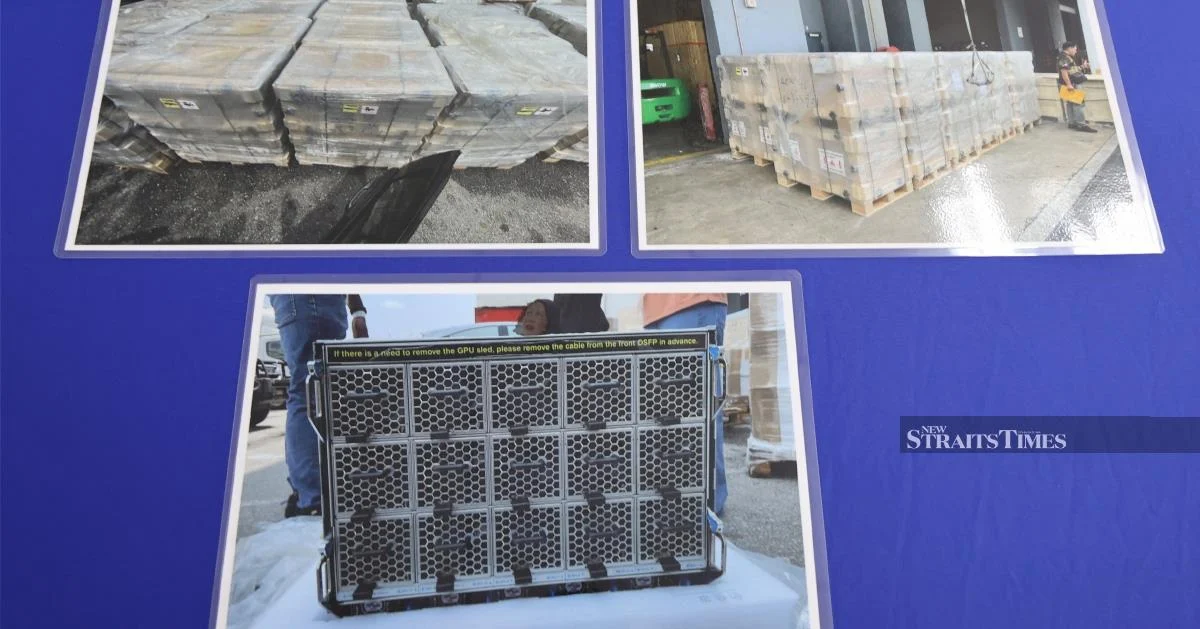
Singapore's police force announced on Wednesday that it has secured a luxury residential property worth in excess of US$40 million during a complex fraud investigation centred on the suspected illicit movement of advanced artificial intelligence chips in contravention of stringent American export control regulations.
The seizure of the high-value bungalow represents a significant enforcement action in what appears to be a sophisticated scheme involving the circumvention of United States technology restrictions. Singapore, positioned as a global financial and technology hub in Southeast Asia, has increasingly become a focus for regulatory scrutiny surrounding the international transfer of sensitive technologies, particularly semiconductors critical to artificial intelligence development and deployment.
The investigation underscores the complex interplay between national security concerns and international commerce. The United States has progressively tightened restrictions on the export of advanced computing chips to certain jurisdictions, reflecting geopolitical tensions and competition in the artificial intelligence sector. These controls are designed to prevent cutting-edge semiconductor technology from reaching destinations that Washington views as strategically sensitive, making any breach a matter of considerable diplomatic and security consequence.
For Malaysia and other Southeast Asian economies, this enforcement action carries important implications. The region has emerged as an attractive location for technology companies, including semiconductor manufacturers and traders, seeking to establish regional headquarters or distribution networks. The Singapore case demonstrates that authorities across Southeast Asia are increasingly vigilant about ensuring compliance with international export regimes, and companies operating in this space must exercise rigorous due diligence in their supply chains and customer relationships.
The asset seizure strategy employed by Singapore authorities reflects a broader law enforcement approach aimed at disrupting financial incentives for illegal technology transfers. By targeting the proceeds and assets acquired through illicit activities, investigators seek to deter future violations and recover gains derived from fraudulent operations. The scale of the confiscated property suggests that those involved may have realised substantial profits from their activities, making the forfeiture action economically meaningful as both a punitive and preventative measure.
Singapore's role as a financial centre means it provides infrastructure—banking systems, legal frameworks, and investment vehicles—that can facilitate both legitimate commerce and illicit transactions. The city-state's authorities have demonstrated commitment to combating financial crime and protecting the integrity of its markets, actions that help maintain its reputation as a stable jurisdiction for international business. However, the existence of such cases also highlights the persistent challenges in monitoring cross-border transactions involving high-value assets and sensitive technologies.
The investigation's focus on artificial intelligence chips reflects the strategic importance of semiconductors in contemporary technological competition. Advanced AI processing capabilities depend upon specialised chips that represent years of research and development investment. Access to these components provides substantial competitive advantages, making their acquisition through prohibited channels an attractive target for those seeking technological advancement without bearing development costs or respecting international legal frameworks.
For regional stakeholders, this case reinforces the necessity of understanding and adhering to American export control regulations, even when conducting business from third countries like Singapore. Companies in Malaysia, Thailand, Vietnam, and across Southeast Asia that engage in technology trading or supply chain activities must recognise that violations can trigger international investigations and severe consequences including asset forfeiture, criminal prosecution, and reputational damage that extends beyond individual firms to their home countries' standing in the global technology ecosystem.
The property seizure also illuminates how authorities employ civil asset forfeiture tools in fraud investigations. This mechanism allows law enforcement to recover assets connected to criminal activity without necessarily requiring criminal conviction, streamlining recovery processes but also raising questions about due process protections. Singapore's application of such powers in this context suggests confidence in the underlying investigation's strength and the legitimacy of the connection between the property and the alleged violations.
Moving forward, the case is likely to prompt increased scrutiny of high-value real estate transactions in Singapore, particularly those involving individuals or entities with business interests in technology sectors. Financial institutions and legal professionals facilitating such transactions may face heightened compliance obligations, and transparency requirements may become more stringent as authorities work to identify potential proceeds of similar illicit activities.
The broader significance of this enforcement action extends beyond Singapore's borders. It demonstrates that international cooperation in policing technology transfers is intensifying, with implications for how Southeast Asian countries structure their regulatory frameworks and enforcement capabilities. As artificial intelligence becomes increasingly central to economic competition and national security strategies, expect similar cases to emerge across the region, with corresponding impacts on the technology business environment.

