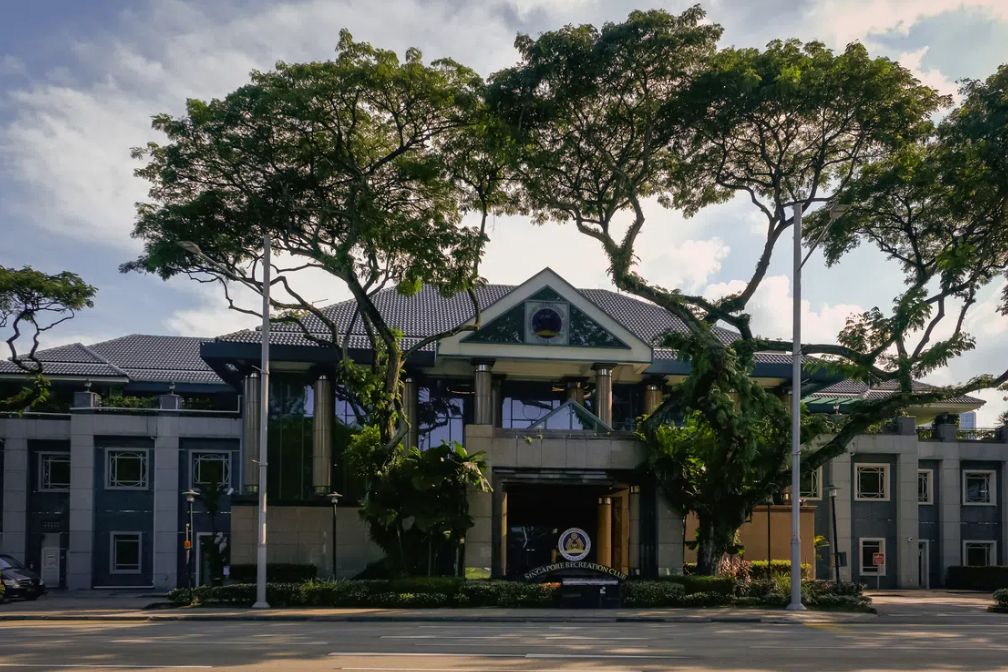
A significant governance dispute at Singapore's long-established Singapore Recreation Club is set for full courtroom adjudication after a High Court judge determined that fundamental questions about the legitimacy of a controversial vote warrant proper legal examination. Senior Judge Chan Seng Onn ruled on August 26 that the club and its management must defend their decision to convert the billiards room into a co-working space against claims that the voting procedure breached constitutional requirements. The case underscores growing tensions within prestigious membership clubs over modernisation initiatives and raises broader questions about how private organisations should conduct democratic decision-making.
The dispute originated when the club's management committee pursued an ambitious transformation plan. In March 2024, members had endorsed a S$16.6 million redevelopment that would relocate the billiards room from the second level to basement level two, making space for a contemporary co-working facility on the upper floor. However, the financial foundation of this project collapsed when land betterment charges—a tax on increases in property value—ballooned from an anticipated S$1.5 million to S$4.9 million. Faced with this dramatically altered economics, the management deemed the original scheme unaffordable and sought alternative directions.
To resolve the impasse, the management committee convened an extraordinary general meeting on October 18, 2025, presenting members with three mutually exclusive paths forward. The first option would proceed with the billiards relocation and fund the expanded land charges. The second would abandon the billiards move and convert that space directly into a co-working area. The third would integrate the billiards facilities within the expanded co-working footprint. Two days after the vote, management announced that the second resolution had passed, obtaining 151 votes in favour against 125 opposing votes from the 514 ballots cast, representing 54.7 percent support among valid votes.
Yet this apparent victory masks troubling procedural questions that propelled the matter into court. Sean Kerwin Mathews and Mu Yee Shyong, both billiards section members, filed suit challenging the resolution's validity on constitutional grounds. They contended that club rules required any major resolution to secure approval from a majority of those physically present at the meeting—at minimum 280 of the 559 members who attended. Since fewer than 151 members had voted affirmatively, they argued the threshold had not been met. More provocatively, they contended that 55 blank votes and 183 spoilt votes ought to be counted as opposition. Adding the blank ballots to the 125 recorded against-votes would yield 180 opposition votes, exceeding the 151 in favour.
The constitutional interpretation issue at the heart of this case reflects a common ambiguity in organisational governance. Club rules typically address voting procedures for standard business, but the extraordinary circumstances of restructuring proposals sometimes fall into grey zones. The plaintiffs' reading—that physical attendance creates a voting floor—contrasts with the management's apparent treatment of the vote as a simple percentage of ballots actually cast. This interpretive gap became the foundation for both an initial judicial dismissal and the subsequent High Court reversal that set the stage for trial.
Judge Chan's decision to overturn the assistant registrar's earlier dismissal hinged on an even more conceptual question: the meaning of abstention and spoilt ballots within contested votes. The judge found the voting process itself potentially compromised by design. Members had received two voting slips with constraints that, in effect, prevented them from rejecting all three options. Those voting yes on the first slip—to proceed with the original relocation plan—could not vote on the second slip. Those voting no on the first slip had to choose between the two alternative resolutions. This configuration arguably boxed in members who might have preferred the status quo or a entirely different path. Chan noted the paradox: voters faced conflicting instructions about how to express opposition, and the mechanism inadvertently punished blank or spoilt ballots by potentially counting them as passive acceptance rather than active refusal.
The judge's most stinging observation concerned the management's substantive constraint on voting entitlement. By structuring options such that members could not simultaneously reject all three paths—since blanking both slips or spoiling them would be treated as non-votes—the club arguably violated members' fundamental right to say no to all proposals. This represents a departure from conventional democratic principle and triggered Chan's concern that the procedure itself, regardless of how votes were ultimately tallied, may have been fundamentally compromised. For a club with approximately 7,000 members, such structural questions about how the organisation respects member agency carry weight beyond this single dispute.
The club's legal team, led by Walter Alexander, had urged the assistant registrar to strike out the complaint entirely, arguing that invalidating the resolution would serve no practical purpose and leave the organisation in gridlock. The management contended that the vote had been conducted in good faith and that reopening the question would merely perpetuate uncertainty. However, Judge Chan rejected this pragmatism as insufficient grounds to suppress legitimate legal claims. He reasoned that the worst practical outcome of a successful challenge would be to hold a properly structured fresh vote, hardly a catastrophic alternative to accepting a potentially flawed decision.
This case carries implications that extend beyond the Singapore Recreation Club itself. For other private associations and membership organisations across Southeast Asia, it signals that courts will scrutinise the technical requirements of internal governance, particularly when constitutional provisions impose specific voting thresholds or procedural protections. The judgment suggests that management committees cannot simply design voting architecture to produce preferred outcomes; the mechanisms must genuinely empower members to express their will. For Malaysia's own network of recreational and social clubs—many governed by similarly layered constitutions—the decision offers a cautionary reminder that modernisation agendas must be advanced through processes that respect member participation.
The procedural journey itself reveals another telling dimension. The plaintiffs' initial loss before the assistant registrar on May 13, followed by the June 24 reversal, demonstrates how appeals courts sometimes reach different conclusions about case merit. The High Court's decision to permit the matter to proceed to trial does not prejudge the ultimate outcome but instead ensures that factual disputes about voting interpretation, constitutional application, and member intent receive full ventilation. The trial process will explore what billiards section members understood the voting options to mean, whether the constitutional rule actually applied to this resolution, and whether blank votes were legitimately neutral or improperly neutral on a contested matter.
Meanwhile, the club itself remains in a functional limbo regarding the co-working space conversion. No construction has commenced based on the disputed resolution, and the management faces the prospect of months of litigation before clarity emerges. For a club seeking to compete in Singapore's office space market and attract younger members through modern amenities, the delay represents tangible opportunity cost. Yet the alternative—proceeding under a cloud of legal challenge from members who believe their voices were improperly excluded—carries reputational and cohesion risks that may prove more costly in the long run.
As the trial unfolds, it will also test the deeper question of whether clubs and similar voluntary associations should be subject to the same judicial scrutiny applied to listed companies or government bodies. Singapore courts have traditionally afforded such organisations considerable deference in internal matters, but growing complexity of membership governance and larger financial stakes involved in modernisation projects increasingly push courts to engage substantively with procedural fairness. The verdict in this case will help establish where that boundary lies for comparable institutions throughout the region.

