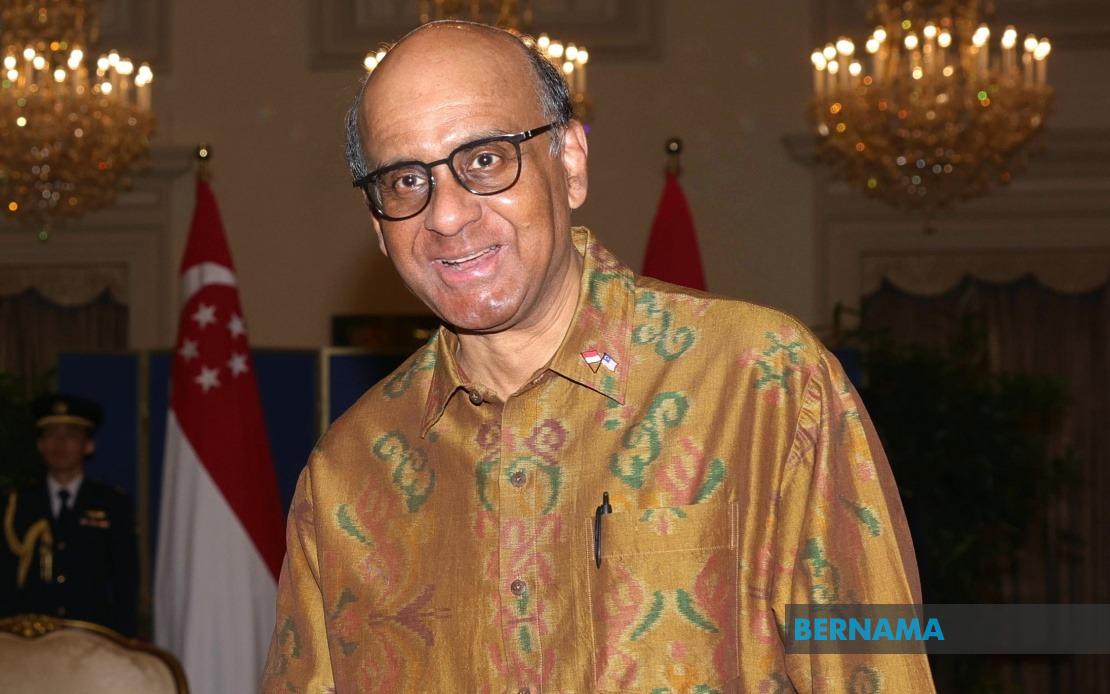
Singapore's President Tharman Shanmugaratnam is set to undertake a three-day state visit to Malaysia beginning July 13, marking his first official journey to the nation as head of state since his inauguration last September. The visit, extending through July 15, comes at the personal invitation of His Majesty Sultan Ibrahim, King of Malaysia, and represents a significant diplomatic engagement between two neighbouring countries whose relationship has long been characterized by economic interdependence and strategic cooperation.
The timing of this visit carries diplomatic significance, as it directly reciprocates the Malaysian monarch's visit to Singapore on May 6 and 7, 2024. Such high-level exchanges of state visits between neighbouring nations underscore the formality and importance both governments accord to their bilateral relationship. For Malaysia and Singapore specifically, these ceremonial visits represent more than mere protocol—they affirm the commitment of each nation's leadership to sustained engagement on matters of mutual concern and shared prosperity.
President Tharman will travel with his wife, Jane Ittogi Shanmugaratnam, alongside a substantial delegation comprising several government ministers and senior civil service officials. The composition of such delegations typically reflects the breadth of cooperation being emphasized during the visit, suggesting that discussions will span multiple portfolios and sectors. The inclusion of multiple ministerial representatives signals that the two nations intend to address substantive policy matters beyond ceremonial aspects of the state visit.
During his time in Kuala Lumpur, the Singapore President will experience the full ceremonial apparatus accorded to visiting heads of state. His programme includes a State Welcoming Ceremony marking his arrival, a formal audience with His Majesty at Istana Negara—the official residence of Malaysia's monarch—and attendance at a State Banquet held in his honour. Beyond these ceremonial engagements, Prime Minister Datuk Seri Anwar Ibrahim has scheduled a courtesy call with the President, providing an opportunity for direct dialogue on matters of bilateral and regional import.
The economic relationship binding Malaysia and Singapore stands as perhaps the most tangible expression of their partnership. Singapore functions as Malaysia's second-largest trading partner worldwide, while simultaneously serving as Malaysia's most significant trading partner among member states of the Association of Southeast Asian Nations. This reciprocal economic importance creates mutual incentives for stable governance and deepened cooperation across multiple sectors.
Bilateral merchandise trade reached RM402.35 billion, equivalent to approximately US$93.97 billion, during 2025. This figure represented a modest increase of 1.5 per cent compared with the prior year, demonstrating the consistency of this critical commercial relationship despite global economic uncertainties. More encouragingly, the first five months of 2026 showed accelerated growth, with bilateral trade climbing 14.5 per cent to RM189.90 billion (US$47.87 billion) compared with the corresponding period the previous year, which had recorded RM165.93 billion (US$37.65 billion).
These trade metrics reveal the scale and dynamism of the Malaysia-Singapore commercial nexus. The year-on-year growth from the beginning of 2026 particularly merits attention, suggesting renewed momentum in bilateral commerce. For Malaysian businesses and policymakers, such figures underscore why engagement with Singapore remains a cornerstone of economic strategy. Conversely, Singapore's investment in and trade with Malaysia reflects the island nation's dependence on the region for resources, markets, and strategic depth.
President Tharman's inauguration as Singapore's ninth president on September 14, 2023, represented a significant moment in his nation's political transition. This state visit thus carries added weight as his first formal visit to a neighbouring nation in this capacity, establishing the tone for his presidency's engagement with the region. In Southeast Asia's diplomatic ecosystem, such firsts carry symbolic importance that extends beyond bilateral relations into the broader regional consciousness.
The Malaysian Foreign Ministry's characterization of this visit as underscoring the "strong and enduring partnership" between the two nations and reflecting "deepening cooperation across key areas of mutual interest" encapsulates the official framing of Malaysia-Singapore ties. Yet the substance behind these diplomatic formulations extends into domains including trade facilitation, transportation connectivity, shared maritime security concerns, and the management of cross-border issues spanning immigration, labour mobility, and environmental conservation.
For Malaysian readers, this visit reinforces that the nation's relationship with Singapore remains one of Southeast Asia's most consequential bilateral partnerships, with ramifications across economic, security, and diplomatic dimensions. The scale of bilateral trade demonstrates how profoundly interlinked the two economies have become, creating constituencies in both nations with vested interests in maintaining stability and expanding opportunities for mutual gain.
The diplomatic calendar linking Malaysia and Singapore—marked by these reciprocal high-level visits—reflects a deliberate cultivation of engagement at the apex of each nation's political structure. Such visits serve multiple functions simultaneously: they demonstrate public commitment to bilateral relations, provide forums for addressing sensitive issues away from public scrutiny, and signal to the broader region and international community that Malaysia and Singapore, despite their differences and occasional tensions, remain committed to partnership and peaceful resolution of disputes.
President Tharman's state visit thus represents not merely a ceremonial interchange but rather a reaffirmation of bilateral bonds that have proven resilient across decades and through various regional and global transformations. For Malaysia, the visit underscores its continued significance as a major player in Southeast Asian affairs and a nation whose prosperity remains intrinsically linked to constructive engagement with its most developed and economically integrated neighbour.

