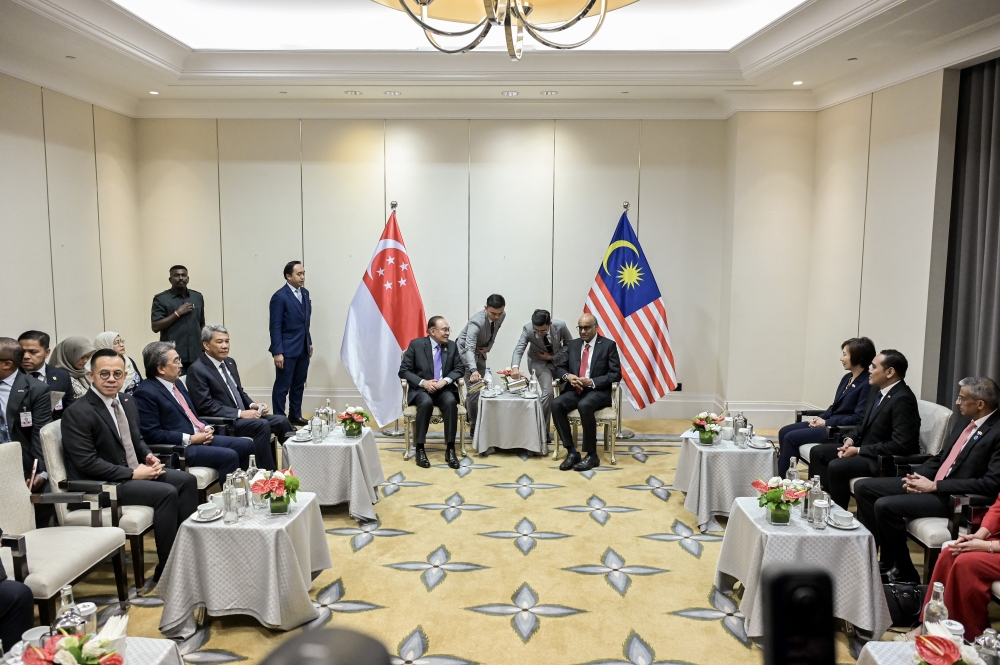
Prime Minister Datuk Seri Anwar Ibrahim received Singapore President Tharman Shanmugaratnam on Monday in a 40-minute meeting that underscored the importance both nations place on their bilateral relationship. The courtesy call took place during the Singapore leader's official state visit to Malaysia, an occasion that typically signals high-level diplomatic engagement and mutual respect between neighbouring governments.
The meeting between Anwar and Tharman reflects the ongoing commitment of both Singapore and Malaysia to maintain constructive dialogue at the highest levels of government. Such state visits serve as important diplomatic mechanisms for addressing bilateral concerns, exploring collaborative opportunities, and reinforcing the shared interests that bind the two countries together. The length and substance of the encounter suggest that both leaders were intent on engaging meaningfully rather than observing mere ceremonial protocols.
Malaysia and Singapore have long maintained complex but essential ties that span economic cooperation, regional security, and cultural exchange. The two nations share maritime boundaries, interconnected trading networks, and mutual stakes in Southeast Asian stability. Issues ranging from trade facilitation to transportation links have historically featured in high-level discussions between Malaysian and Singaporean officials. This particular meeting comes at a time when both countries continue to navigate post-pandemic economic recovery and changing regional dynamics in Southeast Asia.
The state visit format chosen by Singapore to conduct these discussions carries particular weight in diplomatic circles. Unlike routine official visits, state visits typically involve ceremonial elements alongside substantive policy discussions, signalling that both nations view the engagement as strategically significant. For Malaysia, hosting such a visit demonstrates its role as a central regional player willing to engage constructively with its smallest but economically significant neighbour. For Singapore, the visit reaffirms its commitment to maintaining strong relationships within the Southeast Asian region despite its unique geopolitical position.
Bilateral economic relations form a cornerstone of Malaysia-Singapore interactions, with both nations being major trading partners. Singaporean investments in Malaysia span manufacturing, finance, and real estate sectors, while Malaysian resources and labour have long been integral to Singapore's economic ecosystem. Regional supply chain resilience has become increasingly important following pandemic disruptions, making such high-level discussions crucial for identifying new avenues for economic collaboration and removing trade barriers that might impede business flows between the two countries.
Transportation infrastructure represents another critical area where Malaysia and Singapore find significant common ground. The Causeway that connects Johor Bahru to Singapore handles millions of commuters and commercial vehicles annually, making its efficient management essential for both economies. Discussions around congestion, safety standards, and potential infrastructure upgrades often feature in bilateral meetings, as both nations seek to maximize the flow of people and goods across their shared borders while maintaining proper security protocols.
Regional security concerns also feature prominently in Malaysia-Singapore diplomatic engagement. Both nations participate in various regional forums and security arrangements aimed at maintaining stability in the Strait of Malacca and surrounding waters. Maritime security, counterterrorism cooperation, and intelligence sharing represent areas where both countries have developed working relationships that transcend traditional diplomatic niceties. The confidential nature of such discussions means that public statements typically emphasize cooperation without detailing specific operational matters.
Tharman's visit arrives during a period when Southeast Asia continues to grapple with geopolitical tensions extending beyond the region. Both Malaysia and Singapore maintain careful diplomatic postures towards major powers, seeking to balance their relationships while preserving regional autonomy. High-level visits between neighbouring ASEAN members carry implications beyond bilateral concerns, potentially influencing broader regional dynamics and demonstrating commitment to multilateral mechanisms that have historically underpinned Southeast Asian stability.
The timing of such diplomatic engagements also reflects domestic political considerations within each nation. For Malaysia, demonstrating active engagement in regional diplomacy reinforces the government's commitment to constructive international relations and regional leadership. For Singapore, conducting state visits reaffirms its importance as a dialogue partner despite its small geographic size, emphasizing its economic and strategic significance within the broader Southeast Asian context.
Cultural and people-to-people connections between Malaysia and Singapore remain vibrant despite occasional political tensions. Thousands of Malaysians work in Singapore daily, while Singaporeans regularly travel to Malaysia for business and leisure. Educational exchanges, business partnerships, and family ties create natural constituencies in both nations interested in maintaining cordial relations. High-level diplomatic visits serve to reinforce the importance of preserving these connections while addressing any outstanding issues through appropriate channels.
Moving forward, the substance of Monday's meeting suggests that both nations remain committed to developing their relationship constructively. The 40-minute duration indicates this was not merely a perfunctory encounter but rather a substantive discussion between leaders genuinely engaged with bilateral affairs. Such meetings typically generate follow-up actions at ministerial levels, with officials tasked with developing specific proposals for expanded cooperation in identified areas.
The successful conduct of this state visit demonstrates the maturity and stability that characterize modern Malaysia-Singapore relations. While the two nations have historically experienced tensions over issues ranging from water supplies to maritime boundaries, their ability to maintain productive diplomatic channels at the highest levels suggests that shared economic interests and regional responsibilities override potential sources of friction. This visit reinforces the proposition that effective bilateral management requires consistent engagement and mutual commitment to resolving differences through dialogue.

