A 49-year-old woman was taken into custody on 6 August in Singapore as part of an ongoing investigation into the Fun Coffee investment platform, with authorities formally announcing the arrest two days later. The case represents the latest crackdown against what police have described as a scheme employing classic pyramid marketing tactics to lure unsuspecting investors across the region.
The suspect played an active role in drawing participants into the Fun Coffee system and persuading others to become recruiters themselves. Her involvement underscores how these operations rely on a network of promoters working at different levels to maintain momentum and expand their victim base. Police disclosed that the scheme required prospective investors to download a mobile application, after which they would transfer Tether—a stablecoin cryptocurrency pegged to the United States dollar—into wallet addresses accessible only through the app's interface.
Central to the scheme's appeal were promises of returns that authorities characterised as unrealistic and inconsistent with legitimate investment vehicles. Beyond the primary investment returns, the platform dangled additional commissions as incentives for participants who successfully recruited fresh members. This dual incentive structure—combining promised gains with recruitment bonuses—mirrors the architecture of illegal pyramid schemes that have repeatedly targeted Asian consumers in recent years. Singapore participants who attempted to withdraw funds discovered the fundamental flaw: the application blocked access to their money, leaving them stranded without recourse.
The woman was charged under Singapore's Multi-Level Marketing and Pyramid Selling (Prohibition) Act, legislation designed specifically to prosecute organisers and recruiters of such schemes. Conviction carries a potential prison sentence of up to five years alongside financial penalties reaching S$200,000, or both sanctions combined. The severity reflects the legislative intent to deter participation in these operations and protect vulnerable members of the public.
Fun Coffee maintains an official presence claiming headquarters in Phu Quoc, Vietnam, where it asserts ownership of assets exceeding US$1 billion and a workforce surpassing 5,000 personnel. These inflated claims of scale and legitimacy form part of the psychological toolkit used to convince investors of the platform's stability and trustworthiness. The stated mission—positioning itself as a "lifestyle brand combining coffee, wellness and digital innovation into a community experience"—represents an attempt to mask the operation's predatory financial structure beneath a veneer of legitimate commercial activity.
The geographic spread of casualties reveals the scheme's regional reach. Hong Kong and Macau authorities coordinated arrests of eight individuals linked to Fun Coffee operations, with approximately 200 victims in those jurisdictions reporting aggregate losses approaching HK$100 million. One Singapore victim disclosed having transferred around S$400,000 into the system with no possibility of recovery. These figures suggest a sophisticated cross-border operation capable of targeting prosperous urban centres across Asia simultaneously.
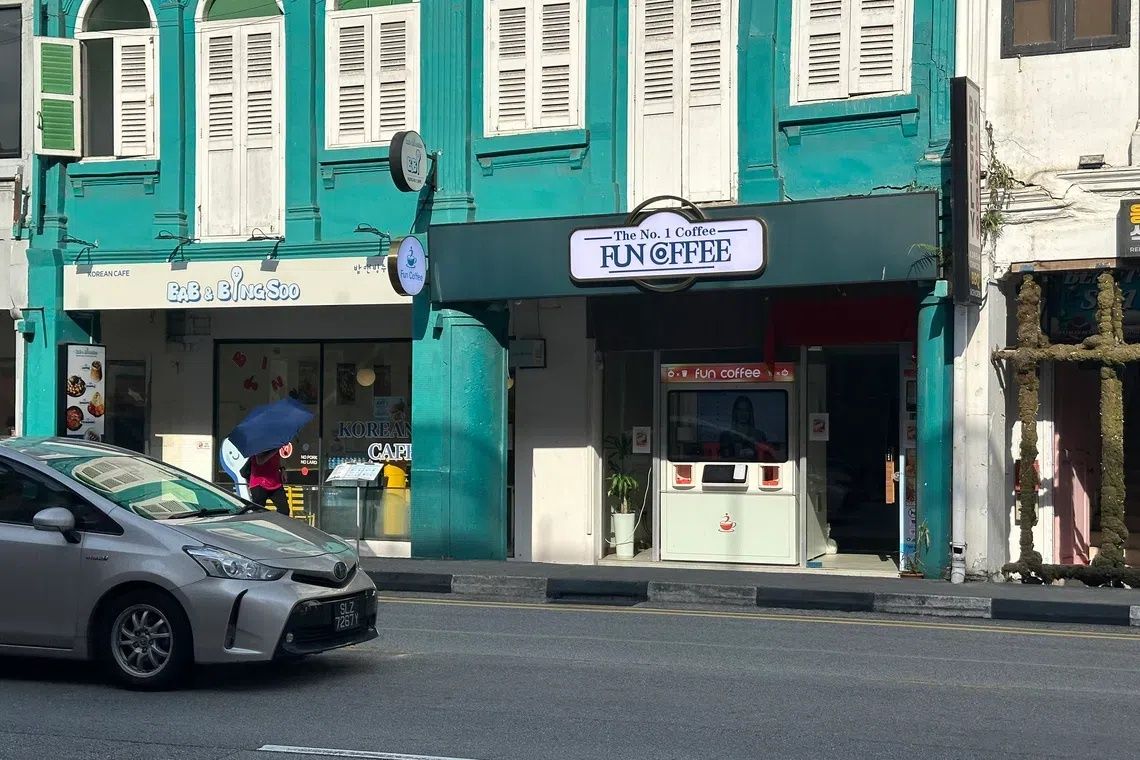
Fun Coffee's formal entry into Singapore occurred sometime in 2025, relatively recently on the timeline of its broader regional expansion. The Straits Times discovered that the entity's registered address at 202 Jalan Besar featured a coffee vending machine at its entrance—a physical prop apparently designed to reinforce the legitimate business narrative. Handwritten instructions affixed to the machine directed customers to scan a QR code for payment processing, a setup that itself demonstrates the rudimentary nature of the legitimate facade compared to the sophisticated digital infrastructure deployed for extracting cryptocurrency from investors.
Singapore police issued explicit guidance warning residents against making further payments or transfers to Fun Coffee accounts, regardless of whether the request came from individuals claiming official association with the platform or through automated messages generated within the app itself. The advisory highlighted specific risk indicators that should trigger suspicion: payment requests funnelled through private PayNow QR codes, personal mobile numbers rather than official business channels, or accounts domiciled outside Singapore. These warning signs reflect patterns common to scam operations designed to obscure the money trail and complicate law enforcement tracing.
For Malaysian readers and investors, the case carries particular relevance given geographic proximity and the regional nature of Fun Coffee's operations. The scheme demonstrates how cryptocurrency's pseudonymous qualities and cross-border transfer capabilities have become central tools for criminal syndicates targeting Southeast Asian populations with disposable income. The gap between the operation's claims of legitimacy and its actual function as a wealth extraction mechanism underscores the importance of investor scepticism toward schemes promising unusually high returns coupled with recruitment incentives.
The involvement of multiple jurisdictions in the investigation highlights a growing trend of coordinated law enforcement action against transnational fraud networks. As these schemes become increasingly sophisticated in exploiting regulatory gaps between countries, authorities across Southeast Asia have begun sharing intelligence and conducting simultaneous enforcement actions. The Fun Coffee case exemplifies both the challenge of combating digitally-native fraud and the emerging capacity of regional partners to mount coordinated responses.
Beyond the immediate arrests and warnings, the case raises questions about how financial regulators and app store operators can better protect consumers before schemes reach critical mass. The fact that Fun Coffee maintained a legitimate-seeming digital presence and physical location despite operating as an apparent fraud suggests deficiencies in verification systems. For potential investors across the region, the episode serves as a reminder that professional-looking websites, claimed asset bases, and physical touchpoints offer insufficient protection against schemes designed by experienced operators.

