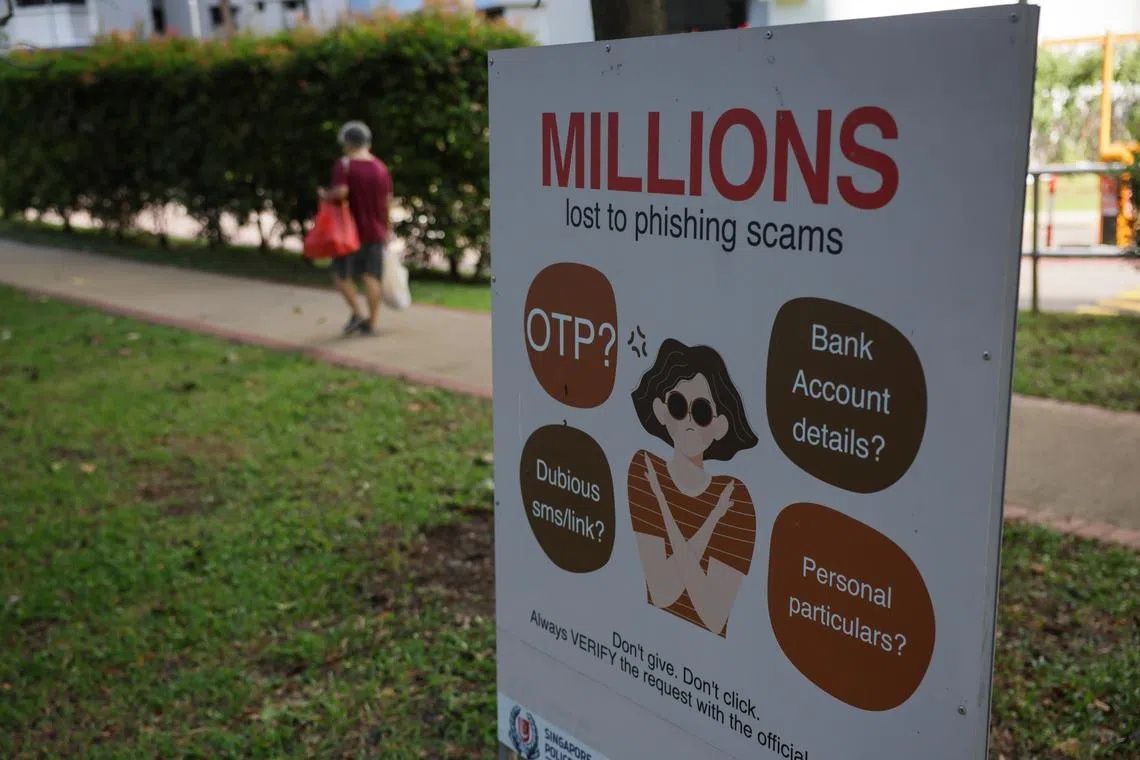
Singapore police have charged 230 individuals ranging in age from 16 to 77 in connection with an extensive scam network that defrauded victims of approximately S$9 million. The suspects, comprising 159 men and 71 women, were detained following a coordinated two-week enforcement operation conducted jointly by the Commercial Affairs Department and all seven police land divisions from June 18 through July 1. The scale of the operation underscores the persistent challenge that Southeast Asian authorities face in combating organized online fraud schemes that increasingly blur geographical boundaries and exploit digital payment infrastructure.
The investigation revealed a remarkably diverse portfolio of fraudulent activities, demonstrating the sophisticated nature of modern scam operations. Authorities documented involvement across more than 713 separate scam incidents, encompassing e-commerce fraud, impersonation schemes targeting both friends and government officials, employment-related scams, investment fraud, and rental property schemes. This breadth reflects how scam syndicates have evolved to capitalize on multiple vulnerability points in the digital economy, from online shopping platforms to social engineering tactics that exploit personal relationships and institutional trust. The inclusion of a minor among the accused highlights a troubling trend wherein young people are recruited as active participants in fraud networks, either through coercion, financial desperation, or lack of awareness regarding legal consequences.
Investigators classified the arrested individuals into two primary categories: those directly orchestrating scams and those facilitating fraud operations as money mules. Money mules play a crucial infrastructure role in scam operations by receiving stolen funds and transferring them through multiple accounts to obscure their origin, thereby enabling scammers to access their proceeds while creating layers of deniability. This distinction is significant for understanding how organized fraud networks function—the syndicate structure compartmentalizes criminal activity, making investigation and prosecution more complex while simultaneously distributing risk across numerous low-level participants who often bear disproportionate legal consequences.
Singapore's legal framework provides substantial penalties designed to deter participation at all levels of scam operations. Those convicted of cheating face imprisonment up to ten years and substantial fines, while money laundering convictions carry similar ten-year sentences alongside fines reaching S$500,000. Individuals operating payment services without proper licensing face up to three years imprisonment and fines of S$125,000. Most notably, scammers and syndicate members convicted under Singapore law face mandatory caning sentences ranging from six to 24 strokes, whilst money mules and those providing supporting services such as SIM cards or identity credentials face caning sentences up to 12 strokes. These severe penalties reflect Singapore's determination to maintain strict order and deter participation in fraud activities through both custodial and corporal punishment.
Beyond traditional criminal sanctions, Singapore authorities employ modern administrative restrictions to prevent reoffending. Individuals convicted of mule-related offences face potential restrictions on banking service access and mobile subscriptions, effectively limiting their ability to facilitate future scams. These measures acknowledge that traditional imprisonment alone may prove insufficient to disrupt organized criminal networks that continuously recruit new members to replace those incarcerated. By restricting financial and telecommunications access, authorities create ongoing barriers that extend consequences beyond the formal sentence period.
The operation's timing follows encouraging national statistics indicating declining scam prevalence in Singapore. The number of reported scam cases decreased significantly from over 50,000 in 2024 to 37,308 in 2025, whilst total losses fell from S$1.1 billion to S$913.1 million during the same period. These reductions suggest that sustained enforcement efforts, public awareness campaigns, and improved victim reporting mechanisms may be gradually achieving measurable impact. However, the substantial losses and incident volume indicate that scams remain a persistent economic problem affecting thousands of Singaporeans annually.
Within the scam landscape, e-commerce fraud emerged as the dominant category in 2025, accounting for 6,703 reported cases with cumulative losses of S$16.7 million. This prevalence reflects broader trends across Southeast Asia, where rapid e-commerce growth has outpaced regulatory capability and consumer awareness regarding transaction security. Online shopping platforms present attractive targets for scammers because they involve trusted payment channels, valuable goods, and frequent interactions between strangers who cannot easily verify each other's legitimacy. The high volume of e-commerce fraud suggests that platforms themselves, payment processors, and law enforcement must coordinate more effectively to implement real-time fraud detection and prevention mechanisms.
For Malaysian readers, the Singapore case carries direct relevance given shared regional vulnerabilities to organized scam networks. Malaysian citizens frequently conduct cross-border e-commerce transactions with Singapore retailers and engage with Southeast Asian digital payment services that criminals exploit to move funds between jurisdictions. Moreover, scam syndicates operating in Malaysia often target Singaporean victims, and vice versa, creating transnational law enforcement challenges that require improved cooperation between regional police forces. The prevalence of money mules in Singapore suggests that Malaysian authorities should similarly investigate whether organized scam networks are recruiting Malaysians to launder proceeds, either through financial coercion or deceptive recruitment practices.
The inclusion of a 16-year-old among the accused raises important questions about youth vulnerability and criminal recruitment. Scam syndicates actively target young people through social media, offering apparently legitimate employment opportunities that transition into criminal participation. Young recruits often lack the life experience to recognize predatory recruitment tactics, whilst their technological proficiency makes them valuable to operations. Schools and parents across Malaysia should consider this development as a warning signal regarding how criminal networks exploit adolescent economic aspirations and digital native status.
Singapore's police emphasize that all individuals linked to scam crimes will face investigation and prosecution without exception. This zero-tolerance messaging aims to eliminate any perception that participation carries minimal legal risk, particularly for money mules who may rationalize their involvement as peripheral to actual fraud. However, effective scam prevention ultimately requires addressing root causes including economic desperation, limited legitimate employment opportunities, and the psychological appeal of quick financial gain—factors that drive recruitment across Southeast Asia.
For residents requiring scam-related assistance in Singapore, authorities direct inquiries to the ScamShield helpline at 1799 or the dedicated website scamshield.gov.sg. The police hotline 1800-255-0000 accepts anonymous tips regarding scam activities, with strict confidentiality protection. Malaysian readers should note that similar reporting mechanisms exist domestically, and cooperation with relevant authorities remains essential for disrupting criminal networks that increasingly operate across regional boundaries.

