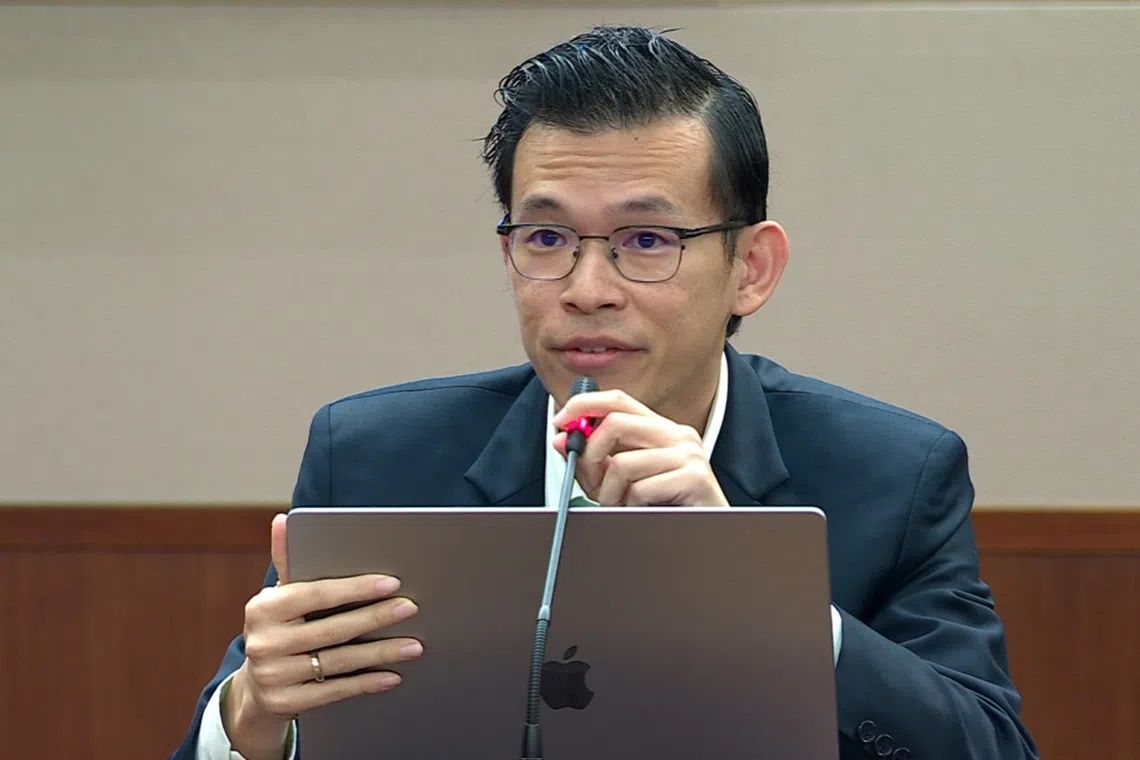
Singapore's Parliament has endorsed an amended motion on the nation's economic future following an extended parliamentary debate that revealed deepening fault lines over how the city-state should structure its approach to prosperity. The affirmation came after the ruling People's Action Party (PAP) introduced four amendments to a Workers' Party motion questioning whether Singapore's longstanding economic strategy requires fundamental reform. All 12 Workers' Party MPs voted against the final version, signalling that the opposition remains unconvinced by the government's framing of the issue.
The parliamentary debate, stretching across nearly nine hours, centred on competing visions for Singapore's economic model at a moment when global uncertainty and technological disruption are reshaping labour markets and business opportunities across the region. Minister for Trade and Industry Tan See Leng opened the government's response by reiterating that Singapore's growth strategy has never been an end in itself, but rather a means to generate meaningful employment, raise living standards, and enable social mobility across generations. This framing seeks to address growing public concerns that rapid economic expansion has not universally translated into improved quality of life for ordinary Singaporeans, particularly younger workers entering the job market in an era of volatile international conditions.
Workers' Party MP Kenneth Tiong articulated a fundamentally different diagnosis of Singapore's economic challenges. Rather than accepting the government's assertion that the existing model remains fit for purpose, Tiong argued that Singapore's reliance on attracting large multinational corporations has become a constraining rather than enabling factor for local employment and enterprise development. His alternative vision emphasises building a domestic economy anchored by dynamic Singaporean companies, robust internal consumer demand, and locally-owned capital that can compete internationally. This distinction matters significantly for the region: as other Southeast Asian nations deliberate their own development pathways, Singapore's debate over foreign versus domestic-led growth carries implications for how governments across ASEAN might balance inward investment with nurturing indigenous entrepreneurship.
A central concern voiced by the opposition relates to the distribution mechanism for economic gains. Tiong explicitly rejected what he characterised as the government's approach of prioritising growth first and then attempting to redistribute prosperity through vouchers and targeted rebates. Instead, he advocated for embedding fairness into the growth process itself, a formulation that suggests structural changes to how wealth is generated and apportioned rather than relying on post-hoc government transfers. This distinction reflects broader ideological differences about whether market mechanisms can be trusted to produce equitable outcomes or whether deliberate policy intervention must reshape incentive structures from the outset.
Tan's response acknowledged that 23 speakers across the chamber had offered varied diagnoses and proposed different solutions, yet he sought to identify common ground on fundamental objectives. Both government and opposition members, he noted, desired fulfilling careers, competitive wages, and the emergence of globally successful Singaporean enterprises. This rhetorical move attempted to reframe the debate from ideological opposition to technical disagreement about implementation. However, the Workers' Party's decisive rejection of the amended motion suggests that the opposition views these disagreements as substantive rather than merely technical, implying fundamental questions about economic philosophy rather than policy mechanics.
Tan emphasised that the government cannot guarantee every business venture will succeed, every job will prove permanent, or that economic transitions will occur painlessly for affected workers. Instead, he positioned the state's role as maintaining conditions enabling fair opportunity, providing viable pathways for advancement, and offering support when individuals experience setbacks. This framing limits expectations of what government intervention can and should accomplish, instead distributing responsibility across multiple economic actors. Businesses must themselves transform and invest in human capital; workers must commit to continuous learning; and entrepreneurs must demonstrate resilience, competitive discipline, and accountability for their decisions.
To illustrate his philosophy, Tan drew on his own entrepreneurial experience. As a medical doctor who co-founded Healthway Medical Group at age 27 without formal business training, he credited the firm's early growth to an unconventional strategy: identifying an underserved market niche by providing corporate healthcare services to employees in public housing estates and industrial zones rather than pursuing conventional approaches. The breakthrough came when Singapore's multinational corporations became early clients, validating the company's capabilities and establishing credibility with subsequent customers. Crucially, Tan presented his company's development as symbiotic rather than competitive with foreign MNCs, arguing that exposure to international standards and demanding customers actually catalysed his firm's growth rather than crowding it out.
This personal narrative carries particular weight in the Singapore context, where government ministers' business backgrounds often carry substantial credibility. Yet the Workers' Party challenge suggests that not all stakeholders accept this interpretation of MNC-SME dynamics. Critics might argue that Tan's experience represents an outlier rather than a generalizable pathway, and that most small and medium enterprises struggle to achieve comparable breakthroughs when competing against established foreign firms with vastly superior resources and market access. The debate implicitly questions whether policy should be designed around success stories or around supporting the median entrepreneur facing more typical obstacles.
Tan outlined the government's architectural approach to bridging specific gaps that entrepreneurs encounter across their development journey. From transforming aspiration into first ventures through programmes like Startup SG Founder, which provides initial capital and mentorship, to facilitating scaling through the Startup SG Equity scheme targeting deep-tech companies, the government has constructed a portfolio of interventions mapped to different developmental stages. The Partnerships for Capability Transformation scheme represents another policy instrument, channelling SMEs into multinational supply chains to enable their participation in high-value international commerce. Within seven cohorts, the Enterprise Singapore Scale-Up programme reportedly generated S$2.5 billion in additional revenue for participating companies within three years, with S$1 billion derived from overseas expansion.
Yet these programmes raise questions about their accessibility and effectiveness across different demographic and sectoral groups. While the government presents them as mechanisms for levelling the playing field, critics might contend that structured support mechanisms often disproportionately benefit entrepreneurs who already possess certain advantages—networks, educational background, financial buffers—that enable them to navigate application processes and programme requirements. The Workers' Party's emphasis on distributional fairness suggests concern that existing support architecture, however well-intentioned, may reinforce rather than overcome existing inequalities in economic opportunity.
Tan stressed that entrepreneurship represents only one pathway through the economy, and that most Singaporeans will experience economic life through employment relationships. This acknowledgement opens space for discussion about wages, job quality, career progression, and employment security—domains where government policy influence extends beyond creating conditions for business formation. Singapore's tight labour market and aging population create both opportunities and pressures for how the government and employers should structure working life. The debate implicitly asks whether existing employment models adequately support workers navigating technological change, skills transitions, and the shift toward services-based production.
The Parliament's affirmation of the amended motion, despite opposition resistance, demonstrates that the PAP commands sufficient numbers to determine formal outcomes. However, the Workers' Party's unanimous rejection and the extended debate duration suggest that concerns about Singapore's economic model have achieved sufficient salience to warrant serious parliamentary engagement. For Malaysian observers, this debate offers instructive parallels: as both nations contend with rising living costs, questions about equitable development, and the challenge of transitioning from manufacturing toward higher-value sectors, Singapore's wrestling with these issues reflects dilemmas that other Southeast Asian economies will increasingly confront. The question of whether growth-first-then-redistribute or fairness-embedded-in-growth represents the superior approach will likely define regional economic policy discussions for years ahead.

