A 55-year-old man was arrested in Singapore on July 5 following a public disturbance that required police intervention with a conducted energy device. The incident unfolded at Block 539 Bedok North Street 3, where officers responded to a report around 3.25pm involving the suspect brandishing a saw in the vicinity of the residential neighbourhood.
The police dispatch received an assistance call from the area, prompting officers to arrive at the scene. Upon their arrival, they encountered the man actively swinging the saw while remaining in a public space adjacent to the Housing Board block. The behaviour quickly escalated into a situation requiring careful tactical management, as the suspect continued his actions despite initial police attempts at intervention.
According to the police statement released the same day, officers repeatedly instructed the man to surrender the implement and cease his threatening conduct. However, he persistently refused to comply with these lawful directions. Compounding the difficulty of the situation, the man was also shouting incoherently, which officers observed as a sign that he may not be in full control of his faculties or fully comprehending the gravity of the circumstances he faced.
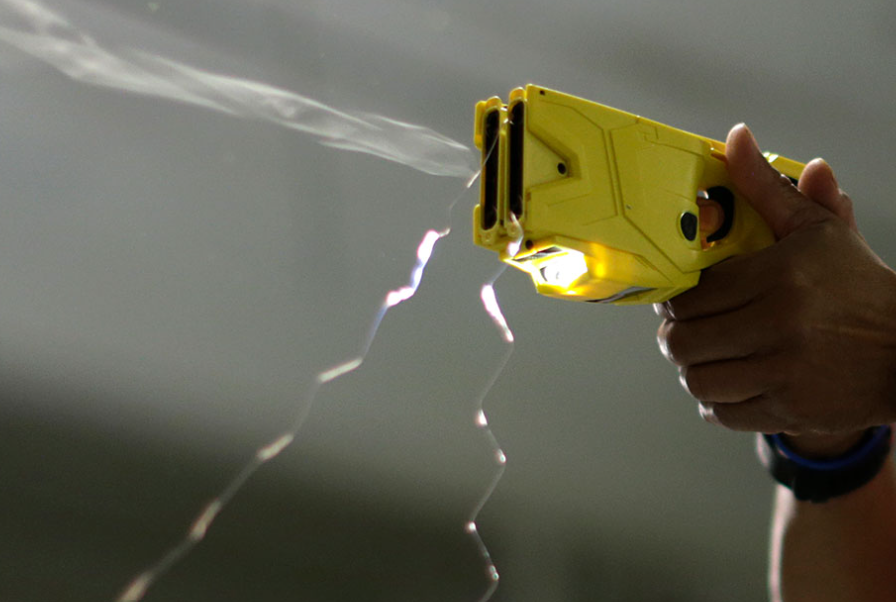
Facing a scenario where conventional de-escalation techniques were proving ineffective, police made the tactical decision to deploy a Taser to neutralise the immediate threat and bring the situation under control. The use of the conducted energy weapon proved decisive in stopping the suspect's actions without causing serious harm. This intervention allowed officers to safely apprehend the man without further risk to public safety or themselves.
Following his arrest, the suspect was transported to Changi General Hospital while remaining conscious, indicating that medical attention was deemed necessary for his assessment and care. The police confirmed that no injuries were sustained by any other individuals during the incident, suggesting that the swift use of the Taser prevented a potentially more dangerous outcome that could have endangered bystanders or responding officers.
The charges against the man reflect multiple dimensions of his conduct that day. He was arrested for public nuisance, a common charge for disruptive behaviour in shared spaces. More seriously, he faced charges for possession of an offensive weapon in a public place, recognising that carrying and wielding a saw in a residential neighbourhood constitutes a breach of public weapons laws. Additionally, police noted suspected consumption of a controlled drug, which may explain the incoherent shouting and non-compliance that characterised his behaviour.
The drug-related aspect of the case has been escalated to the Central Narcotics Bureau, Singapore's specialist agency for narcotics enforcement and investigation. This referral indicates that authorities suspect drug involvement played a significant role in precipitating the incident. The ongoing investigations into this dimension remain active, suggesting that toxicological testing or further inquiry into the suspect's substance use may provide additional context for understanding what motivated his erratic behaviour in a public residential area.
Incidents involving weapons in public spaces remain matters of serious concern for police and communities across urban Southeast Asia. Singapore's approach reflects the city-state's zero-tolerance stance on public disturbances and weapon possession, with clear legal frameworks and decisive enforcement practices. The deployment of conducted energy devices in such situations represents an evolution in police tactical options that aims to incapacitate suspects while minimising lethal harm, though such use remains subject to ongoing public and policy scrutiny regarding necessity and appropriateness.
The timing and location of this incident—a weekday afternoon near a residential housing block—underscores how such disturbances can unexpectedly impact ordinary neighbourhoods. Housing Board areas in Singapore accommodate hundreds of thousands of residents, and incidents involving weapons brandishing naturally generate concern among residents about safety in shared communal spaces. The rapid police response and resolution likely reassured the community that authorities were acting swiftly to contain the threat.
For Malaysian observers, the incident illustrates how Singapore's police deployment of non-lethal technologies and escalated response protocols operate in practice. While Malaysia's police force operates under different procedural and legal frameworks, the fundamental challenge of managing mentally unstable individuals armed with implements remains a shared concern across the region. The Central Narcotics Bureau's involvement also highlights Singapore's structured approach to separating drug-related criminal investigations from broader public order matters, ensuring specialist expertise addresses substance abuse dimensions.
The case exemplifies the intersecting issues of mental health, drug consumption, and public safety that challenge urban law enforcement throughout Southeast Asia. Where an individual's erratic behaviour combines with weapon possession and apparent substance involvement, police must balance restraint with swift action to protect communities. Singapore's incident response demonstrates how trained officers can employ graduated force options to resolve threatening situations without resulting in fatalities or serious injuries to the suspect, though questions about underlying mental health support and drug rehabilitation remain relevant policy considerations for the broader region.

