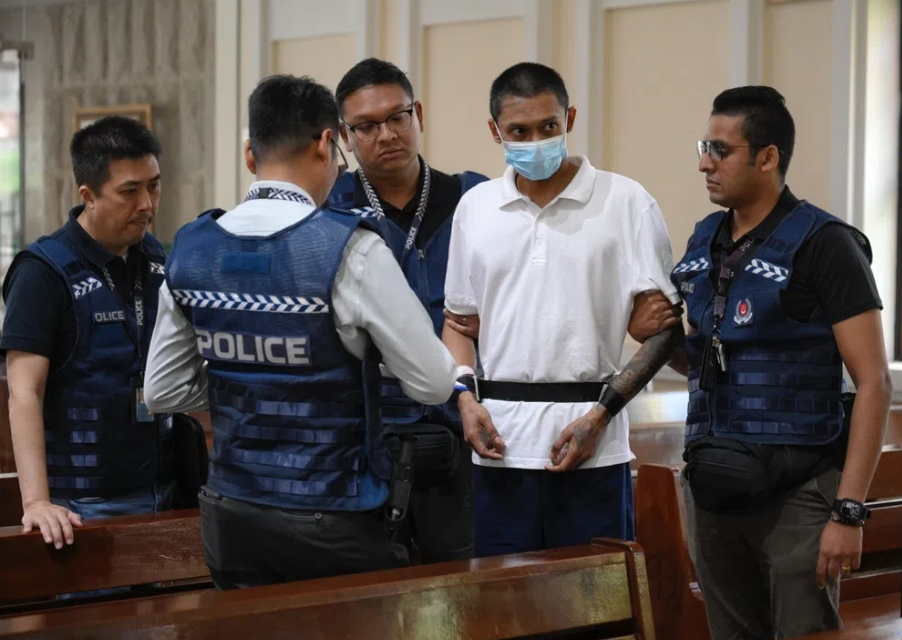
A 38-year-old Singaporean man was handed down a jail sentence of four years and three months along with nine strokes of the cane on Friday for the violent stabbing of a Catholic priest during a children's mass at St Joseph's Church last year. Basnayake Keith Spencer entered a guilty plea to charges of voluntarily causing grievous hurt with a dangerous weapon and illegal possession of weaponry, bringing an abrupt end to proceedings that had stretched across nearly two years since the assault on Reverend Christopher Lee, who was aged 57 at the time of the attack.
The incident unfolded on the evening of November 9, 2024, when approximately 900 worshippers gathered for mass at the church. Basnayake arrived alone around 5.30 pm and seated himself in a pew positioned centrally within the church hall. As the prosecutor's account detailed during court proceedings, the defendant had consumed two pills before mass to maintain focus, and consumed three additional pills shortly before the communion ritual commenced, apparently to manage anxiety about the fact that children would be present during the service.
During the communion segment of the service, two priests positioned themselves to distribute the sacrament to congregants. Father Lee and his colleague stood ready to administer communion as parishioners formed orderly queues. Basnayake initially joined the queue designated for the other priest but then abruptly repositioned himself to stand behind Father Lee's line instead. When the moment came for him to receive communion, Basnayake produced a foldable knife measuring 23 centimetres in overall length with a 10-centimetre blade and thrust the weapon into the priest's mouth with sudden violence.
The immediate aftermath saw Father Lee sustain serious facial injuries from the blade penetrating his oral cavity. Blood flowed profusely from the wound, prompting the priest to step backward. Despite his injuries, Father Lee demonstrated remarkable presence of mind by immediately grasping the rear pocket of Basnayake's jeans to prevent further attacks on other worshippers. Members of the congregation, including a police officer who happened to be attending the service while off-duty, swiftly restrained the assailant and summoned law enforcement. Basnayake was apprehended at the scene without further incident.
Medical examination revealed the extent of Father Lee's injuries: an 8-centimetre laceration on his tongue, a 3-centimetre wound on his upper left lip, and a 4-centimetre cut at the corner of his mouth. The priest was transported to hospital immediately and remained there until November 15, receiving six days of hospitalisation. He subsequently underwent 40 days of medical leave and required speech therapy sessions in the months following the traumatic incident. The physical and psychological toll of such an attack during a sacred ritual highlighted the vulnerability of religious spaces and their congregants.
Subsequent investigation uncovered additional weapons in Basnayake's possession, painting a picture of premeditated potential for violence. Police recovered a 14.5-centimetre penknife, a flip knife, and a fishing gaff—a pole fitted with a sharp hook—suggesting the defendant may have harboured violent intentions beyond the immediate assault. These discoveries added considerable weight to prosecution arguments regarding his dangerousness. When bail was considered in December 2024, prosecutors successfully argued that Basnayake represented an unacceptably high risk of reoffending, leading to his remand in custody.
This incident was not Basnayake's first brush with knife violence. Court records revealed that in 2019, he had been convicted of voluntarily causing hurt with a dangerous weapon, receiving a one-year jail sentence after stabbing his then-girlfriend in the buttocks with a kitchen knife while under the influence of methamphetamine. That prior conviction demonstrated a pattern of resorting to blade weapons during violent episodes and suggested underlying issues with substance abuse that complicated his criminal profile. The 2024 attack at St Joseph's Church represented an escalation in both the severity of injuries inflicted and the public nature of the assault.
Prosecutors submitted that Basnayake's state of intoxication and drug-induced psychosis at the time of the offence were mitigating factors, yet argued they did not eliminate his culpability. The prosecution contended he retained sufficient awareness of his actions to warrant substantial punishment, seeking a sentence ranging from four years and three months to four years and eleven months imprisonment plus nine strokes of the cane. The defence counsel from the Public Defender's Office, Ashwin Ganapathy, appealed for leniency, requesting a term under four years coupled with caning. Ganapathy emphasised his client's remorse and asked for proportionate sentencing, though such pleas carried limited persuasive weight given the circumstances.
District Judge Shaiffudin Saruwan, in pronouncing sentence, emphasised the unprovoked nature of the assault and the severe injuries inflicted upon a defenceless individual engaged in religious duties. The judge further noted that the timing of the attack—precisely when Father Lee was administering the sacred communion ritual—created genuine risk of mass panic among the hundreds of congregants present, potentially triggering secondary injuries or chaos. This consideration of wider public safety implications informed the judge's determination that punishment must fully reflect the gravity of the offences committed.
The sentencing carries implications beyond Singapore's shores, as such incidents of religiously-motivated or random violence within places of worship resonate throughout Southeast Asia. Malaysia, with its diverse faith communities, has similarly grappled with security concerns at religious institutions. The case demonstrates how mental health crises, substance abuse, and inadequate intervention systems can converge to produce catastrophic consequences even within supposedly safe communal spaces. Basnayake's extended time in remand—more than a year and nine months—reflects Singapore's judicial approach to managing high-risk offenders pending trial, contrasting with varying approaches across regional jurisdictions.
For the Catholic community in Singapore and beyond, the incident has prompted reflection on security protocols at religious gatherings, particularly those involving children. The presence of an off-duty police officer who aided in subduing the assailant may have prevented additional casualties, yet underscores the reality that institutional security cannot always prevent determined violence. The case will likely influence discussions about mental health screening, substance abuse treatment availability, and the management of individuals with documented histories of violent weapon offences within Singapore's criminal justice framework.

