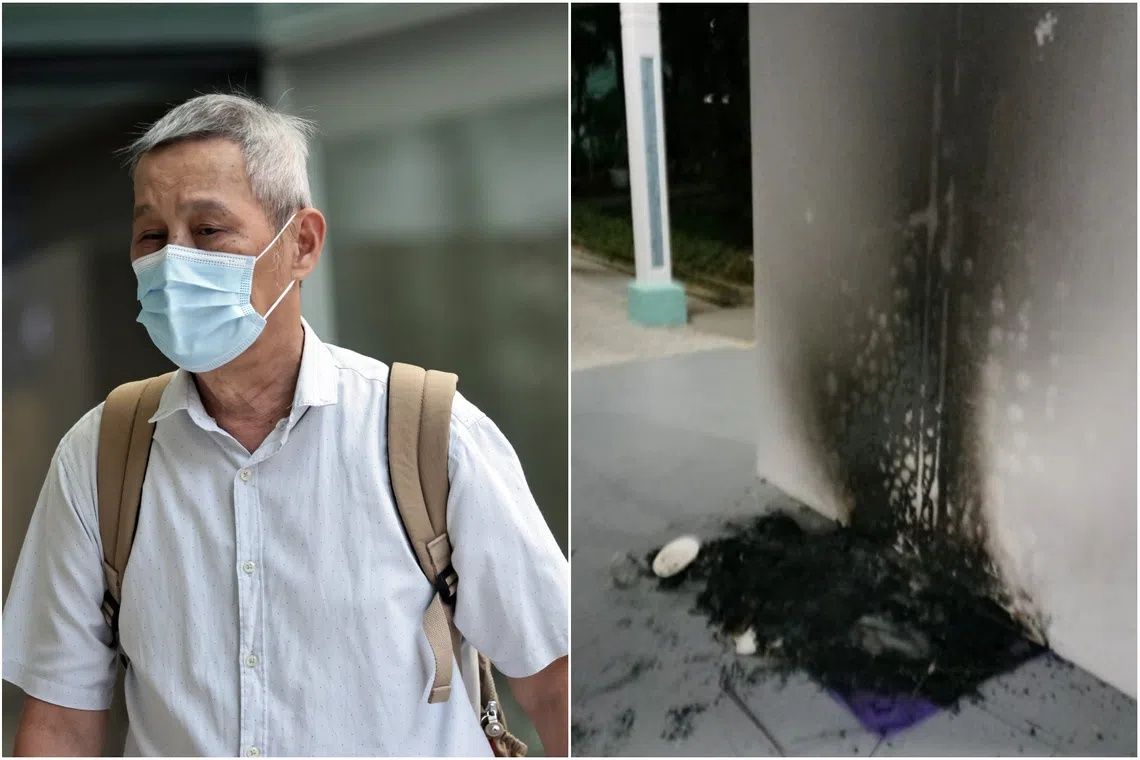
A Singapore court has sentenced a 68-year-old retiree to three months' imprisonment after he deliberately set fire to cardboard cat houses positioned near his home in Bukit Batok. Koh Teng Boo, who pleaded guilty to committing mischief by fire, caused damage exceeding S$900 to the ground and surrounding walls during two separate arson incidents. The case highlights the tensions that can emerge in densely populated residential areas when different community interests—animal welfare and neighbourhood livability—come into direct conflict.
Koh first encountered the cardboard cat shelters in September 2025 when structures appeared around a pavilion and void deck adjacent to his home at Bukit Batok East Avenue 4. These houses, maintained with supplies of food and water, served as sanctuary for stray cats in the neighbourhood. Rather than accepting the presence of the community cat feeding stations, Koh grew increasingly frustrated, viewing them as problematic for reasons extending beyond simple aesthetics.
The retiree's objections centered on his belief that the cat houses were creating ancillary nuisances. He observed that birds were being drawn to the feeding sites, and he contended that the structures risked attracting other pests to the residential block. Beyond these environmental concerns, Koh also noted that residents were discarding litter directly into the cat houses, exacerbating sanitation issues in what he described as an already unhygienic arrangement. Rather than dismiss these complaints as merely the grievances of a curmudgeon, Koh took formal action by escalating his concerns to his Member of Parliament, expecting official intervention.
When weeks passed without visible remedial action from authorities, Koh's frustration transformed into direct action. In October 2025, he removed three cardboard cat houses and disposed of them in an incense burner bin, which he then ignited. The incident should have served as a warning signal to authorities that residential dissatisfaction had crossed into unlawful territory, yet the community cat housing initiative appears to have continued unabated. Within two days of Koh's first arson act, additional cat houses had materialised around the block, signalling either that the removal had gone unnoticed or that the programme operators were determined to proceed regardless of resident opposition.
Undeterred by the reappearance of the structures, Koh returned to his MP on November 17, now making a second formal complaint and reiterating his position that the cat housing scheme was unhygienic. He was careful to clarify that he harboured no animosity toward cats themselves, framing his objection as a matter of neighbourhood cleanliness and pest control rather than cruelty. This distinction is important for understanding Koh's mindset: he saw himself as defending residential quality of life against what he perceived as an unilateral imposition by well-meaning but inconsiderate animal welfare advocates.
Two days after his second parliamentary appeal, on November 19 at approximately 1:30am, Koh encountered a cat house while returning home after consuming alcohol. Acting on impulse or accumulated grievance, he produced a lighter and set fire to the structure before departing the scene without waiting to observe the consequences. The fire was eventually extinguished, though investigations failed to establish precisely when or how the flames were suppressed. This incident demonstrated escalating recklessness: Koh had moved from deliberately removing structures to abandoning an active fire in a residential void deck, creating potential danger to both property and persons.
The pattern repeated itself the following day when, apparently still incensed that the cat houses remained despite his escalating complaints, Koh set fire to another structure on November 20. This time, two passing residents witnessed the burning cat house and promptly extinguished the flames before significant damage could occur. Koh was apprehended later that day, bringing his campaign of arson to an end and triggering the criminal investigation that culminated in his guilty plea.
Deputy Public Prosecutor Stephen Yeo presented the facts to the court, framing Koh's actions within the legal context of intentional property damage. The prosecution noted that Koh had explicitly justified his conduct by referencing his unsuccessful attempts to resolve the matter through official channels, treating his MP's apparent inaction as license for self-help remedies. The Jurong-Clementi-Bukit Batok Town Council subsequently calculated the repair expenses at S$913, covering damage to flooring and walls in the vicinity of the burnt cat houses. Koh has since made complete restitution to the town council.
The sentencing to three months' jail reflects the serious view Singapore courts take of arson, regardless of the target's perceived legitimacy. The Criminal Code prescribes sentences of up to seven years' imprisonment and substantial fines for those committing mischief by fire with intent to damage property. Koh's relatively moderate sentence may reflect mitigating factors including his age, his prompt restitution, and the limited scope of the damage, yet the imprisonment sends a clear message that even residents with legitimate grievances cannot resort to arson as a means of civic protest.
The incident raises uncomfortable questions about community decision-making in Singapore's high-rise residential environments. While animal welfare initiatives deserve support, their implementation in shared spaces arguably requires clearer consultation mechanisms to address legitimate resident concerns about hygiene and pest control. For Malaysian readers observing similar community cat feeding programmes in their own neighbourhoods, Koh's case serves as both a cautionary tale about the consequences of escalating conflict and a reminder that formal grievance channels, however slow, remain preferable to the legal jeopardy created by taking direct action.

