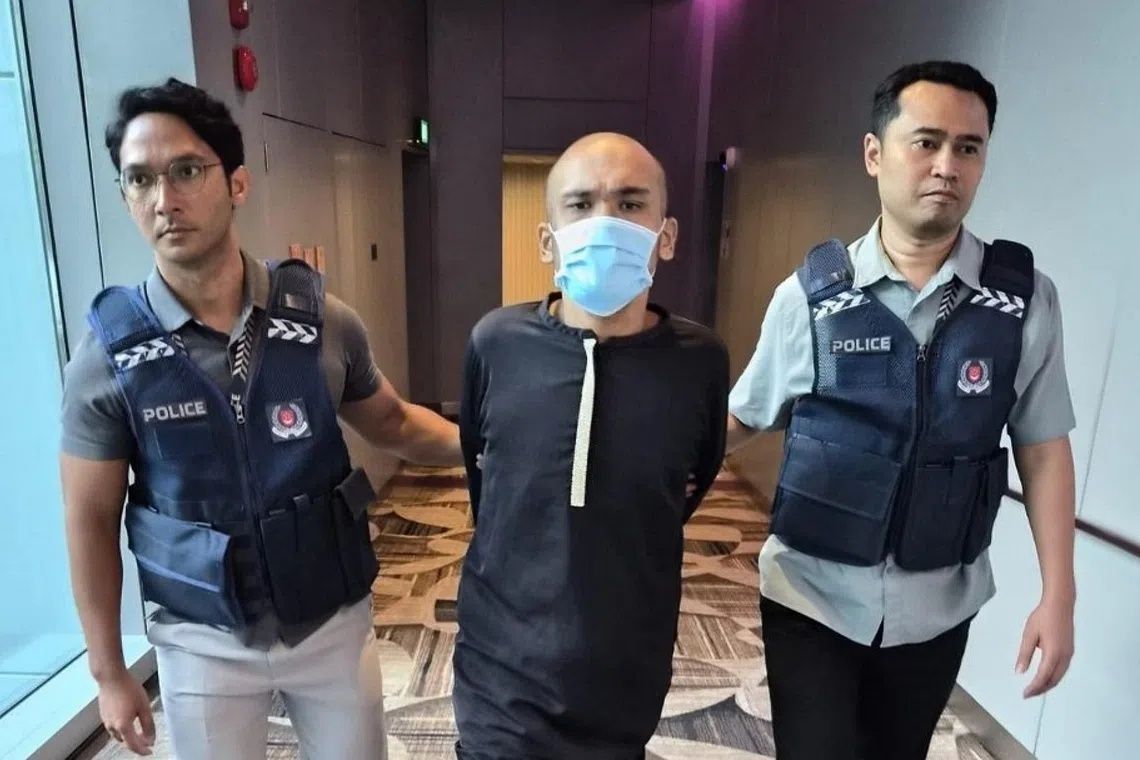
Singapore's authorities have moved swiftly against a 27-year-old man accused of uploading inflammatory content disparaging the Muslim community to social media platforms earlier this year, with the case highlighting the island nation's firm stance on protecting religious sensitivities. The individual is scheduled to appear in court on Friday, August 7, following his arrest upon arrival in Singapore on August 6, after being deported from Malaysia with assistance from the Royal Malaysia Police. The timing of his prosecution underscores how Singapore's law enforcement can mobilise cross-border cooperation to locate offenders who attempt to flee the jurisdiction, demonstrating the region's commitment to preventing digital incitement that could undermine communal peace.
According to the Singapore Police Force, the complaint about the man's offensive material was received on March 1, 2026, but investigators discovered he had already departed Singapore before the report was formally filed. This initial gap allowed him to evade immediate apprehension, though police tracking eventually located him in Malaysia. The cross-border retrieval operation, facilitated through coordination between Singapore's authorities and the Royal Malaysia Police, culminated in his deportation back to Singapore, where he was detained the moment he crossed the border. The case exemplifies how law enforcement agencies in Southeast Asia increasingly cooperate to address digital offences that transcend territorial boundaries, a growing concern as social media enables rapid dissemination of inflammatory content across the region.
If convicted, the man faces severe consequences, including a potential prison sentence of up to five years alongside financial penalties or a combination of both. These substantial penalties reflect Singapore's stringent approach to religious vilification and incitement, embedded in legislation designed to maintain the delicate equilibrium of harmony among diverse religious communities. For Malaysian readers, the severity of sentencing serves as a cautionary reminder of how neighbouring jurisdictions enforce laws protecting religious groups, particularly in city-states with compressed multicultural populations where communal tensions can rapidly escalate from online speech to street-level confrontation.
Complicating the case further is the man's connection to a parallel investigation involving a separate video that has circulated on social media depicting an individual desecrating the Quran by stepping on it. Police investigations have confirmed that the person featured in this footage is the same 27-year-old now facing charges. The video was reportedly filmed aboard a public bus in Singapore, transforming a transport vehicle into the inadvertent stage for an act many Muslims view as deeply offensive and sacrilegious. This dual-track investigation reveals how a single individual can generate multiple breaches of Singapore's religious harmony statutes, each potentially warranting separate charges that could compound his legal jeopardy.
The authorities' response included the issuance of disabling directives to Meta, the parent company of Facebook and Instagram, on March 7, requiring the platform to restrict access to the offending videos within Singapore's borders. This regulatory intervention demonstrates how governments in the region increasingly leverage their regulatory authority over technology companies to control the spread of religiously sensitive material domestically, even as the content originates from users whose identities may remain concealed internationally. For tech companies operating in Southeast Asia, such orders underscore the necessity of maintaining robust compliance teams and content moderation infrastructure capable of responding rapidly to government requests that invoke public order and communal harmony concerns.
Singapore's police have issued a pointed statement regarding their approach to such offences, characterising acts that threaten religious and racial harmony as matters demanding swift and firm legal response. The statement explicitly warns that any individual making remarks or engaging in conduct calculated to incite enmity, hatred, ill-will, or hostility between different racial or religious groups will face consequences aligned with the law. This declarative approach serves not merely as a response to the immediate case but as a broader deterrent message to others who might consider similar conduct, particularly given the amplifying effect of social media platforms that can transform individual acts of expression into viral phenomena reaching hundreds of thousands of users within hours.
The case arrives at a moment when Singapore and other Southeast Asian nations are grappling with the challenge of balancing free expression principles against the imperative to protect religious sensibilities in increasingly pluralistic societies. Unlike some democracies that prioritise expansive speech protections even when offensive, Singapore has consciously chosen to privilege communal harmony and religious respect as overriding values. This philosophical choice reflects the nation's post-independence experience of managing tensions among Buddhist, Muslim, Christian, Hindu, and Sikh communities, where leaders determined that unbridled speech could destabilise the social contract.
For Malaysia, where similar concerns about religious harmony persist and where both federal and state governments maintain various provisions protecting Islam and other religions, the Singapore case offers both a parallel and a contrast. While Malaysia's constitutional framework grants Islam a special position and provides specific protections, the enforcement intensity and swiftness demonstrated in Singapore's response may serve as a model for how neighbouring jurisdictions prioritise digital-age challenges to religious peace. The coordination between Malaysian and Singaporean police also highlights growing recognition that managing religious sensitivities in the age of social media requires sophisticated cross-border intelligence sharing and operational capability.
The broader implications extend to businesses and individuals operating across Southeast Asia's digital economy. Content creators, social media users, and platform operators must navigate an increasingly complex landscape where expression that might be protected or tolerated in Western liberal democracies faces substantial legal consequences in the region. The man's impending court appearance will likely generate significant media attention within Singapore and among Malaysian observers, particularly given the religious dimensions of the charges and the cross-border elements of his apprehension, potentially influencing how both communities perceive their respective governments' commitment to protecting faith communities from digital harassment and desecration.

