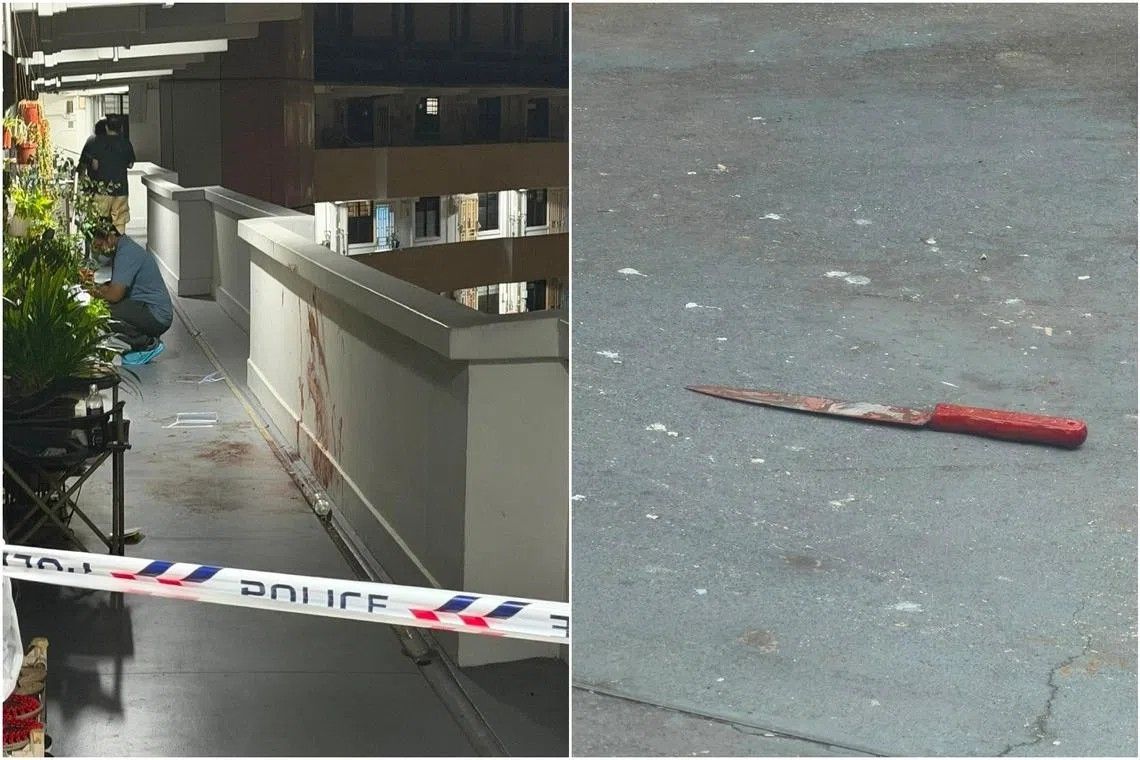
A Singapore court has heard murder charges against a man accused of fatally attacking his neighbour in what appears to be a residential dispute. Ng Swee Seng, 59, made a brief appearance via video link at the district court on July 22 in connection with the death of Thiyagarajan Karunakaran, also 59, at Block 55 Lengkok Bahru near Redhill Road.
Police responded to distress calls just before 5pm on July 20 after the incident unfolded within the high-rise residential complex. Officers discovered the victim motionless in the lift lobby on the 16th floor of the block. Emergency responders transported him to the National University Hospital, where he was pronounced dead later that evening. The circumstances surrounding what triggered the confrontation between the two residents remain under investigation.
Journalists who visited the scene the following day observed significant evidence of the violence that had occurred. Blood stains were visible along the 16th-floor corridor leading from individual units, and a distinct bloody footprint marked the walkway near where the victim was found. Such physical evidence typically plays a crucial role in establishing the sequence of events and the severity of the altercation.
According to residents of the block, the two men lived in separate units on the same floor, positioned several doors apart. This proximity suggests they likely crossed paths regularly in shared areas such as corridors and lift lobbies, raising questions about whether prior tensions or disputes had existed between them. The nature of their relationship and any preceding incidents remain unclear at this stage.
The incident highlights an emerging concern across Singapore's public housing estates, where close-quarters living sometimes creates friction between residents. Housing and Development Board blocks accommodate hundreds of thousands of residents, and while violent incidents remain relatively rare, disputes over noise, shared facilities, and parking have occasionally escalated into confrontations. This case marks a particularly tragic outcome in what may have begun as a routine neighbourhood disagreement.
For Malaysian readers, the case serves as a sobering reminder of how domestic and neighbourhood disputes can rapidly turn fatal when emotions run high. Singapore's high-density housing model, while efficient, creates conditions where neighbour relationships become unavoidable. Similar pressures exist in Malaysia's urban centres, particularly in states like Selangor and Kuala Lumpur, where affordable housing schemes pack residents into close proximity.
The legal proceedings against Ng Swee Seng will likely shed further light on the motivations and circumstances of the killing. Murder charges in Singapore carry severe penalties, with conviction potentially resulting in capital punishment, life imprisonment, or lengthy custodial sentences depending on circumstances and judicial discretion. The case will proceed through the court system over coming months, with investigators continuing to piece together the events that led to Thiyagarajan's death.
Community safety officials in Singapore's public housing estates have increasingly focused on early intervention and mediation programmes to address neighbour disputes before they escalate into violence. Such initiatives include community policing efforts, grassroots mediation services, and education campaigns about conflict resolution. The Lengkok Bahru incident underscores the critical importance of these preventive measures in maintaining social cohesion within densely populated residential areas.
The tragedy has likely unsettled other residents at Block 55, many of whom may now view their living environment differently. While violent crimes remain statistically uncommon in Singapore, high-profile incidents of this nature typically provoke discussions about personal safety, building security, and the adequacy of community support systems. Building management companies and town councils may face renewed scrutiny regarding their role in identifying and addressing tensions between residents before situations deteriorate.
Malaysian policymakers and urban planners can draw lessons from how Singapore's authorities respond to and investigate such incidents. The swift police response, comprehensive forensic documentation, and prompt court proceedings demonstrate the importance of institutional capacity and efficiency in the criminal justice system. As Malaysia continues developing its public housing schemes and managing rapid urbanisation, maintaining effective safety mechanisms and dispute resolution frameworks will be essential to preventing similar tragedies.

