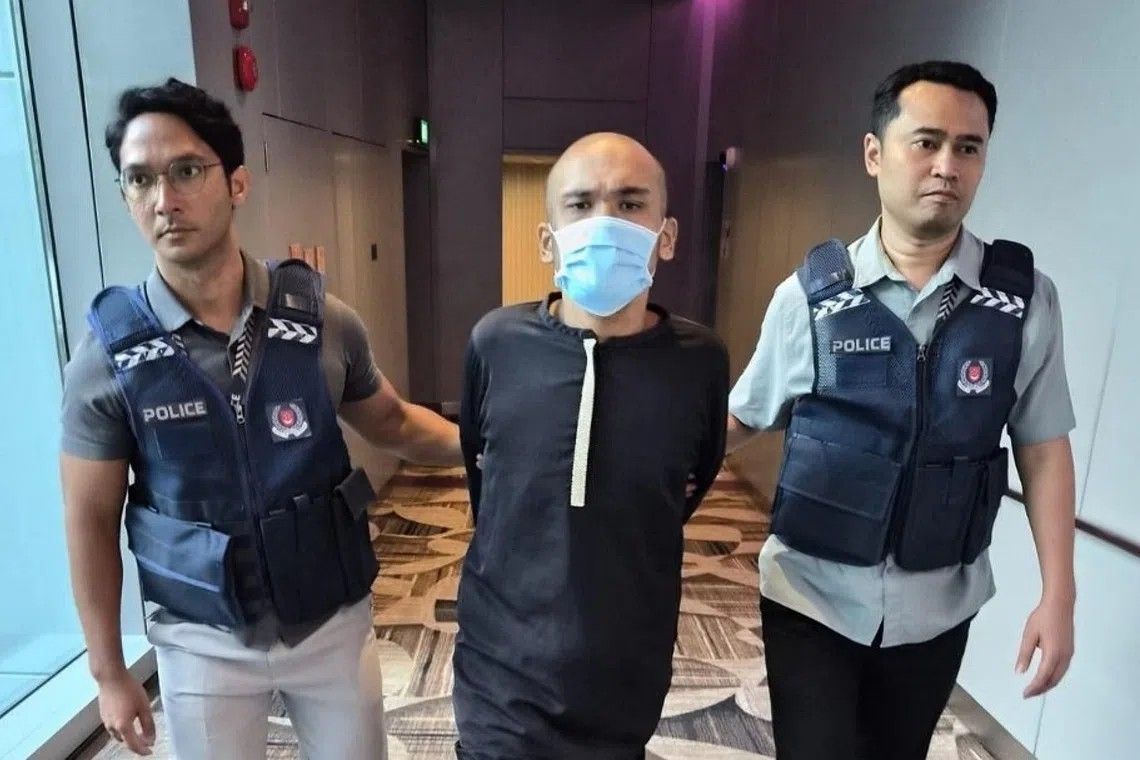
A 27-year-old Singaporean national faced court charges in early August following allegations that he posted religiously offensive content on social media targeting the country's Muslim community. Elvin John Baptist appeared in court on August 7 to face a single charge under Singapore's Maintenance of Religious Harmony Act, which carries significant penalties for those found guilty of insulting another person's religion. The case represents the latest in a series of religious sensitivity incidents in Singapore, where authorities maintain strict enforcement of laws designed to protect inter-communal harmony.
According to prosecution documents, Baptist allegedly uploaded two videos to TikTok on March 1 that contained Malay-language statements he knew would be considered insulting to Islam and potentially destabilise public peace in the multicultural city-state. The exact nature of the remarks has not been detailed in public statements, though police confirmed the videos were specifically crafted to offend the Muslim community. The March posting went initially unreported, suggesting the content may have had limited initial reach before later coming to the attention of authorities or concerned members of the public.
The Singapore Police Force received a formal report about Baptist's alleged infractions on March 1, the same day the videos were uploaded. However, investigators discovered that Baptist had already departed Singapore before the complaint was officially lodged, indicating he may have anticipated potential consequences or simply left for unrelated reasons. The timing of his departure and the reporting raised questions about how long the offensive content remained accessible online before triggering an official response.
With cooperation from the Royal Malaysia Police, Baptist was located across the border and subsequently deported from Malaysian territory on August 6. The involvement of Malaysian authorities underscores how regional police forces collaborate on cases involving cross-border suspects, particularly those fleeing jurisdictions with strict religious harmony laws. When Baptist arrived back in Singapore on the same day of his deportation, he was immediately placed under arrest by local police at the point of entry. This swift apprehension ensured he could be brought before the courts and formally charged.
Beyond the primary charges related to the TikTok videos, Baptist is cooperating with ongoing police investigations into a separate but thematically related incident. Authorities are examining a video circulating on social media that allegedly depicts an individual desecrating a Quran by stepping on the Islamic holy book. Intelligence suggests this video was recorded aboard a public bus within Singapore, making it a matter of significant concern for maintaining religious sensitivities in shared public spaces. The involvement of Baptist in assisting with these inquiries suggests possible connections between multiple related incidents, though authorities have not explicitly confirmed whether he appears in the second video.
The case highlights persistent challenges facing Singapore's multicultural society, where religious tensions can surface through anonymous or pseudonymous online platforms. The Maintenance of Religious Harmony Act, enacted to prevent communal violence and protect minority communities, has increasingly been invoked in the digital age as social media platforms provide tools for rapid dissemination of provocative content. Enforcement has become more sophisticated, with authorities tracking and tracing online posters even when they attempt to flee jurisdiction.
For Malaysian readers and Southeast Asian observers, the case underscores regional approaches to managing religious sensitivities in plural societies. While Malaysia and Singapore share similar concerns about religious harmony, their legal frameworks and enforcement mechanisms differ in scope and severity. The cross-border cooperation demonstrated in Baptist's case shows how neighbouring countries, despite diplomatic complexities, work together on matters involving public order and religious respect.
The incident also reflects broader regional conversations about the responsibilities of content creators and platform users in religiously diverse environments. Major social media platforms have faced mounting pressure to enforce community standards regarding religious content, yet enforcement remains inconsistent and often reactive rather than preventative. Baptist's case may prompt renewed discussions about platform accountability and user behaviour standards across Southeast Asia.
The charging and detention of Baptist signals Singapore's continued commitment to enforcing strict standards around religious discourse, particularly when such speech occurs in public forums accessible to broad audiences. The authorities' swift action in tracking, locating, and deporting the suspect demonstrates the resources committed to investigating such cases. For the broader Singapore community, the prosecution represents the state's intent to protect religious minorities and maintain the delicate equilibrium between free expression and communal harmony that the city-state has cultivated over decades.

