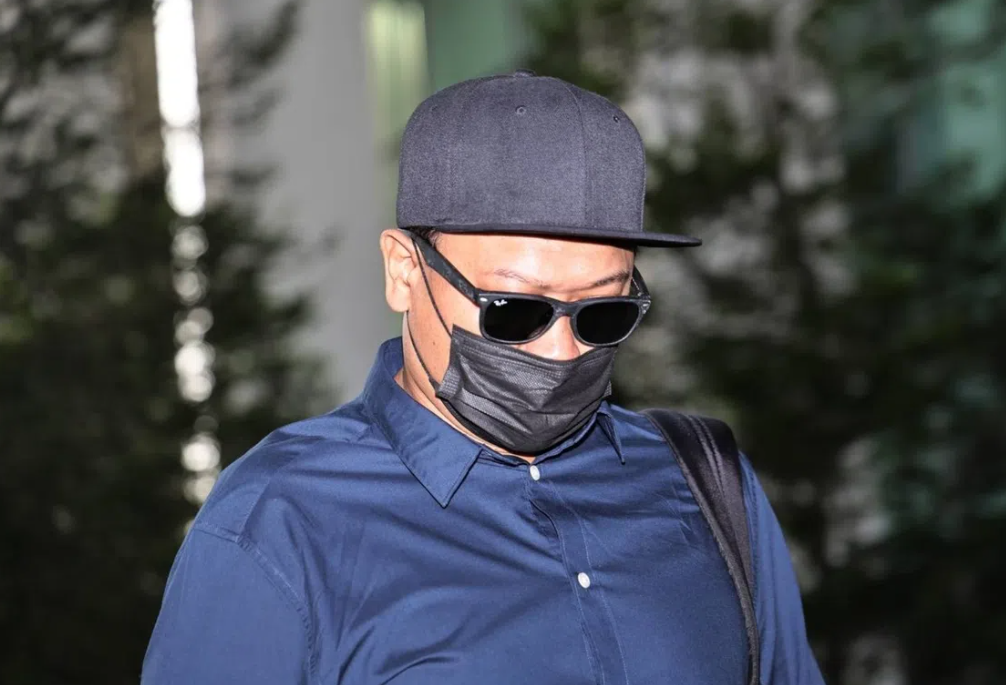
A 45-year-old driver in Singapore has admitted guilt to dangerous driving causing death following a devastating multi-vehicle collision in Tampines that claimed two lives and left multiple others injured. Muhammad Syafie Ismail's plea on August 6 came more than two years after the April 22, 2024 incident, following a series of four court adjournments that extended the legal proceedings considerably. The case has now entered the sentencing phase, with Syafie facing potential imprisonment of up to eight years and a permanent driving ban under Singapore's dangerous driving laws.
The circumstances surrounding the crash reveal a pattern of reckless driving that made the tragedy almost inevitable. After completing a Grab Hitch passenger drop-off in Bedok, Syafie accelerated his vehicle to speeds exceeding 129 kilometres per hour as he approached the intersection of Tampines Avenue 1 and Tampines Avenue 4, where the legal speed limit stood at just 50kmh. His vehicle had been travelling at nearly three times the permitted velocity, and critically, he proceeded through a red traffic light that had been signalling vehicles to stop for at least 26 seconds. The combination of excessive speed and traffic light violation created a catastrophic sequence of events captured in court video footage showing his black car hurtling past multiple vehicles before impact.
The collision's destructive force extended far beyond the initial point of impact. Syafie's vehicle struck two cars in succession before surging forward to collide with a third vehicle. The first car he struck spun violently and overturned, which then collided with a van carrying passengers. That van subsequently struck a minibus, creating a domino effect of destruction involving six vehicles in total. The violence of the impact was particularly severe for the junior college student, a 17-year-old passenger in her father's car who was en route to participate in her school's annual cross-country event. The collision caused her father's vehicle to flip, with its doors forced open by the impact, trapping the teenager beneath the overturned vehicle.
The human toll of the accident extended far beyond the two fatalities. Norzihan Juwahib, a 57-year-old senior technician at pest control company First Choice Pest Specialist, was travelling in the van as a passenger on her way to work when Syafie's vehicle struck. She had worked at the firm for approximately a decade and was pronounced dead in hospital after suffering multiple severe injuries including fractures to her neck and ribs. Despite receiving cardiopulmonary resuscitation at the crash scene, her injuries proved fatal. The student, whose name is protected by a court-imposed gag order protecting minors, died from injuries sustained in the collision, having aspired to pursue a medical career as a doctor.
The court proceedings revealed the profound psychological devastation inflicted on survivors and their families. The student's father, who was driving at the moment of impact, lost consciousness from his injuries. Upon awakening in hospital, his first question concerned his daughter's whereabouts. When hospital staff informed him that she had succumbed to her injuries, the father experienced complete emotional collapse. Medical staff later allowed him to enter another room where he could hold his daughter's hand as he processed his loss. The trauma to the girl's mother proved similarly overwhelming, with court documents indicating she developed major depressive disorder following the accident, subsequently ceasing employment.
Victim impact statements presented to the court illustrated the psychological aftermath extending well beyond the immediate tragedy. The student's mother expressed that life had become devoid of meaning after losing her child, and she harboured misplaced guilt, blaming her husband for the crash despite his clear lack of responsibility. The prosecutor noted her tremendous pride in her daughter's academic promise and medical aspirations, making the loss particularly devastating. Beyond the primary victims, eight other individuals sustained injuries requiring medical treatment. One victim suffered rib fractures while another sustained significant head trauma. A third victim, whose identity was redacted in court documents, experienced hand injuries that subsequently created ongoing functional difficulties including challenges with wearing clothing and typing, compounded by concentration problems, sleep disturbances, and appetite loss as she continued to process the traumatic event.
Syafie's driving behaviour in the minutes preceding the collision demonstrated a pattern of aggressive and unsafe vehicle operation that foreshadowed the disaster. Before reaching the fatal junction, he had abruptly accelerated past another vehicle and repeatedly swerved between traffic lanes without activating turn signal indicators, displaying deliberate disregard for road safety protocols. This pattern of dangerous manoeuvring culminated in the decision to proceed through a red traffic light at excessive velocity, suggesting either complete inattention to traffic signals or a conscious decision to ignore them. The court footage presented during proceedings graphically illustrated the high-speed trajectory of his vehicle past multiple other vehicles before the catastrophic impact occurred.
Syafie's actions in the immediate aftermath of the collision were documented by authorities. He remained in the driver's seat of his vehicle until a bystander assisted him to the side of the road. He sustained an arm fracture from the impact but has experienced no permanent disability, a fact that starkly contrasts with the life-altering injuries and deaths caused by his actions. Police arrested him two days later on April 24 after he was discharged from hospital, and authorities immediately suspended his driving licence. His guilty pleas covered multiple traffic offences beyond the dangerous driving causing death charges, acknowledging the breadth of his culpability.
The case carries significant implications for road safety discourse in Singapore and across Southeast Asia, where traffic fatalities remain a pressing public health concern. The incident underscores how momentary decisions behind the wheel can generate irreversible consequences for families and communities. The extended timeline between the April 2024 crash and the August 2025 plea highlights how the judicial process unfolds slowly even in serious cases, prolonging uncertainty for grieving families and survivors seeking closure. As sentencing approaches, the courts will weigh the circumstances of reckless excess speed combined with red light violation against the severe consequences that resulted, including two deaths and multiple serious injuries that will impose lifelong physical and psychological effects on victims and their families.

