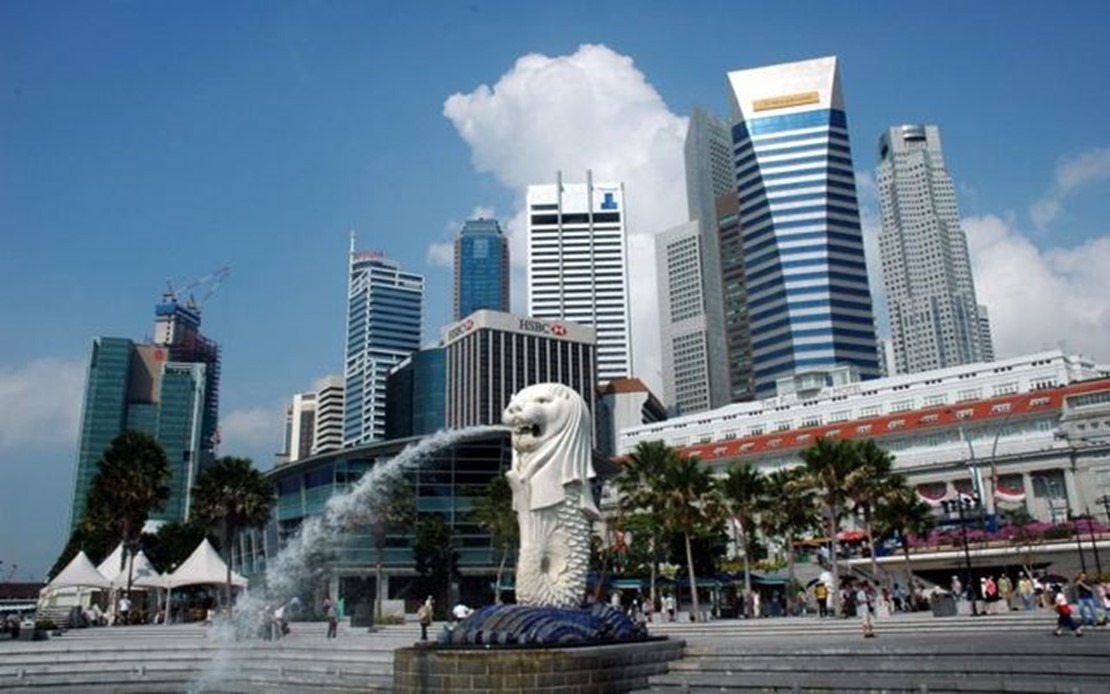
Singapore's environmental authorities have placed their haze response machinery on high alert, with the National Environment Agency confirming it stands ready to deploy contingency measures should air pollution breach critical thresholds in the coming weeks. The announcement, made as smoke from fires across the Indonesian archipelago drifts toward the city-state, reflects the persistent vulnerability of Southeast Asia's most developed economy to transboundary haze — a phenomenon that has disrupted the region for decades.
The timing of Singapore's preparedness statement underscores the seasonal nature of this recurring crisis. Dry conditions extending across parts of Sumatra and Kalimantan have created ideal conditions for fires to proliferate, a pattern that climatologists have linked to the broader Asian dry season and the influence of weather patterns such as the Indian Ocean Dipole. On Sunday, the 24-hour Pollutant Standards Index reading in Singapore's Central region stood at 81, comfortably within moderate levels, yet the trajectory of air quality remains uncertain given prevailing meteorological forecasts.
The Haze Task Force operates on a clearly defined escalation framework that hinges on PSI readings exceeding 100, the threshold marking the transition into the unhealthy category. Should measurements cross this boundary, the National Environment Agency will commence issuing daily haze advisories providing both current air quality data and 24-hour forecasts, enabling residents and business operators to make informed decisions about outdoor activities, events scheduling, and health precautions. This transparent communication protocol represents a substantial improvement from earlier decades when haze information remained sparse and unreliable.
For Malaysian readers, Singapore's predicament carries direct relevance. The regional fire hotspots that concern Singapore's authorities similarly threaten Malaysia, particularly the eastern peninsular states and Sarawak, which have experienced severe haze episodes during previous dry seasons. The fact that Singapore — with its advanced air quality monitoring infrastructure and substantial economic resources — must nonetheless prepare contingency responses demonstrates that no nation within the region can independently insulate itself from transboundary pollution. This interdependence underscores the necessity for coordinated regional action rather than isolated national responses.
The specific identification of southern Sumatra as a particular concern reflects current wind patterns and fire distribution. Southeasterly winds predominating during this period create a natural corridor for smoke transport toward Singapore's relatively confined airspace, where atmospheric conditions can concentrate pollutants to dangerous levels within confined urban areas. The southeastern winds operating as a vector for pollution create an asymmetry in regional exposure, with downwind nations bearing disproportionate burden regardless of where fires originate.
Weather forecasters have already cautioned that dry conditions will likely persist throughout the coming week, a projection that carries troubling implications for fire management. Unlike short-term weather disruptions, sustained dry spells eliminate the natural fire suppression mechanism that rainfall provides. In such conditions, fires spread more rapidly across vegetation and peatlands, generating the voluminous smoke plumes that overwhelm even sophisticated air purification systems. The multiplication effect of numerous concurrent fires across vast territories creates an aggregated pollution load that exceeds simple summation of individual fire impacts.
Singapore's institutional capacity to monitor and respond to haze reflects substantial investments in environmental governance infrastructure that most Southeast Asian nations lack. The National Environment Agency operates multiple air quality monitoring stations throughout the island-state, generating granular, real-time data that feeds into predictive models and public warning systems. This technical apparatus, while impressive, cannot alter the fundamental reality that haze prevention fundamentally depends on fire suppression in source regions — a challenge requiring coordination across international borders and cooperation among multiple jurisdictions with varying capacities and priorities.
The economic implications of haze events for Singapore extend well beyond immediate health concerns. Previous haze episodes have disrupted aviation operations, suppressed tourism, reduced labour productivity across outdoor industries, and prompted business disruptions as companies implement work-from-home protocols during severe pollution episodes. The financial costs accumulate rapidly, creating incentives for robust preparedness despite the inherent uncertainties regarding whether contingency plans will ultimately be activated. From a public health perspective, even moderate PSI levels carry documented consequences for respiratory conditions, particularly among children, elderly populations, and those with pre-existing pulmonary or cardiovascular conditions.
The notification system described by the National Environment Agency represents a communication strategy designed to empower public decision-making rather than imposing restrictions. By providing daily forecasts alongside current readings, authorities enable individuals and organisations to self-regulate behaviour — parents might adjust children's outdoor activities, schools might modify sports schedules, and companies might implement flexible working arrangements — without formal governmental mandates. This approach leverages decentralised decision-making informed by reliable data, a model that contrasts with more heavy-handed regulatory interventions.
Looking forward, Singapore's haze management strategy reflects the reality that Southeast Asian nations must simultaneously pursue short-term contingency planning and long-term structural solutions addressing the root causes of fire proliferation. The region's economic development model has historically treated fire as an agricultural management tool and land-clearing mechanism, particularly in peatland regions where fires can smoulder for months beneath the surface, releasing extraordinary quantities of smoke despite relatively modest flames. Transitioning toward sustainable land management practices in source regions remains essential, though progress has been frustratingly gradual given competing economic pressures and governance challenges across the Indonesian archipelago.
For Malaysia, Singapore's mobilisation of haze response protocols offers a reminder that the coming weeks may bring similar challenges to domestic air quality, particularly in Peninsular Malaysia's eastern states and throughout Sarawak. The seasonal pattern, while somewhat predictable, consistently generates public health impacts and economic disruptions that warrant serious preparedness measures. Regional cooperation mechanisms, though imperfect, provide the only viable framework for addressing transboundary pollution that respects no political boundaries and recognises no diplomatic protocols. Singapore's stance effectively signals that monitoring, preparation, and communication represent necessary complementary elements of a comprehensive haze response strategy.

