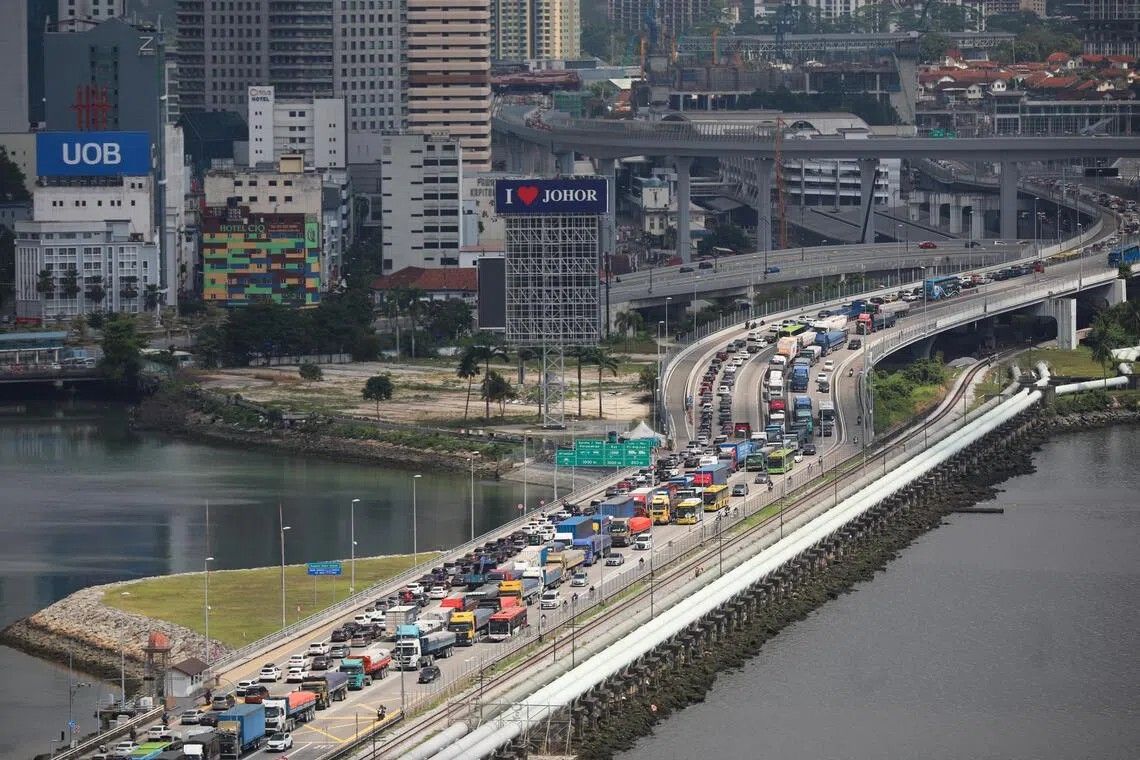
Travellers crossing into Singapore via the two main land checkpoints should prepare for considerable delays over the National Day long weekend between August 7 and 10, as the Immigration and Checkpoints Authority (ICA) flagged expectations of what it described as "very heavy traffic" flows. The advisory, released on August 3, reflects growing concern about checkpoint congestion during holiday periods, particularly given recent precedent during comparable festive breaks.
The ICA's guidance emphasises forward planning as the most effective mitigation strategy, recommending that motorists avoid traditional rush hours and instead opt for travel windows in the early morning or late evening when throughput tends to be considerably higher. Prospective travellers are also advised to check real-time traffic updates at both checkpoints before commencing their journey, allowing them to make informed decisions about timing and potentially which crossing point might offer a smoother passage.
The checkpoint strain reflects the sheer scale of cross-border movement during holiday periods. Between May 26 and June 28—a window encompassing Hari Raya Haji observances, Vesak Day celebrations, and June school holidays—more than 18 million travellers cleared the Woodlands and Tuas checkpoints. This extraordinary volume underscores how deeply interconnected the Singapore-Malaysia border has become for both work commuters and holiday travellers.
The pressure reached unprecedented levels during this earlier period. On June 19 alone, more than 598,000 people successfully completed immigration checks at the two checkpoints, exceeding the previous daily record of 589,000 set on December 19, 2025. During peak movement hours, particularly during mornings and late afternoons, motorists endured waiting periods stretching to three hours simply to clear immigration formalities, with substantial tailbacks extending well into Malaysian territory adding to the frustration.
Beyond the procedural bottlenecks, the ICA has intensified security protocols since February 28 in response to the broader global security landscape, particularly following geopolitical developments affecting the Middle East region. These enhanced measures, while necessary, inevitably add further time to the clearance process, compounding delays during peak periods and making the August 7-10 window particularly challenging for planners.
Technology represents a significant tool for reducing queue times, and the authority actively encourages adoption of digital solutions. The MyICA mobile application, which generates QR codes for expedited immigration processing, allows travellers to substantially reduce their processing duration. For motorcycle riders and their passengers, facial recognition technology incorporated within the ICA's New Clearance Concept has delivered measurable improvements, accelerating departure-period clearance rates by more than 35 per cent—equivalent to an additional 7,600 travellers per hour—compared with pre-pandemic 2019 benchmarks.
Behavioural factors significantly influence overall checkpoint efficiency, and the ICA has emphasised that traveller conduct directly impacts everyone's experience. Queue discipline remains critical; the authority specifically highlighted that cutting across lanes or jumping queues disrupts traffic flow and extends delays for compliant motorists. During the May-to-June holiday period, 52 motorists were apprehended for traffic violations and dangerous conduct. Enforcement responses include directing offenders to complete U-turns and rejoin queues at the rear, referrals to Traffic Police for formal investigation and prosecution, and in serious cases, temporary or permanent bans from entering Singapore.
For Malaysian readers, particularly those accustomed to crossing regularly for work or family visits, the checkpoint announcement carries immediate practical implications. The National Day weekend represents a concentrated surge period when recreational travellers join the usual commuter flows, creating exponentially higher congestion than typical weekday crossing patterns. Those with flexibility should consider postponing non-essential trips to the following week when traffic normalisation occurs.
The situation also highlights ongoing infrastructure and processing capacity questions at one of Asia's busiest land borders. While technological innovations like facial recognition and QR-code processing have meaningfully improved throughput, the fundamental constraint remains: physical checkpoint capacity during extreme peak periods cannot expand indefinitely. This reality underscores why voluntary timing adjustments by individual travellers yield perhaps the most practical congestion mitigation approach.
Cooperation between Singapore and Malaysia regarding border management infrastructure remains important context. Cross-border trading, employment commuting, and family connections mean that checkpoint efficiency affects millions of people across both nations. The ICA's proactive communication about anticipated congestion—rather than allowing surprise delays—reflects recognition that advance warning enables better individual decision-making.
For those determined to cross during the National Day weekend, the practical takeaway remains consistent with ICA guidance: depart extraordinarily early, use mobile app QR codes, maintain disciplined lane conduct, and anticipate substantial delays as the cost of travelling during the most congested periods.

