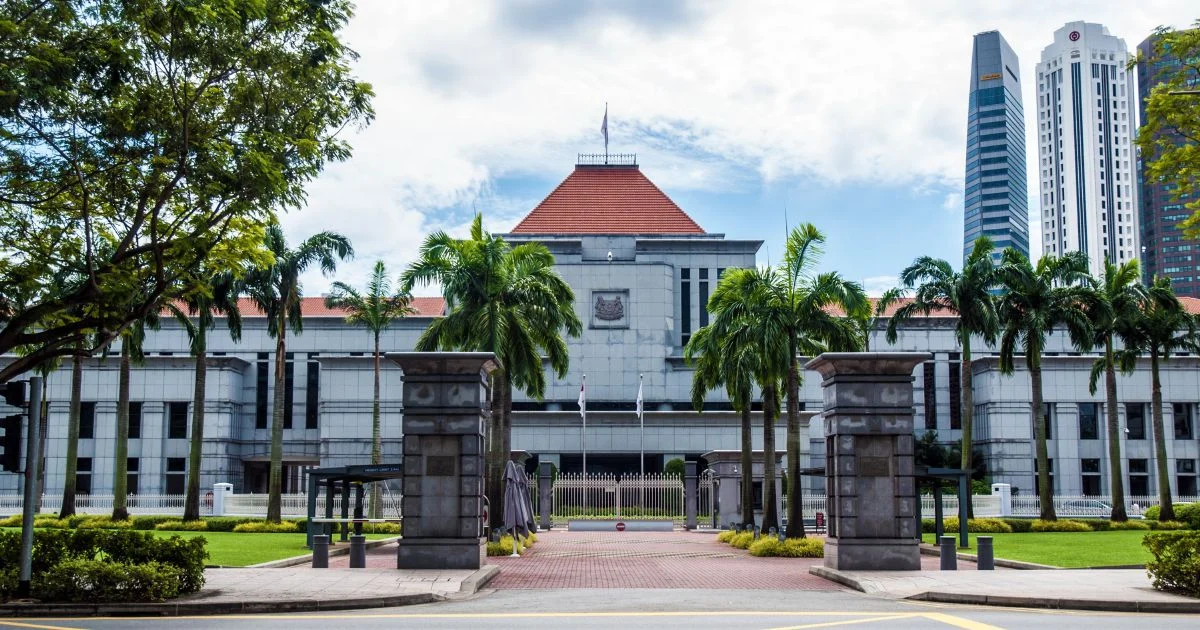
Singapore's police force announced the arrest of a 40-year-old male resident in connection with a series of anonymous bomb threats directed at two significant government installations. The suspect was taken into custody following an investigation into threats made against Parliament House and the Home Team Science and Technology Agency (HTX), a key government body responsible for developing technological solutions in law enforcement and home affairs.
The arrest represents a significant development in what authorities treated as a serious security incident affecting critical national institutions. Parliament House remains one of Singapore's most sensitive locations, housing the nation's legislative body and requiring stringent security protocols. Similarly, HTX operates on the frontline of national security technology, making threats against either institution a matter of considerable concern for the authorities.
Police investigations into anonymous threat cases typically involve tracing digital communications and coordinating with telecommunications providers to identify senders. The successful identification of the suspect in this instance demonstrates the capabilities of Singapore's law enforcement in handling cybercriminals and those who exploit communication channels to make threats. For Malaysian observers, this development underscores the growing importance of digital forensics in Southeast Asian policing.
Bomb threats, whether credible or not, trigger substantial institutional and resource responses. Security personnel must conduct building evacuations and sweeps, disrupting operations and requiring trained bomb detection specialists. The economic cost of such threats extends beyond immediate security measures to include lost productivity and potential psychological impacts on staff and visitors. In Singapore's context, any disruption to parliamentary proceedings or government operations draws considerable scrutiny.
The nature of anonymous threats in the digital age presents law enforcement agencies across Southeast Asia with evolving challenges. Individuals may assume anonymity through various technological means, yet persistent digital trails often provide investigators with viable leads. The Singapore Police Force's success in this case reinforces the reality that digital anonymity remains elusive when investigators possess adequate technical resources and legal authority to trace communications.
The incident highlights the broader regional context of security threats facing government institutions. Southeast Asian governments increasingly face challenges from individuals motivated by various ideologies, personal grievances, or simply the desire for notoriety. Singapore's rapid response and successful apprehension demonstrate institutional readiness, though such threats continue to recur periodically across the region.
For Malaysia and other neighbouring countries, the Singapore case offers lessons in rapid threat assessment and digital investigation capabilities. As governments across Southeast Asia modernise their law enforcement infrastructure, investment in cyber investigation units and digital forensic expertise becomes increasingly essential. The ability to swiftly identify and apprehend those behind anonymous threats protects both public confidence and critical infrastructure.
The arrested individual faces investigation under Singapore's criminal law provisions governing threats and public safety offences. The city-state maintains strict legislation regarding bomb threats and related offences, reflecting the government's zero-tolerance approach to threats against national institutions. Charges and court proceedings will likely occur following the completion of police investigations, with outcomes potentially setting precedents for similar cases across the region.
The psychological aspect of bomb threats deserves consideration alongside their security dimensions. Such threats, regardless of their credibility, induce fear and uncertainty among staff and the public. They test institutional crisis management protocols and the resolve of security personnel. Singapore's parliamentary establishment, accustomed to operating under heightened security, nonetheless must absorb the operational disruption caused by such incidents.
From a regional perspective, this arrest reinforces Singapore's position as a jurisdiction where sophisticated crime investigation capabilities translate into successful law enforcement outcomes. For Malaysian security agencies and those throughout Southeast Asia, observing counterpart nations' successes in investigating and prosecuting digital crimes provides valuable benchmarks. Collaborative approaches to cross-border cybercrime and threats increasingly define regional law enforcement cooperation.
The incident concludes with an arrest but opens questions about motivation and circumstances that will emerge during judicial proceedings. Whether the threat originated from political frustration, mental health crises, or deliberate attempts to disrupt governance remains to be established. Understanding these factors informs both public comprehension and policy responses to similar future incidents.

