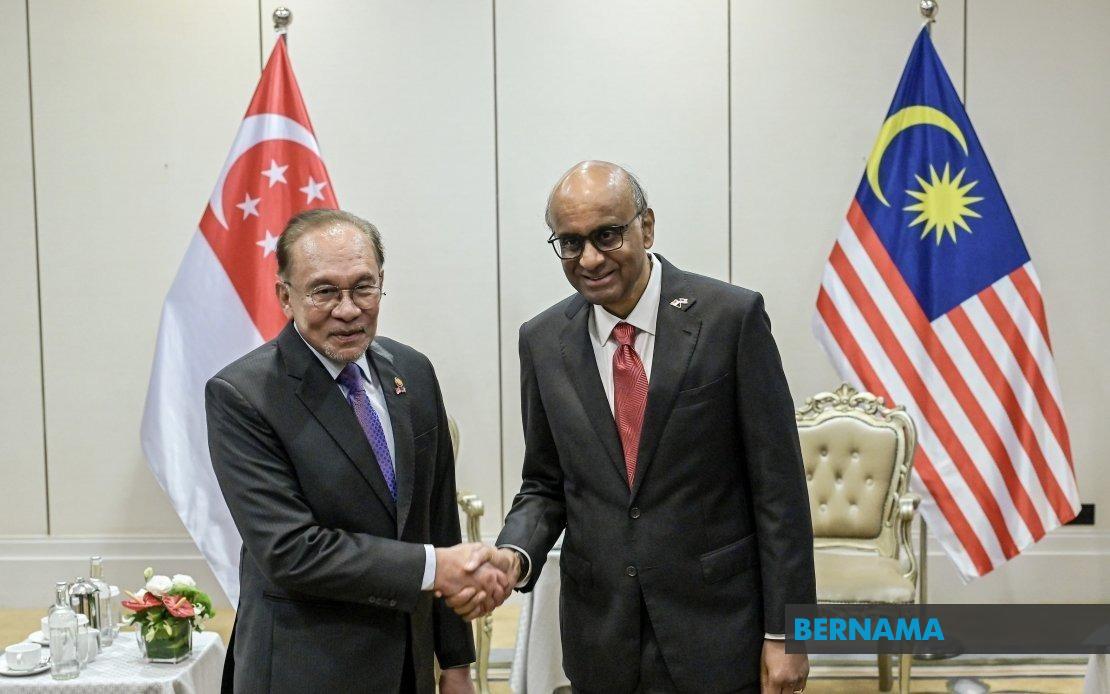
Prime Minister Datuk Seri Anwar Ibrahim and Singapore's President Tharman Shanmugaratnam have pledged to expand bilateral cooperation across multiple strategic domains, signalling a significant strengthening of ties between the two neighbours. The commitment emerged during a courtesy call on Monday as part of Tharman's inaugural state visit to Malaysia, which runs through July 15. The dual emphasis on food security and energy reflects shared vulnerabilities in the region, where both nations depend heavily on supply chains and regional stability to sustain their economies and growing populations.
The Singapore Foreign Ministry outlined that discussions ranged beyond economic matters to encompass broader geopolitical considerations. Both leaders underscored their commitment to international law, particularly the United Nations Convention on the Law of the Sea (UNCLOS), and reaffirmed the principle of freedom of navigation—issues of paramount importance in a region where maritime trade routes carry trillions of dollars in annual commerce. This emphasis gains weight against the backdrop of escalating tensions in West Asia, which the two leaders examined in detail, assessing how distant conflicts might ripple through Southeast Asian waters and trade networks.
For Malaysia, the timing of these discussions carries particular significance. The nation faces mounting pressures on multiple fronts: ensuring adequate food supplies for its 34 million residents whilst managing agricultural challenges from climate volatility, and securing reliable energy supplies to power continued economic development. Singapore, densely populated and heavily reliant on imports, shares these concerns acutely. By formalising cooperation frameworks in these sectors, both nations position themselves to weather potential supply disruptions and work collaboratively to stabilise regional markets rather than competing for scarce resources.
President Tharman's visit itself represents a diplomatic milestone. As Singapore's head of state, his inaugural state visit to Malaysia underscores the symbolic importance both governments place on the bilateral relationship. The formal welcome at Istana Negara, where Tharman and his wife Jane Ittogi Shanmugaratnam were received by His Majesty Sultan Ibrahim, King of Malaysia, and Her Majesty Raja Zarith Sofiah, Queen of Malaysia, demonstrated the highest protocol honours. Such ceremonial gestures, whilst often overlooked in policy discussions, serve to reinforce public commitment to closer ties and signal to domestic constituencies that engagement remains a priority.
Beyond the national capital, the visit extended to Selangor, Malaysia's most economically dynamic state. Tharman's engagement with Sultan Sharafuddin Idris Shah and Menteri Besar Datuk Seri Amirudin Shari reveals a deliberate strategy to deepen relationships at the sub-national level. This approach acknowledges Selangor's economic weight and its role as a hub for innovation and enterprise within Malaysia. The discussions centred on technical and vocational education, climate adaptation, flood mitigation, and the emerging start-up ecosystem—all areas where Singapore's expertise and capital could provide valuable support.
The emphasis on technical and vocational education addresses a critical skills gap across Southeast Asia. As regional economies increasingly demand workers trained in advanced manufacturing, renewable energy, and digital technologies, Malaysia and Singapore can collaborate on curriculum development and trainer exchange programmes. Such initiatives create tangible benefits for ordinary citizens whilst building intellectual capital that strengthens both economies. Singapore's well-established reputation for technical training excellence offers a natural partnership opportunity for Malaysia's institutions seeking to elevate standards.
Climate adaptation and flood mitigation initiatives assume heightened urgency given both nations' exposure to seasonal flooding and rising sea levels. Malaysia experiences regular flooding during monsoon seasons, whilst Singapore's low elevation makes it vulnerable to tidal inundation. Collaborative research, early warning systems, and infrastructure planning could yield solutions applicable across the region. Tharman's receptiveness to deeper Selangor cooperation suggests Singapore recognises mutual benefit in pooling resources and expertise to address environmental challenges that transcend borders.
The growth of start-ups emerged as another collaboration pillar, reflecting broader regional trends. Southeast Asia has become a significant hub for technology ventures and digital entrepreneurship, attracting billions in venture capital. Singapore's mature fintech ecosystem and innovation infrastructure can mentor Malaysian enterprises, whilst Malaysia's larger domestic market and lower operational costs attract Singapore-based founders. Cross-border collaboration in this arena generates jobs, technology transfer, and higher-value economic activity beyond traditional manufacturing and trade.
These initiatives fit within a larger strategic calculus for both nations. Malaysia seeks to leverage Singapore's developmental expertise and capital access whilst diversifying economic partnerships. Singapore, facing demographic constraints and limited natural resources, recognises that regional prosperity and stability directly serve its interests. By investing in Malaysian capabilities and markets, Singapore creates favourable conditions for its own growth and security. This relationship, grounded in enlightened self-interest rather than charity, has proven resilient through multiple regional crises and shifting geopolitical alignments.
The regional context amplifies the significance of this strengthened commitment. With major powers increasingly asserting influence in Southeast Asia and competition for resources intensifying, smaller nations benefit from deepening mutual cooperation. Malaysia and Singapore, despite occasional bilateral tensions, have repeatedly demonstrated their capacity to transcend disagreements and identify common ground. This latest round of pledges continues that tradition whilst addressing contemporary challenges that neither nation can effectively tackle alone.
Looking forward, the success of these initiatives depends on translating political goodwill into concrete programmes and institutional mechanisms. Regular ministerial dialogues, joint task forces, and implementation timelines will determine whether July's pledges become substantive partnerships or fade into diplomatic archives. Both governments understand this calculus, suggesting serious intent behind the rhetoric. For Malaysian and Singaporean citizens, the real measure will be whether these cooperation frameworks translate into greater food security, cheaper energy, better education, and protection against environmental threats.

