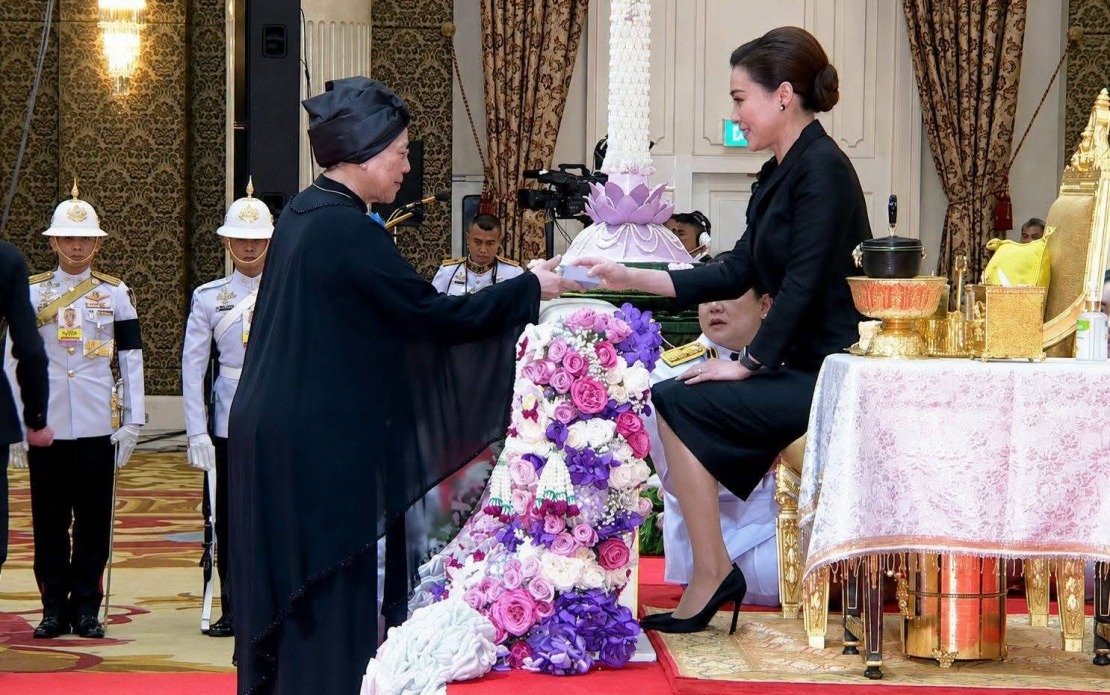
Prime Minister Datuk Seri Anwar Ibrahim and his wife, Datuk Seri Dr Wan Azizah Wan Ismail, have extended their congratulations to Prof Emerita Tan Sri Datuk Seri Dr Sharifah Hapsah Syed Hasan Shahabudin following her conferment of the 'Outstanding Woman Award for Social Development' in Thailand. The honour, bestowed by Queen Suthida Bajrasudhabimalalakshana, marks another significant milestone for Malaysian representation in regional forums that celebrate women's advancement and societal contributions.
Anwar's public recognition of this achievement carries symbolic weight beyond the immediate honour itself. In his statement on social media, the Prime Minister emphasised that the award transcends personal recognition, instead serving as a testament to the calibre and capability of Malaysian women broadly. This framing reflects a deliberate government narrative positioning women's achievement as intrinsically linked to national advancement and international standing. For a country navigating complex regional relationships and seeking to enhance its soft power credentials, such recognitions become diplomatic touchstones that reinforce Malaysia's commitment to inclusive development.
The award underscores a broader pattern of Malaysian women gaining traction on international stages, particularly within Southeast Asian contexts where regional cooperation frameworks have increasingly centred gender equality and women's leadership. Thailand's decision to honour a Malaysian academic and professional speaks to the cross-border resonance of women-focused social development work in the region. This inter-ASEAN recognition carries particular relevance as member states collectively pursue sustainable development objectives and social cohesion initiatives that rely heavily on women's participation and expertise.
Anwar's emphasis on how this recognition should inspire further female participation demonstrates the government's strategic approach to gender mainstreaming. By linking individual achievement to collective aspiration, the Prime Minister attempts to create a narrative momentum whereby women's success becomes normalised rather than exceptional. His call for women to contribute through knowledge, leadership and compassion provides a values-based framework that extends beyond tokenistic inclusion to substantive engagement in nation-building exercises.
The reference to the Malaysia MADANI agenda in Anwar's statement explicitly connects women's advancement to the government's broader development philosophy. MADANI, which emphasises prosperity, dignity, and inclusivity, theoretically positions gender advancement as foundational rather than supplementary to national progress. This integration signals that Malaysian policymakers view women's leadership not as a diversity consideration but as essential infrastructure for achieving developmental goals. Whether this rhetorical commitment translates into concrete budgetary allocation and structural reform remains an ongoing measure of government sincerity.
Sharifah Hapsah's background and the nature of her recognised contributions merit closer examination for Malaysian audiences. Her work in social development suggests expertise in areas ranging from education to community welfare, potentially touching upon health, poverty alleviation, or institutional reform. For regional observers, understanding the specific domains in which Malaysian women are gaining international recognition helps identify comparative advantages and sectoral strengths that Southeast Asian economies might leverage in competitive global markets where skilled, experienced female leadership becomes increasingly valuable.
The government's explicit commitment to expanding opportunities for women across various sectors addresses longstanding critiques regarding unequal advancement rates in certain industries and governance levels. Malaysian labour market data has historically revealed persistent gender pay gaps and underrepresentation of women in senior positions across both public and private sectors. Public statements linking international recognition to domestic policy commitment create accountability mechanisms, albeit informal ones, that civil society organisations and gender advocates can reference when monitoring implementation of stated priorities.
Thailand's role as the award-granting nation adds a regional dimension worth considering. Thai-Malaysian relations encompass trade, security, and cultural dimensions, with gender and social development representing shared policy concerns. Awards that flow between neighbouring nations, particularly those centred on societal contributions, reinforce people-to-people connections and demonstrate that regional cooperation extends beyond economic metrics to encompass social progress. This soft power dimension helps explain why government leadership publicly celebrates such honours.
The timing and nature of Anwar's response, delivered through social media platforms with wide reach, reflects contemporary communication strategies where heads of government bypass traditional media gatekeepers to directly address populations. This approach allows for rapid dissemination of messages reinforcing specific policy narratives and national values. For Malaysian audiences, such posts serve as periodic reminders of government positions on women's roles while signalling to international observers the administration's rhetorical commitment to gender-inclusive governance.
Looking forward, the sustainability of women's advancement in Malaysia will depend on institutional mechanisms that move beyond ceremonial recognition. While international awards provide valuable visibility and external validation, systemic barriers within Malaysian institutions—including persistent cultural assumptions about gender roles, inadequate childcare infrastructure, and limited mentorship pathways—require sustained attention and resource allocation. The gap between celebratory rhetoric and transformative policy remains significant across most Southeast Asian economies.
For Malaysian women navigating professional environments, Sharifah Hapsah's recognition offers both inspiration and a measuring stick against which to assess actual opportunity structures within their own sectors. The award validates the potential for Malaysian women to achieve regional and international prominence, yet its impact on everyday advancement for ordinary professionals depends on complementary initiatives addressing recruitment, retention, promotion equity, and workplace culture. Government statements affirming women's importance require complementary action within civil service, judiciary, corporate boards, and academic institutions where gatekeeping decisions substantially influence who rises and who remains constrained.

