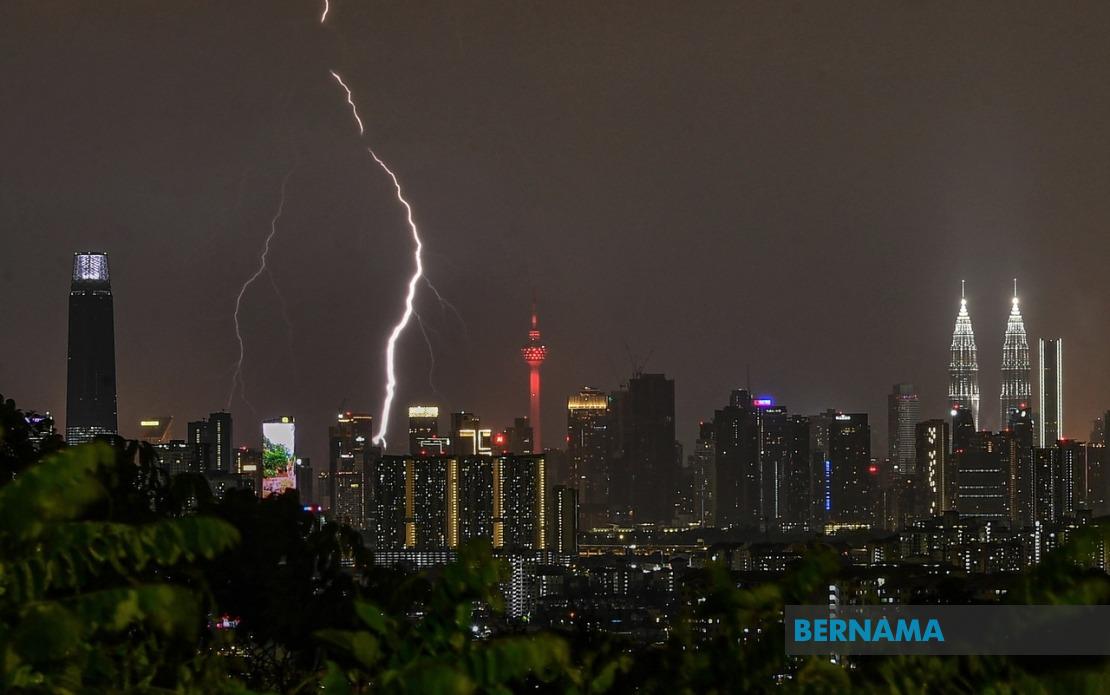
The Malaysian Meteorological Department issued an urgent weather warning on Thursday afternoon, alerting residents across Kuala Lumpur and eight states to prepare for severe thunderstorms, intense rainfall and powerful winds anticipated to continue until 5 pm. The alert, released at 2 pm, underscores the intensifying atmospheric conditions expected to impact large swaths of the Malaysian peninsula during the afternoon and early evening hours, with authorities urging the public to remain vigilant and stay informed of any changes to the forecast.
The warning encompasses the entire states of Melaka and Penang, placing over one million residents across these two major population centres on notice. Both states, with their significant urban and coastal populations, stand to experience the brunt of the severe weather system, raising concerns about potential flooding in low-lying areas and disruptions to daily activities across these commercially important regions.
In Kedah, the meteorological department has specifically identified five districts requiring heightened alert: Kuala Muda, Sik, Baling, Kulim and Bandar Baharu. These northern peninsular districts, some of which are agriculture-dependent areas, face risks from waterlogged fields and temporary disruptions to rural transportation networks. The warning demonstrates the selective nature of the weather system, which appears concentrated in certain geographic pockets rather than affecting the entire state uniformly.
Perak's warning coverage extends across an expansive list of nine districts spanning both the western and central regions of the state. Kerian, Larut, Matang and Selama in the western lowlands face immediate flooding risks, while the inland districts of Hulu Perak, Kuala Kangsar, Kinta, Kampar and Batang Padang may experience disruptions compounded by the state's topography and drainage systems. This broad distribution suggests a weather system of considerable geographic breadth sweeping through the state.
Pahang's six affected districts—Cameron Highlands, Lipis, Raub, Bentong, Pekan and Rompin—represent a mix of upland and coastal areas. The inclusion of Cameron Highlands, Malaysia's principal highland agricultural region, carries particular significance given the vulnerability of tea plantations and vegetable farms to heavy downpours and potential landslides on steep terrain. Coastal Pekan and Rompin face storm surge and waterlogging concerns specific to their maritime exposure.
Selangor, Malaysia's most densely populated state and economic engine, confronts weather warnings across seven districts. Sabak Bernam and Kuala Selangor on the northern coast, alongside the central urban districts of Klang, Gombak, Petaling and Hulu Langat, encompass both industrial zones and residential areas where flash flooding poses significant risks to property and public safety. Hulu Selangor's inclusion indicates the system's reach into the state's interior regions as well.
Negeri Sembilan's Jelebu district faces isolated impacts within the state, suggesting the storm system maintains patchy geographic coverage. Meanwhile, Johor's six warned districts—Tangkak, Segamat, Muar, Batu Pahat, Kluang and Mersing—stretch across the state's interior and eastern coastline, indicating the weather disturbance extends into Malaysia's southernmost peninsula territory, affecting both agricultural heartlands and tourism-dependent coastal areas.
For residents and businesses across these multiple jurisdictions, the afternoon weather warning creates immediate planning challenges. Schools may face dismissal decisions, construction sites require temporary suspension of elevated operations, and transportation operators must prepare for potential route disruptions or delays. The five-hour warning window, while providing some lead time, remains relatively compressed for comprehensive public preparedness.
The meteorological department's explicit advisories emphasise the importance of real-time monitoring and rapid response to updated forecasts. Weather conditions in tropical maritime environments like Malaysia can shift with minimal advance warning, and the notation that conditions may change reflects the inherent unpredictability of atmospheric systems during transitional periods. Residents are encouraged to avoid unnecessary outdoor activities, secure loose outdoor items, and maintain awareness of local flood-prone locations.
Beyond the immediate afternoon period, this weather event highlights broader patterns of seasonal weather volatility affecting Malaysia. The Southwest Monsoon period typically brings occasional thunderstorm activity, yet the geographic extent and concurrent timing across such numerous districts suggests a more organised weather system, possibly associated with a mesoscale convective complex or similar atmospheric phenomenon. Understanding these patterns remains crucial for longer-term planning across agriculture, construction, tourism and other weather-sensitive sectors throughout the peninsula.
For commuters and the general public navigating the affected regions during the warning period, exercise enhanced caution on roadways where visibility may be severely compromised, drainage systems potentially overwhelmed, and surface water accumulation creating hazardous driving conditions. Outdoor events scheduled during this timeframe may require cancellation or postponement to ensure public safety and allow meteorological conditions to stabilise before activities resume.

