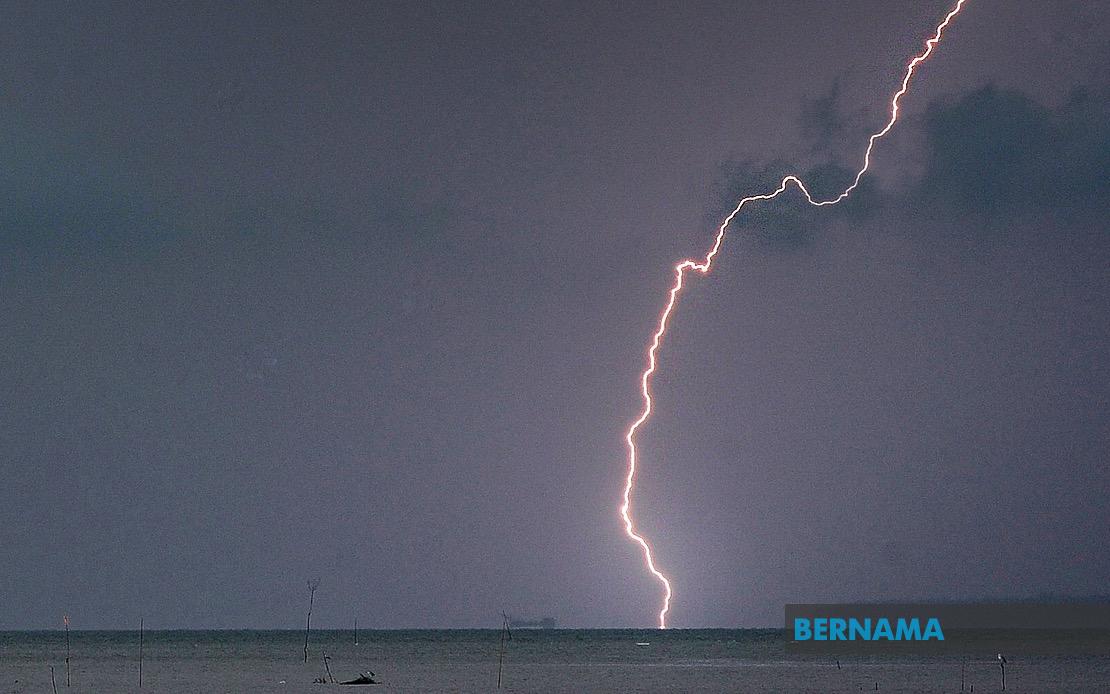
The Malaysian Meteorological Department has activated a weather alert spanning multiple regions across the peninsula and Sabah, warning residents and authorities to brace for potentially dangerous atmospheric conditions throughout the afternoon. The advisory, which remains in force until 5 pm, encompasses districts in Kedah, Perak, Terengganu, Pahang, Selangor, Johor, and Sabah, alongside the federal territory of Labuan, creating a widespread weather event affecting millions of people across the country's most densely populated and economically active zones.
In Kedah, the Baling district faces the brunt of the weather system, while Perak experiences the most extensive coverage of the advisory. Nine distinct areas within Perak are on alert, including Manjung, Kinta, Perak Tengah, Kampar, Bagan Datuk, Hilir Perak, Batang Padang, and Muallim. This concentration in Perak reflects the state's geographical positioning and its vulnerability to moisture-laden winds that characterise Malaysia's inter-monsoon periods, when convective thunderstorms develop with particular intensity.
Terengganu's east coast positioning makes it similarly susceptible to heavy precipitation events, with seven districts identified as at-risk zones: Setiu, Kuala Nerus, Hulu Terengganu, Kuala Terengganu, Marang, Dungun, and Kemaman. The inclusion of both coastal and inland districts in Terengganu suggests the weather system extends across the entire state, potentially affecting both population centres and rural communities. Pahang's vulnerable areas centre on its mountainous terrain and eastern reaches, with Tanah Tinggi Cameron, Lipis, Jerantut, and Kuantan all affected, indicating that the highland regions and the state's primary urban centre face simultaneous threats from heavy downpours.
Selangor's inclusion underscores the reach of this weather event into the Klang Valley region and its surrounding areas. The affected districts—Sabak Bernam, Kuala Selangor, Hulu Selangor, and Gombak—represent both peripheral and central zones of Malaysia's most developed state. For Selangor residents and businesses, such advisories carry significant practical implications, as heavy rain in these areas can disrupt transport networks, affect industrial operations, and create localised flooding in low-lying neighbourhoods. Johor similarly faces threats across six districts, including its southernmost points and major urban centres: Kluang, Mersing, Pontian, Kulai, Kota Tinggi, and Johor Bahru, suggesting the entire state from its borders with Pahang through to its southernmost reaches experiences weather instability.
In Sabah, the alert encompasses multiple regions including the Interior, West Coast, and specific districts such as Kuala Penyu, Beaufort, Tambunan, Beluran in Sandakan, and Kudat. The Sabah component of this weather advisory demonstrates that the atmospheric disturbance is not confined to Peninsular Malaysia but extends northward across the South China Sea region, affecting Sabah's interior highlands and coastal areas alike. The inclusion of both interior and coastal zones suggests a comprehensive weather system rather than a localised phenomenon, with implications for agriculture, transportation, and resource extraction activities that depend on stable weather conditions.
Thunderstorms of this scale, accompanied by strong winds and heavy rain, carry genuine hazards for residents and infrastructure. Flash flooding represents the primary concern in low-lying areas and near watercourses, while strong winds pose risks to structures, tree safety, and outdoor activities. The afternoon timeframe specified in the warning provides communities a critical window to prepare, securing loose items, avoiding unnecessary travel, and ensuring adequate drainage in vulnerable locations. For those working outdoors or operating businesses dependent on weather conditions, such alerts necessitate contingency planning and potentially operational adjustments.
The geographical distribution of this alert—spanning both Peninsular Malaysia's western and eastern corridors, as well as extending to Sabah—reflects the complex meteorological patterns that characterise the region. Malaysia's position near the equator, combined with surrounding seas and the influence of monsoon systems during transition periods, creates conditions conducive to sudden, intense convective rainfall. The simultaneous activation of alerts across such disparate regions suggests a significant atmospheric feature, potentially an inter-monsoon surge or the approach of an organised weather system capable of generating dangerous localised conditions.
For Malaysian authorities, such widespread advisories necessitate coordinated response mechanisms across state boundaries. Local government agencies, emergency services, and utilities must activate contingency protocols to manage potential flooding, traffic disruptions, and power outages. Residents, particularly those in flood-prone areas, should monitor updated forecasts and be prepared to implement household flood mitigation measures. Schools, businesses, and public events scheduled for the afternoon may face disruptions, and transport operators must assess conditions and advise commuters accordingly.
The specificity of the five-hour window—extending to 5 pm—suggests MetMalaysia's confidence in the weather system's duration and impact timeline. Forecasters likely anticipate that the convective activity will weaken during evening hours as atmospheric instability decreases. However, even after the official alert period concludes, residual rainfall and localized flooding may persist in affected areas, particularly those with poor drainage infrastructure or recent heavy rain history. Communities should remain vigilant even as conditions gradually improve toward evening and overnight.
For Southeast Asian readers beyond Malaysia's borders, this alert serves as a reminder of the region's shared vulnerability to severe weather events during inter-monsoon periods and monsoon transitions. Thailand, Indonesia, and other neighbours face similar challenges during comparable seasons, and the meteorological patterns affecting Malaysia often influence wider regional weather behaviour. Transnational coordination on weather monitoring and early warning systems remains an important component of regional disaster preparedness and climate resilience, particularly as climate variability increasingly characterises tropical meteorology across the ASEAN region.

