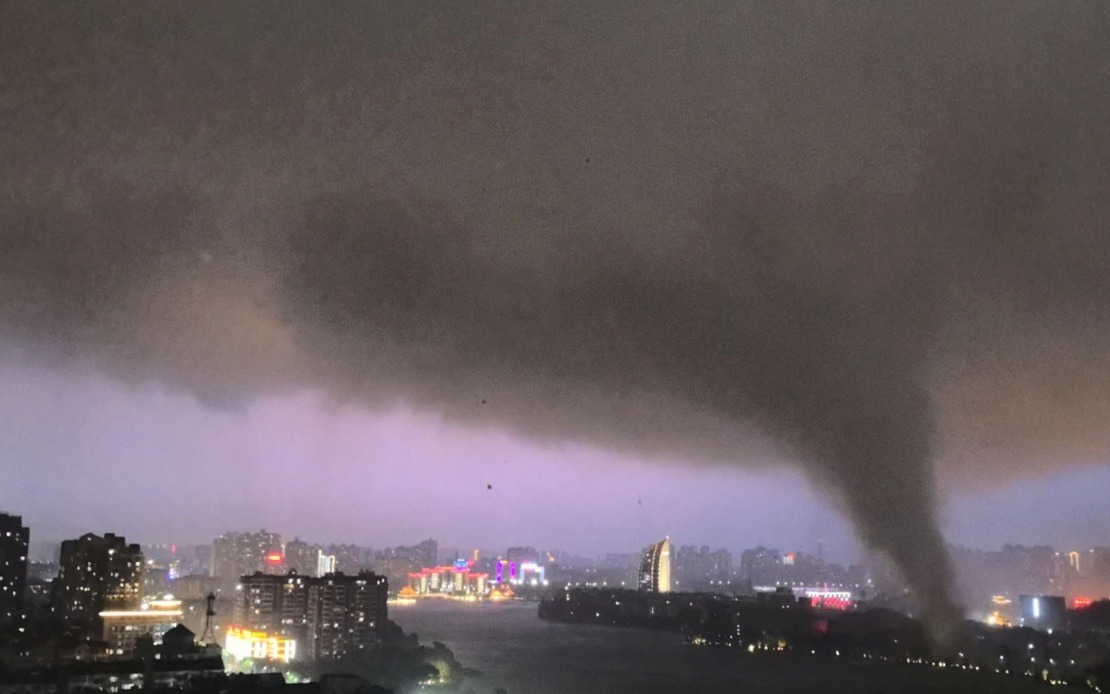
A severe weather system packing thunderstorms, destructive gales and tornadoes tore through four cities in eastern Hubei Province on Monday evening, claiming 11 lives and leaving one person unaccounted for, provincial authorities confirmed. The extreme weather event struck during a concentrated four-hour window between 7 pm and 11 pm, affecting the major urban centres of Huangshi, Huanggang, Ezhou and Xianning with particular ferocity.
The meteorological phenomenon that struck the region displayed the hallmarks of severe convective weather, with wind speeds in at least two townships reaching level 13 on the wind scale—gusts powerful enough to uproot trees and demolish structures. Multiple tornado formations were reported by local officials, indicating the atmospheric instability extended beyond typical thunderstorm conditions to more dangerous rotating wind systems that can cause concentrated damage along their paths.
The material destruction wrought by the four-hour onslaught proved extensive across the affected region. Emergency authorities documented the complete destruction of 22 buildings, with a further 4,855 structures sustaining damage of varying severity. This scale of building damage underscores both the intensity of the wind speeds and the wide geographic area over which the severe weather system maintained its strength. Beyond the structural toll, the storms also injured 331 residents across the affected communities, stretching local medical facilities and emergency response capabilities.
The missing person represents an ongoing search concern for rescue teams, who must work under the constraint that post-storm conditions often obscure victims or complicate location efforts. The combination of widespread structural damage, downed trees, debris fields and disrupted utilities creates hazardous conditions for search operations even as recovery efforts accelerate.
Responding to the crisis, Hubei Province has mobilised comprehensive rescue and relief operations across all affected municipalities. These coordinated efforts encompass immediate search and rescue operations to locate missing persons, medical assistance for the injured, structural assessments to identify buildings at risk of secondary collapse, and the restoration of essential services including power and water supply to communities. The scale of the disaster response reflects the seriousness with which Chinese authorities treat such extreme weather events, particularly where loss of life is involved.
A critical component of the provincial response strategy involves preventing secondary disasters—a particular concern following severe convective weather events. Damaged buildings risk further collapse under aftershocks or minor precipitation; downed power lines present electrocution hazards; blocked roads and debris fields create traffic dangers; and contaminated water supplies can emerge from damaged infrastructure. These cascading risks often claim additional victims or compound injuries in the aftermath of the initial weather event, making preventive measures essential to comprehensive disaster management.
For Southeast Asian readers, this incident underscores the growing frequency and intensity of extreme weather systems affecting the broader region, driven by shifting climate patterns and atmospheric circulation changes. While China's temperate zones experience different weather phenomena than Malaysia's tropical climate, the underlying meteorological dynamics increasingly produce volatile convective systems with minimal warning across East and Southeast Asia. The vulnerability demonstrated in Hubei—where modern urban infrastructure and emergency systems still sustained massive damage—highlights how even well-developed regions struggle when severe weather systems intensify.
The incident also reflects broader trends in disaster preparedness and response frameworks across the region. Malaysia and neighbouring countries, equally vulnerable to sudden meteorological extremes, can examine how China's multi-tiered response system activates during crises and how secondary disaster prevention is prioritised. The emphasis on coordinated relief efforts and systematic infrastructure assessment aligns with best practices increasingly adopted by ASEAN nations developing resilience protocols for extreme weather events.
Climate scientists have noted that the conditions producing these severe convective systems—particular combinations of atmospheric instability, wind shear, and moisture availability—appear to be shifting geographically and becoming more pronounced in temperate zones adjacent to tropical regions. This expansion zone concept has direct implications for Southeast Asia, where the interaction between monsoon systems, tropical heating, and midlatitude weather patterns could produce increasingly violent severe weather episodes affecting populations historically more familiar with steady rainfall than explosive convective systems.
The incident in Hubei Province occurred during China's peak summer weather season, when atmospheric instability reaches its annual maximum across eastern regions. The concentration of damage in four major cities suggests the system maintained remarkable coherence and intensity across significant distance, raising questions about what atmospheric conditions enabled such sustained severe weather development. Understanding these mechanisms helps meteorological services across Southeast Asia better forecast and warn of similar systems developing within their respective regions.

