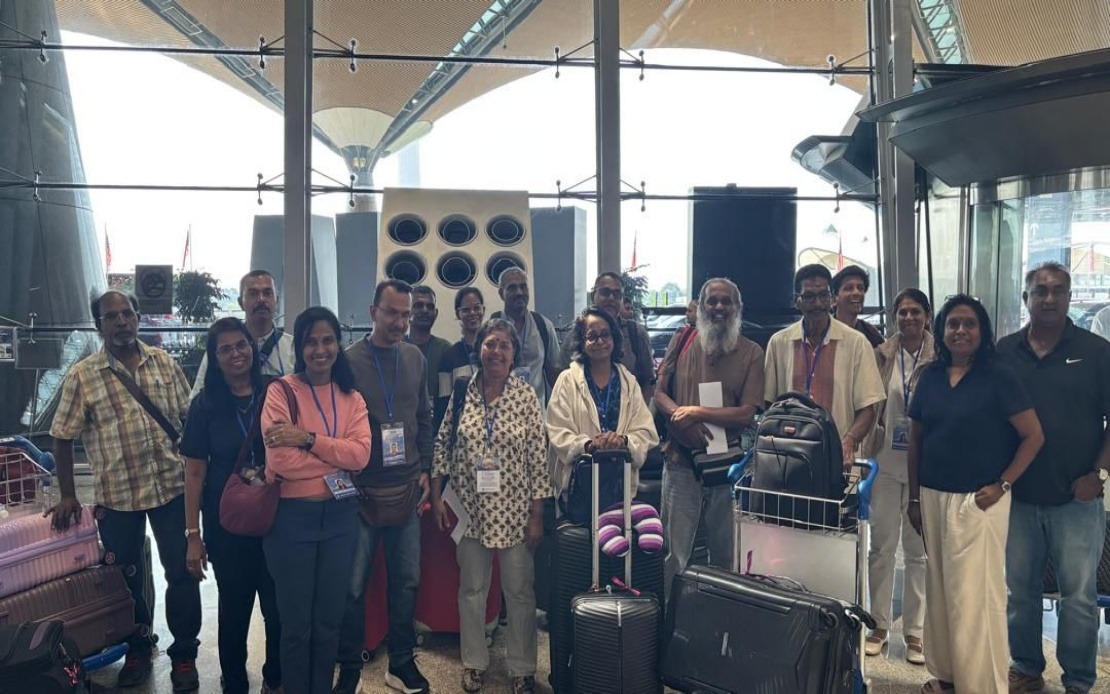
Seventeen Malaysians participating in a religious pilgrimage to Mount Kailash in Tibet have gone silent following catastrophic flash floods that struck the Nepal-Tibet border region, triggering an urgent coordinated response from Malaysian government agencies and raising acute anxiety among families back home. The pilgrimage group, organized by Kathmandu-based Fishtail Tours & Travels, lost all contact with the outside world on the morning of August 26 local time, precisely when they were positioned near the immigration checkpoint that marks the border crossing. The last traceable communication arrived at 8:40 am Malaysian Standard Time, a message received over WhatsApp just before the disaster unfolded. The group had entered Nepal on August 23 and was scheduled to complete their spiritual journey by September 5.
R. Logadashini, speaking on behalf of concerned family members, disclosed that four of her relatives were among those trapped in the communication blackout: her father S. Raman aged 59, mother M. Neelavany aged 54, uncle S. Murukan aged 60, and aunt G. Padmahwathi aged 58. The family's attempts to reconnect through the travel agency and the Malaysian Embassy in Kathmandu have yielded no substantive information regarding their condition or location. Logadashini's account underscores the profound uncertainty facing dozens of Malaysian families who have had no meaningful updates about their loved ones' circumstances since the disaster struck approximately 24 hours earlier.
The Ministry of Foreign Affairs reported that 55 Malaysians connected to the diplomatic mission in Kathmandu remained uncontactable in the immediate aftermath of the flooding, though authorities stressed they had received no official confirmation of fatalities among Malaysian nationals. This distinction between unconfirmed numbers and verified casualties reflects the chaotic information environment surrounding the disaster zone, where damaged infrastructure has severely degraded communication networks and hindered the coordination of rescue operations. The Malaysian Embassy in Kathmandu has assumed a central coordinating role, working in partnership with Nepalese authorities, specialized search and rescue teams, multiple travel agencies, and other relevant organizations to piece together information about the wellbeing and current whereabouts of the stranded Malaysians.
Prime Minister Datuk Seri Anwar Ibrahim issued urgent directives to all relevant government agencies, demanding they prioritize locating and establishing contact with affected Malaysian citizens. In response, Malaysian diplomatic missions stationed in Kathmandu and New Delhi have been mobilized as forward operating centers to coordinate relief efforts, liaison with Nepalese officials, and gather intelligence about the situation on the ground. This high-level governmental engagement reflects the seriousness with which Malaysian leadership views the potential loss of citizens abroad and demonstrates the diplomatic machinery being deployed to manage a developing humanitarian crisis.
The natural disaster itself was triggered by a combination of exceptionally intense rainfall and the sudden collapse of a glacial formation, phenomena that produced violent torrents of water through Nepal's Rasuwa and Nuwakot districts. These flash floods ravaged the principal thoroughfares connecting the affected mountain communities with Kathmandu, effectively isolating survivors and complicating the logistical challenges facing rescue teams attempting to reach victims. The particular route traversed by the Malaysian pilgrims serves as a critical corridor for religious travelers making the challenging journey to Mount Kailash as well as for mountaineers and trekkers heading toward the Mount Everest region, meaning that multiple groups from different nationalities may be affected by this catastrophe.
Contrastingly, a separate cohort of Malaysian pilgrims led by the internationally celebrated mountaineer Datuk N. Mohanadas has been confirmed safe and unaffected by the flooding disaster. Mohanadas's expedition comprises 56 individuals in total, encompassing 39 Malaysian citizens, four citizens from Singapore, and three from Canada, all of whom are continuing their sacred Mount Kailash circumambulation without impediment. In a statement reassuring the public, Mohanadas disclosed that whilst his group became aware of the severe weather conditions, sudden torrential downpours, flash flooding, and reported casualties occurring at the border crossing, their own location and travel route had been spared from the disaster's direct impact. The group has commenced the first phase of their three-day pilgrimage circuit around Mount Kailash, performing what Mohanadas described as the auspicious rituals associated with this spiritually significant journey.
The divergent outcomes experienced by these two pilgrimage groups underscore the unpredictable geographical nature of mountain disasters and the element of fortune that sometimes separates tragedy from safety in alpine regions. The Mohanadas group's confirmation of safety provides some reassurance to Malaysian citizens concerned about pilgrims in the region more broadly, yet it simultaneously highlights the urgent need to locate the missing Fishtail Tours group before weather conditions further deteriorate or rescue windows close permanently. The geographic separation between the two groups demonstrates that the disaster's impact zone, whilst severe, appears to have been relatively confined to the border crossing area rather than affecting all pilgrims traveling in Nepal toward Mount Kailash.
For Malaysian families awaiting news, the extended communication blackout represents an agonizing period of uncertainty. The group's positioning directly at the immigration checkpoint when the floods struck places them at the precise epicenter of the disaster, compounding concerns about their vulnerability. Standard pilgrimage itineraries at this location typically involve brief border formalities, meaning the group may have been caught in the open or at a processing facility when the deluge arrived. The specific timing of the last communication message—precisely aligned with the group's proximity to the checkpoint—suggests they encountered the floodwaters while in transition, potentially one of the most dangerous moments during the entire journey.
The flash floods in Nepal's Rasuwa and Nuwakot districts have drawn international attention as a reminder of the persistent risks associated with high-altitude pilgrimage and trekking in the Himalayas. The region's infrastructure, whilst adequate for normal conditions, remains vulnerable to extreme weather events and glacial hazards that can materialize with little warning. For Malaysia, which sends hundreds of pilgrims annually to Mount Kailash and maintains significant trekking tourism traffic through Nepal, this incident reinforces the importance of robust travel insurance, comprehensive pre-departure briefings about meteorological risks, and continuous diplomatic coordination with Nepalese authorities regarding safety protocols.
The Malaysian government's mobilization of resources and diplomatic channels reflects standard international practice when nationals face crisis situations abroad, yet the effectiveness of these efforts depends substantially on cooperation from Nepalese counterparts and the accessibility of the disaster zone. Rescue operations in mountainous terrain following natural disasters typically unfold slowly, constrained by terrain, weather, infrastructure damage, and the challenges of locating missing persons in remote areas. As hours pass with the Malaysian pilgrims remaining unreachable, the urgency of these coordinated response efforts intensifies, even as the technical obstacles to communication and rescue remain formidable in the damaged landscape of the border region.

