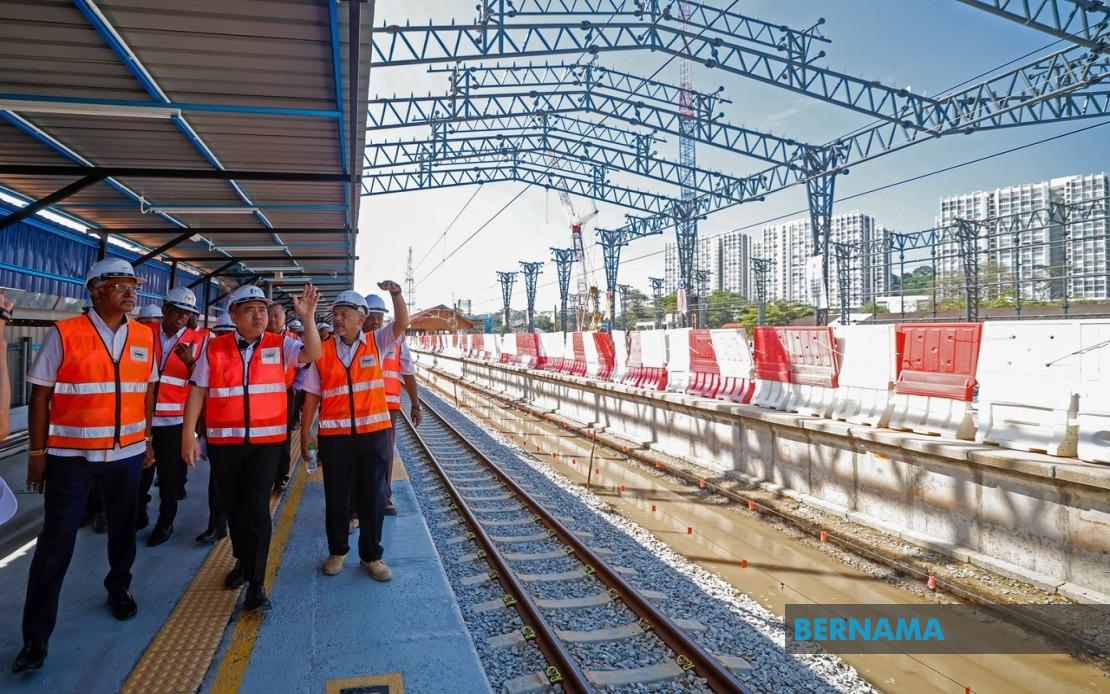
The long-awaited Seremban Sentral railway station project has passed a significant construction milestone, with Transport Minister Anthony Loke announcing that work on the RM100 million facility has reached 35 per cent completion as of July 2024. The station, designed to serve as a comprehensive modern transport interchange in the city, is tracking toward a March 2027 completion date, marking a substantial leap forward after years of preliminary work.
Loke, who serves as Member of Parliament for Seremban, explained that the initial phases of construction had proceeded deliberately rather than rapidly, as the project faced considerable technical hurdles. The most time-intensive element involved deep piling work that required precise positioning, coupled with the complex task of relocating underground utilities including electrical cables and infrastructure systems scattered beneath the site. These foundational tasks, though demanding considerable effort and expertise, have now been substantially resolved, paving the way for accelerated progress on visible superstructure elements.
With the groundwork phase largely concluded, construction teams can now concentrate on installing the station's defining architectural features. The roof structure, extensive glazing systems, and interior finishings will now take precedence, allowing the project to advance at a quickened pace. The Transport Minister characterised the overall endeavour as exceptionally challenging but noted that the completion of piling and utility relocation represents a watershed moment, transforming the project from its slow foundational phase into a more dynamic construction period.
The new Seremban Sentral station represents far more than simply a replacement facility. It will merge the historic Seremban KTMB station—which has served the public for over a century—with contemporary transport infrastructure, creating a unified and substantially more efficient passenger experience. The architectural design incorporates a green building philosophy and draws inspiration from traditional Minangkabau architectural styles, reflecting cultural sensitivities while embracing modern sustainability principles. Commercial spaces have been incorporated into the facility's design, contributing additional revenue streams and activating the transport hub beyond pure transit functions.
Capacity projections underscore the station's ambitious scope. In its initial operational phase, the facility is engineered to handle approximately 30,000 passengers daily, yet the modular design permits substantial future expansion to accommodate up to 120,000 passengers per day as demand warrants. This forward-thinking approach reflects planners' recognition that the region may experience significant demographic and economic growth over the coming decades. The station incorporates six platform positions overall, though only three will be constructed immediately, with the remaining three reserved for development as passenger volumes justify the investment.
The infrastructure design directly addresses previous operational challenges that have affected rail services in Seremban. A newly constructed sewerage system will channel rainwater directly into Sungai Temiang, bypassing the station precinct entirely. This engineering solution tackles the chronic flash-flooding problems that previously disrupted platform and track operations during heavy precipitation, a persistent issue that undermined service reliability. The comprehensive flood mitigation approach reflects lessons learned from years of operational difficulties and represents a material upgrade to service dependability.
Access and traffic management have received careful planning attention. The completed station will feature two distinct entrance points and drop-off zones, one positioned at the front along Jalan Tunku Antah and a secondary entrance at the facility's rear. This dual-access arrangement aims to distribute arriving and departing traffic more evenly, reducing congestion at individual points and enhancing the overall integration of the station with the surrounding urban fabric. Such considerations demonstrate how transport infrastructure planning increasingly encompasses broader traffic management goals.
Loke emphasised the station's role as a catalyst for broader regional transformation. Upon completion, enhanced frequency of Komuter, electric train service (ETS), and other rail operations will capitalise on the expanded capacity and improved infrastructure. Increased service frequency and reliability should drive ridership growth by making rail travel a more practical option for residents and workers throughout the Seremban region. The Transport Minister suggested that improved connectivity may stimulate residential and commercial development, attracting people to establish themselves in the area and thereby generating virtuous cycles of urban growth and economic activity.
The station project forms part of a larger integrated development strategy. The government has been implementing the transit-oriented development (TOD) project known as Seremban Sentral, positioned immediately behind the new station. This complementary development programme aims to create dense, mixed-use urban environments that prioritise pedestrian access to public transport, reducing automobile dependency and supporting sustainable urban patterns. The synergy between the railway station and TOD project represents contemporary urban planning practice increasingly adopted across Southeast Asia.
Parallel infrastructure rehabilitation has also progressed substantially. The historic Seremban KTMB station, dating back over a century, underwent complete renovation works that concluded in June 2024. Modernisation efforts encompassed comprehensive electrical system upgrades and wiring replacements, ensuring the heritage structure maintains operational safety and functionality standards compatible with contemporary rail operations. This conservation-focused approach preserves architectural heritage while delivering modern operational capabilities, addressing the common challenge of adapting century-old infrastructure to contemporary demands.
The broader Klang Valley Double Track Phase 2 (KVDT2) upgrade project continues advancing simultaneously, currently achieving 55.8 per cent completion. This complementary infrastructure initiative involves temporarily reducing afternoon Komuter service frequencies to facilitate accelerated construction work after one track was closed for development purposes. Such temporary service reductions, though inconvenient for commuters, reflect the substantial infrastructure modernisation programme underway across the greater Klang Valley region, positioning both Seremban and surrounding areas for improved rail capacity and service standards.
For Malaysian travellers and regional observers, the Seremban Sentral project exemplifies the government's commitment to modernising rail infrastructure beyond the Klang Valley's concentration. The facility, expected to become a recognisable landmark upon completion, demonstrates how investment in provincial transport hubs can enhance regional connectivity and support decentralised urban development patterns. When operations commence in March 2027, the station will likely serve as a reference point for similar transport-oriented development initiatives across Malaysia and the broader Southeast Asian region.

