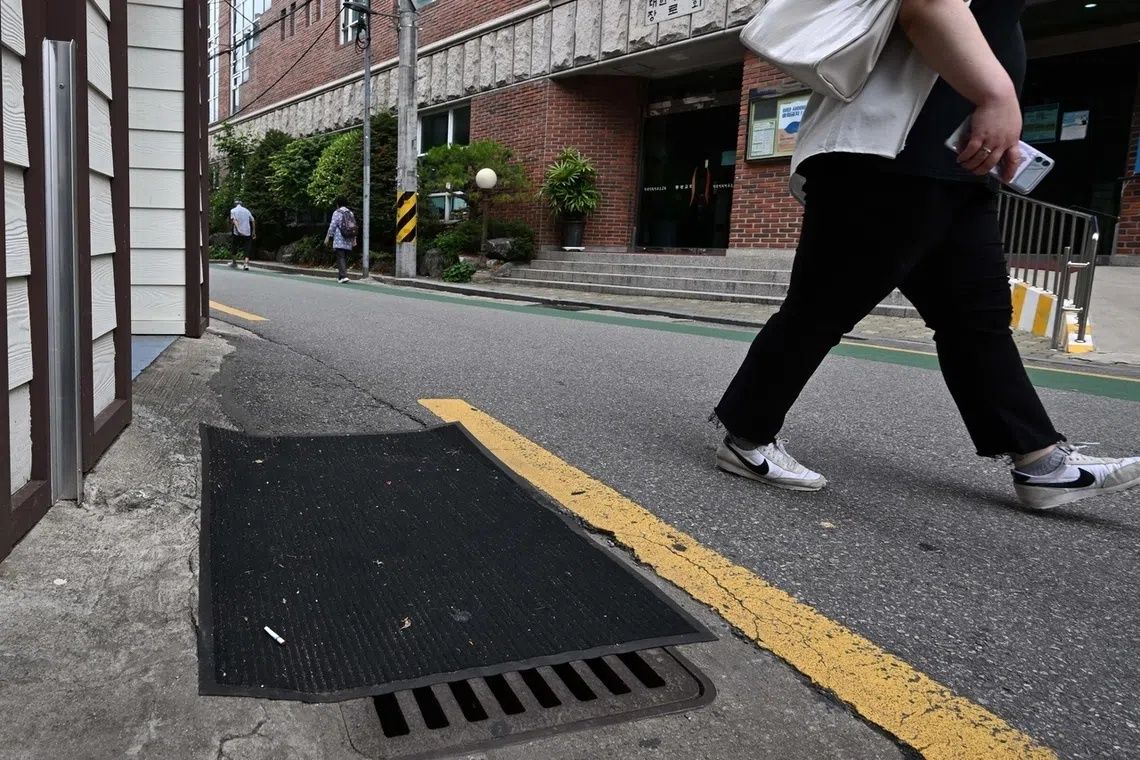
Commuters and pedestrians across Seoul frequently encounter sharp, unpleasant odours emanating from underground sewers as they navigate the South Korean capital's streets and wait at bus stops. While these episodes typically last mere seconds, the consistency of complaints from residents and international visitors has made sewer smells a recognisable urban irritant. Online forums and community platforms in both Korean and English regularly feature posts describing sudden bursts of nauseating odours, indicating this is neither a marginal nor isolated issue but rather a recurrent phenomenon affecting the daily experience of those living in or visiting the metropolitan area.
According to a 2025 report released by the Seoul Institute, approximately half of all civil complaints regarding foul odours in the city stem directly from the sewer system. This proportion underscores the scale of the problem within Seoul's broader air quality management framework. The trajectory of complaints reveals a troubling pattern: after Seoul implemented dedicated sewer odour reduction initiatives starting in 2015, the volume of grievances initially declined. However, this improvement proved temporary, and complaints have subsequently resurged, suggesting that the underlying infrastructure challenges persist despite more than a decade of targeted intervention. The persistence of the issue raises fundamental questions about whether current strategies adequately address the root causes or merely provide superficial, short-term relief.
The primary culprit behind Seoul's sewer stench is hydrogen sulfide gas, recognisable by its distinctly unpleasant rotten-egg-like aroma. This compound emerges during the decomposition of organic matter within sewage that occurs in oxygen-depleted underground environments. Seoul's sewer infrastructure has struggled to evolve in tandem with the city's explosive urban expansion and densification over recent decades. Many buildings, lacking immediate connections to the municipal sewer network, have installed septic tanks as temporary storage solutions before wastewater eventually enters underground pipes. Although these tanks successfully remove certain solid waste constituents, dissolved organic compounds remain suspended in the wastewater that subsequently flows into sewers, where they decompose and generate hydrogen sulfide as a byproduct.
Weather patterns significantly influence when and how intensely Seoul residents experience sewer odours. During periods of substantial rainfall, the increased volume of water flowing through the system naturally flushes accumulated sewage through the network more rapidly, reducing the residence time during which odour-producing gases can accumulate and escape. Conversely, during hot and dry spells with minimal precipitation, hydrogen sulfide concentrations build up within the sewer pipes and subsequently leak through accessible points in the system, including storm drain openings and maintenance access holes. This seasonal variation means that Seoul's odour problem intensifies during specific climatic conditions, making it predictable yet difficult to eliminate entirely.
City officials acknowledge the multifaceted nature of Seoul's sewer odour challenge. One Seoul city administrator noted that because odours arise from diverse and interconnected factors, addressing them requires individual expert analysis tailored to specific locations and circumstances rather than blanket solutions. The city is currently investigating structural modifications to its sewer system and sediment removal operations, recognising that reduced wastewater flow rates and accumulated sediment deposits within pipes contribute substantially to odour generation. These proposed interventions represent a shift toward more mechanistic, infrastructure-based solutions rather than relying solely on chemical treatments or ventilation devices.
A critical structural impediment is Seoul's combined sewer system, which routes both wastewater from buildings and stormwater runoff from streets through identical underground pipe networks. This dual-purpose arrangement creates conditions where different water qualities mix, complicating the chemical environment and exacerbating decomposition conditions. Since the early 1990s, Seoul has contemplated converting to a separated system in which wastewater and stormwater travel through distinct pipes, mirroring practices in many developed nations. However, this transformation has advanced sluggishly, constrained by the extraordinary technical complexity and substantial financial investment required to replace extensive underground infrastructure across a densely built metropolitan area. By 2025, only 20.4 percent of Seoul's total sewer network had transitioned to this separated configuration, indicating that the majority of the system still operates under the problematic combined arrangement.
The municipal government has designated sewer odour reduction as a priority within its environmental policy agenda and established dedicated teams to oversee mitigation projects. Yet the current regulatory framework operates primarily on a complaint-responsive rather than anticipatory basis, focusing on managing odours once they exceed legally permissible thresholds rather than requiring proactive prevention strategies. This reactive posture creates perverse incentives where action only occurs after residents lodge formal complaints, rather than systematic monitoring and intervention targeting vulnerable areas. Specialists argue that a metropolis of Seoul's scale and resources should adopt a fundamentally different approach, one grounded in prevention and long-term infrastructure transformation rather than cyclical responses to public complaints.
Statistical trends illustrate both the initial promise and subsequent limitations of Seoul's intervention efforts. Sewer odour complaints declined substantially from 3,095 in 2015 to 1,660 in 2020, reflecting the impact of measures including the installation of odour reduction equipment at major septic tanks. However, this progress proved unsustainable; complaints rose again to 2,302 by 2024, demonstrating that without addressing fundamental infrastructure deficiencies, temporary palliatives inevitably lose effectiveness. Ki Dong-won, a researcher at the Seoul Institute, attributes this pattern to Seoul's complaint-driven methodology, which impedes the development of comprehensive, standardised, long-term solutions. Korea has yet to create predictive models capable of forecasting how sewer odours propagate into the atmosphere above ground or analysing their diffusion trajectories, making it difficult to identify geographic areas most vulnerable to recurring complaints. While sewer odour mapping initiatives are underway, these efforts remain disconnected from concrete performance metrics or evaluation standards for odour reduction installations.
Innovative approaches from academic experts offer potential pathways forward. Park Seok-soon, an environmental engineering professor emeritus at Ewha Womans University, proposes introducing artificial water circulation through sewer pipes as a practical interim measure, particularly given the formidable obstacles to replacing combined sewer systems entirely. When sewage stagnates in underground storage facilities for extended durations, water quality deteriorates and decomposition accelerates—conditions that generate odours. Park suggests that systematically introducing water from hydrants or comparable municipal facilities to maintain circulation could reduce stagnation and consequent decomposition. Notably, major cities in Japan and other economically advanced nations continue operating combined sewer systems without equivalent odour problems, suggesting that management rigour and operational discipline may prove as consequential as infrastructure design itself.
For Malaysian readers and Southeast Asian observers, Seoul's struggle holds instructive lessons about urban infrastructure management in rapidly developing megacities. Many Southeast Asian metropolitan areas, including Kuala Lumpur, Bangkok, and Manila, face comparable challenges managing expanding populations within aging or inadequate sewer systems. Seoul's experience demonstrates that infrastructure inadequacies cannot be resolved through cosmetic interventions or complaint-responsive patches, but instead require sustained political commitment to long-term capital investment and systematic operational discipline. The South Korean capital's difficulty in implementing a separated sewer system across two-thirds of its network, despite being a wealthy developed nation, illustrates the magnitude of infrastructure transformation required. For Southeast Asian cities still in earlier stages of metropolitan development, Seoul's example underscores the critical importance of establishing robust sewer infrastructure from the outset rather than attempting remedial conversion decades later.

