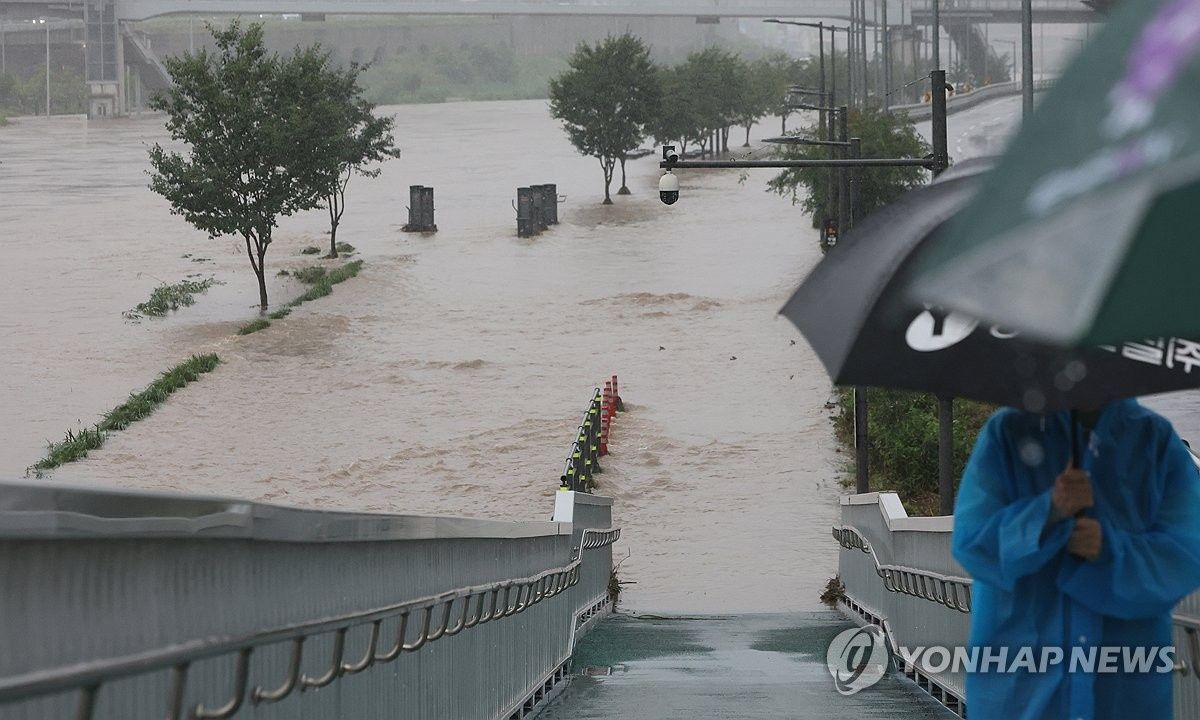
South Korea's Seoul metropolitan region and the eastern province of Gangwon experienced severe weather overnight that left a substantial mark across the landscape, with nearly 200 millimetres of rain deluging the areas between midnight and 10 a.m. local time on Saturday. The deluge, as documented by the Central Disaster and Safety Countermeasure Headquarters, resulted in approximately 540 documented cases of property damage across the affected regions, prompting an urgent response from emergency authorities and senior government officials throughout the morning hours.
The rainfall distribution across the metropolitan zone and Gangwon proved particularly intense in certain municipalities, with Paju recording 192.5 mm, Dongducheon reaching 189.5 mm, Pocheon capturing 179 mm, Gimpo measuring 166.5 mm, and Cheorwon accumulating 159.5 mm during the eight-hour window. These precipitation levels approached monthly rainfall totals for some areas, underscoring the exceptional nature of the weather event and raising concerns about soil saturation and geological stability in regions already vulnerable to water-related hazards.
By mid-morning Saturday, the meteorological threat remained active, with heavy rain warnings still in effect across 10 distinct regions within Gangwon Province, while authorities simultaneously issued mudslide warnings specifically for Pocheon, reflecting concerns about unstable terrain conditions exacerbated by the sustained downpour. The combination of high rainfall rates and warning escalations signalled that ground conditions were deteriorating and that additional hazards might emerge without significant meteorological relief.
Emergency response teams documented 148 separate incidents involving flooded residences and roadways, while an additional 392 cases involved fallen trees and scattered debris obstructing transportation routes and creating secondary hazards throughout affected communities. The distinction between flood-related and wind-or-vegetation-related damage suggested a multi-faceted weather event with both vertical precipitation and potentially gusty wind conditions contributing to the overall impact on infrastructure and property.
Despite the considerable material disruption, governmental authorities reported a fortunate outcome regarding human safety, with zero fatalities recorded as of Saturday morning. Nevertheless, precautionary evacuation measures were implemented across six municipalities, with 95 individuals from 44 separate households relocated temporarily to safer locations as a protective measure against potential secondary disasters such as landslides or structural failures in flood-prone zones.
Recreational and tourist access to significant outdoor attractions became severely restricted as administrators moved swiftly to prevent injury in hazardous conditions. Ten national parks across the region, including the popular Mount Bukhan facility, sealed their entrances to the public, whilst 275 designated hiking pathways were closed to traffic. Additionally, seven ferry routes operating from the western coastal region suspended service, eliminating maritime transportation options and stranding travellers who depended on these maritime corridors for intercity connectivity.
Meteorological forecasts indicated that the precipitation event would not conclude with the overnight deluge, but rather would persist through Sunday, with some areas potentially experiencing rainfall intensities reaching 300 mm per hour. These projections suggested that the overall cumulative moisture and related hazards could substantially exceed Saturday's figures, placing continued strain on drainage infrastructure and heightening the risk of cascading environmental disasters such as flooding progression and mass movement incidents.
Prime Minister Han Seong-sook convened an emergency response meeting and directed all relevant authorities to prioritise the rapid deployment of rescue equipment and response personnel to affected zones with the explicit objective of minimising continued disruption to residents and reducing secondary damage. Her intervention signalled the severity with which the national government was treating the situation and reinforced the urgency of coordinated multi-agency action across provincial and municipal administration tiers.
During her address at the emergency coordination session, Han acknowledged the paradox of the situation: whilst casualty avoidance represented a genuine success for disaster management systems, the extensive property harm affecting hundreds of households and business operations demanded immediate compassionate response and financial consideration. She extended formal condolences to affected populations and pledged government commitment to recovery and damage mitigation efforts.
Looking ahead, Han specifically flagged heightened concern regarding the central province of Chungcheong and the northeastern expanse of Gangwon, where additional heavy precipitation was anticipated to commence later Saturday evening and continue into Sunday morning hours. She requested that officials maintain elevated preparedness specifically for potential landslide events in these regions, recognising that saturated soil conditions combined with continued rainfall presented acute geological instability risks that could trigger rapid mass movements affecting populated areas, transportation infrastructure, and critical facilities.
The weather event underscores the escalating frequency and intensity of extreme precipitation incidents affecting the Korean Peninsula, a pattern increasingly attributed to climate variability and shifting atmospheric circulation patterns. For Malaysian observers, the episode provides instructive comparison with Southeast Asian monsoon and tropical storm impacts, particularly regarding rapid-onset flooding, evacuation protocols, and governmental coordination mechanisms during weather emergencies that exceed normal seasonal precipitation norms.

