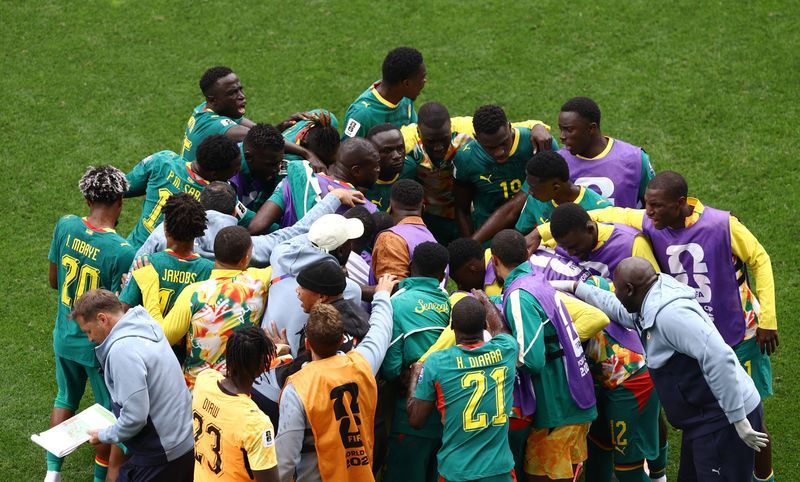
Senegal's football federation has opened a contentious dispute over the medical credentials of the national team's physician, with federation president Abdoulaye Fall asserting the doctor lacked the specialised background required to support the squad during their World Cup campaign in North America. The revelation emerged during a post-tournament review as Senegal grappled with an unexpectedly poor showing at one of football's biggest stages, prompting the federation to scrutinise every aspect of their preparation and support infrastructure.
Fall disclosed at a Monday press conference that the team doctor had been trained as a gynaecologist, a qualification that stood in stark contrast to the sports medicine expertise typically expected for international football operations. The federation chief characterised the discovery as a late realisation that significantly undermined player confidence in the medical contingent travelling with the squad. The mismatch between the doctor's training and the role's demands created palpable anxiety within the playing group, Fall suggested, with athletes expressing doubts about whether they would receive appropriate injury assessment, treatment, and preventative care during the tournament.
According to Fall's account, the federation recognised the concern and moved swiftly to supplement their medical team with additional expertise to restore player confidence. He emphasised that the federation prioritised reassuring the squad through credible medical resources, framing health and player welfare as paramount considerations that superseded other organisational concerns. This intervention, while remedial, highlighted a significant gap in the federation's preparation process and raised questions about how such a critical oversight had escaped notice until such a late stage of the World Cup campaign.
The Senegalese Association of Sports Medicine responded robustly to these accusations on Monday evening, denouncing the federation's claims as "unfounded and defamatory." The professional body moved to defend the credentials of the team doctor, Abderahmane Fediore, presenting documentation of his qualifications. According to the sports medicine association, Fediore holds a specialist diploma in sports medicine and sports biology from the faculty of medicine at Cheikh Anta Diop University, credentials that directly contradicted the federation president's characterisation of his background. The professional body's statement sought to establish that Fediore possessed legitimate, formally recognised qualifications in precisely the field required for his role.
Fediore's track record in the position further supported the association's defence. He had previously served as head of the physiotherapy department at Fann Hospital, one of Senegal's leading medical institutions, and had held the position of national team doctor since 2017. Over this seven-year tenure, he had accumulated significant tournament experience, having accompanied the national team to three separate World Cups and five editions of the Africa Cup of Nations. This extended history of involvement at major competitions suggested a level of institutional acceptance and established practice that seemed at odds with Fall's assertion of a late-stage discovery regarding his medical background.
The timing of the federation's criticism raised eyebrows in Senegalese football circles. Just days before the medical credentials controversy surfaced, the federation had dismissed coach Pape Bouna Thiaw, attributing the decision to the team's underwhelming World Cup performance. The managerial change signalled a comprehensive overhaul of accountability across the organisation, but the subsequent focus on the team doctor's qualifications suggested the federation was searching for explanations beyond tactical shortcomings or player performance.
Senegal's World Cup campaign had indeed been disappointing for a squad that arrived as genuine contenders following a triumphant Africa Cup of Nations victory over Morocco in January. The continental title had positioned the West African nation as one of Africa's strongest representatives in the World Cup, yet the team stumbled early in the North American tournament. Losses to both France and Norway in their opening group matches immediately placed Senegal in a precarious position, requiring success in subsequent fixtures to advance.
The final blow came in the knockout stage against Belgium, where Senegal's inability to maintain defensive discipline cost them dearly. The squad had controlled much of the match and built a commanding two-goal advantage, only to concede three unanswered goals in a dramatic reversal that stretched into extra time. The 3-2 defeat eliminated Senegal from the tournament and epitomised the tournament's narrative of squandered opportunity and tactical failings under Thiaw's management.
The dispute over Fediore's qualifications must be contextualised within this broader context of institutional soul-searching. Senegal's federation appeared to be attributing failure across multiple dimensions, identifying problems not only in coaching and tactical execution but also in support functions. Whether the medical infrastructure truly contributed to the tournament's disappointing outcome remained unclear, though the federation's public airing of these concerns suggested internal tensions and finger-pointing in the aftermath of failure. The professional sports medicine association's swift and emphatic defence of Fediore indicated that the federation's characterisations had not gone unchallenged within Senegal's medical establishment, setting the stage for an ongoing dispute over responsibility and competence.

