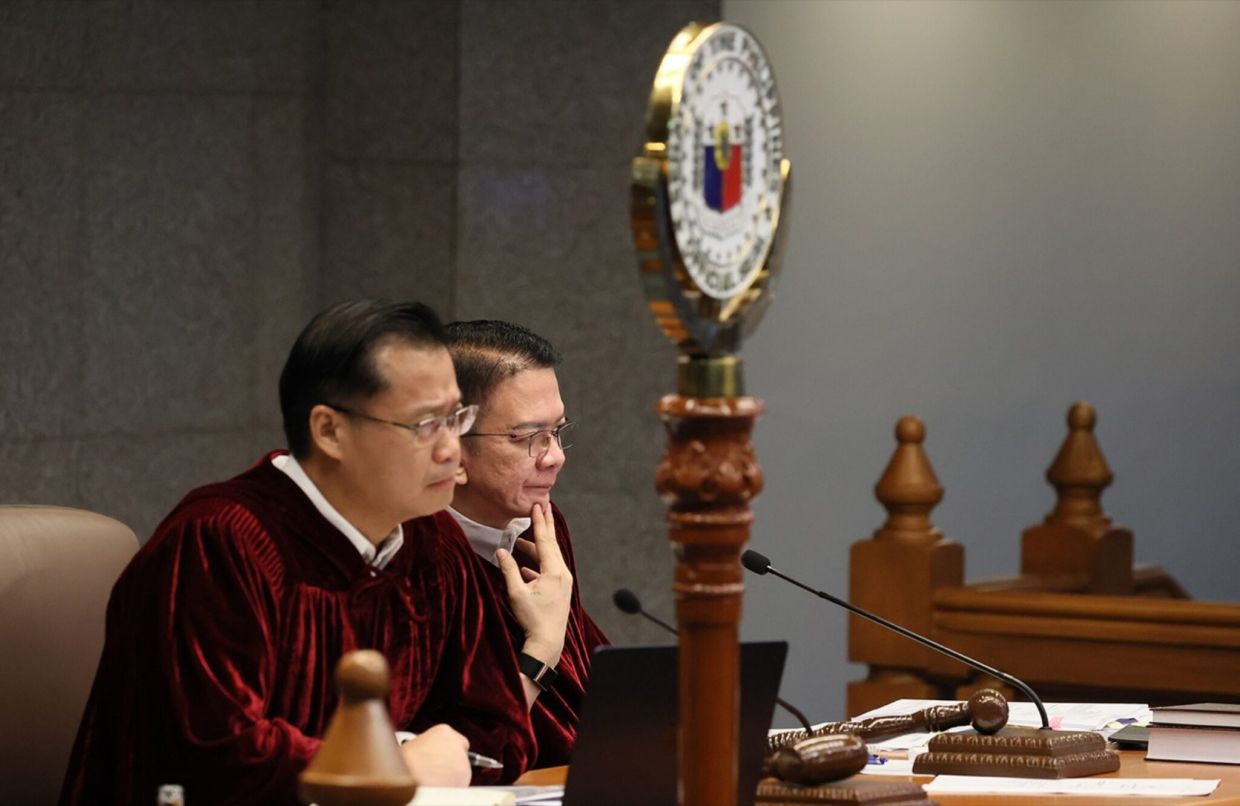
The Philippine Senate impeachment court will make a pivotal decision this week on whether to compel Vice President Sara Duterte to disclose her financial records, a ruling that could fundamentally shape the trajectory of her ongoing trial. House prosecutors have expressed strong confidence that senator-judges will approve their subpoena request for bank statements, tax documents and records from the Anti-Money Laundering Council, arguing these materials are indispensable to substantiating charges that she accumulated wealth disproportionate to her legitimate income and violated the public trust.
The vote scheduled for Monday afternoon represents one of the trial's most consequential procedural moments, arriving on the seventh day of proceedings against the Vice President. Prosecutors contend that the financial documentation directly supports allegations under Article II of the impeachment articles, which focuses specifically on unexplained wealth accumulation. The proposed subpoena extends beyond Duterte herself to include records from her husband, lawyer Manases Carpio, reflecting the prosecution's comprehensive approach to tracing potential financial transactions.
Proecution spokesperson Benjamin Tolosa Jr. has dismissed doubts about the Senate's receptiveness to the request, emphasising the strength of the legal foundation underpinning it. He highlighted the precedent of the 2012 impeachment trial of former Chief Justice Renato Corona, where the Senate successfully compelled the production of bank records despite constitutional protections normally safeguarding financial privacy. Tolosa specifically referenced Republic Act No. 1405, the bank secrecy law, which explicitly carves out impeachment proceedings from its confidentiality provisions. This constitutional exception, he argued, makes clear that financial disclosure becomes permissible when addressing impeachment allegations.
The prosecution's strategy rests on the assertion that impeachment proceedings occupy a special category within Philippine law, elevating accountability concerns above ordinary privacy protections. Prosecutor Chel Diokno expanded on this argument during earlier oral arguments, asserting that the Senate, functioning as an impeachment court, derives its authority directly from the Constitution itself and therefore possesses inherent power to compel disclosure of confidential financial records. Diokno further argued that the Data Privacy Act likewise permits such disclosure when issued under valid subpoena authority. He emphasised that Duterte's financial activities spanning her tenure as Davao City vice mayor and mayor are directly relevant, since the impeachment complaint alleges wealth accumulation throughout her entire public service career.
Central to the prosecution's case is an Anti-Money Laundering Council report indicating that Duterte's financial activity exceeded three billion pesos between 2007 and 2013. This figure, prosecutors argue, demonstrates patterns inconsistent with legitimate income sources and necessitates detailed examination of underlying transactions. The prosecution has framed the request not as an isolated evidentiary demand but as one component within a broader factual narrative, signalling their confidence that multiple lines of evidence support the core allegations even should the Senate deny this particular subpoena.
The defense has mounted a vigorous counter-argument, characterised by lead counsel Michael Poa as a principled stand for financial privacy and due process protections. Poa described the prosecutors' request as an impermissible "fishing expedition," pointing out that the subpoena was filed only after impeachment complaints had already been lodged, suggesting prosecutorial desperation rather than considered legal strategy. He further contended that the request's temporal scope—extending nearly two decades into the past—impermissibly includes periods when Duterte held positions not subject to impeachment, such as her service as Davao vice mayor. This jurisdictional argument carries constitutional weight, as Poa invoked a 2025 Supreme Court ruling in Duterte v. House of Representatives establishing that impeachable offences must have been committed while occupying an impeachable office.
Beyond jurisdictional boundaries, the defense has argued that even where impeachment exceptions to banking confidentiality exist, disclosure is not automatic but must satisfy constitutional due process requirements. Poa emphasised that the Anti-Money Laundering Act and National Internal Revenue Code contain no explicit impeachment exceptions for AMLC reports and tax records respectively, distinguishing these from bank secrecy protections. The defense further objected to including Carpio's financial records, noting that as a private citizen and attorney, he holds no impeachable office and therefore deserves full privacy protection under Philippine law.
Civil society organisations have mobilised to influence the Senate's decision, with activist groups warning against repeating historical errors that damaged public confidence in past impeachment proceedings. The August Twenty-One Movement specifically referenced the controversial "second envelope" vote during former President Joseph Estrada's 2001 impeachment trial, when senator-judges' decision to withhold key evidence ultimately triggered public backlash that contributed to Estrada's downfall. The group argued that transparent disclosure of financial records, whether exonerating or incriminating, would ultimately serve democratic accountability better than confidentiality-based obstruction.
Faith-based and social justice coalitions have similarly urged senator-judges to approve the subpoena, framing the issue as fundamental to Philippine democracy's requirement that public officials remain accountable for their finances. Kingdom Keepers, a coalition led by activist priest Fr. Robert Reyes and social anthropologist Dr Melba Padilla Maggay, invoked the principle that public service necessarily entails surrendering certain privacy expectations. The group posed a rhetorical challenge to Duterte's defense, asking why an innocent official with nothing to conceal would resist transparent financial disclosure. This framing attempts to shift the burden of proof psychologically, suggesting that resistance to subpoena compliance carries its own evidentiary implications.
The impeachment trial itself involves four substantive articles charging Duterte with misusing confidential funds, accumulating unexplained wealth and making threats against President Ferdinand Marcos, First Lady Liza Araneta-Marcos and former Speaker Martin Romualdez. The gravity of these charges cannot be overstated within the Philippine political context—conviction would result not merely in removal from office but in permanent disqualification from all future public service, effectively ending Duterte's political career. This high-stakes outcome underscores why procedural rulings on evidence admissibility carry such significance; they determine whether the prosecution can construct a sufficiently compelling factual narrative to persuade senator-judges that removal is warranted.
Prosecutors have indicated that additional testimony will strengthen their evidentiary foundation regardless of the Senate's decision on financial records. National Bureau of Investigation Director Melvin Matibag is scheduled to testify regarding the agency's investigation into Duterte's alleged threats against administration figures, with prosecutors emphasising that the NBI concluded such remarks formed part of a deliberate plan rather than spontaneous comments. This testimony could provide corroborating evidence of intent and pattern, potentially reducing the prosecution's dependence on financial documentation.
For Malaysian and regional observers, the Philippines' handling of high-level impeachment proceedings carries broader implications for how Southeast Asian democracies balance executive accountability against individual privacy rights. The Senate's imminent decision will signal whether Philippines law permits robust investigation of official misconduct allegations or whether constitutional confidentiality protections can shield public figures from financial scrutiny. The precedential value extends beyond this single trial, potentially influencing how future impeachment proceedings in the Philippines and comparable regional jurisdictions navigate the tension between democratic accountability and fundamental rights protection.

