Selangor has cemented its position as Malaysia's economic powerhouse, with its gross domestic product reaching RM460.1 billion in 2025—a substantial jump of RM28 billion from the previous year. The expansion significantly outpaced growth in every other state and federal territory, making the bustling manufacturing and service hub the undisputed engine of the nation's economy. According to data released by the Department of Statistics Malaysia, this performance has raised Selangor's contribution to national GDP to 26.5 per cent, underscoring the region's critical importance to Malaysia's broader economic trajectory.
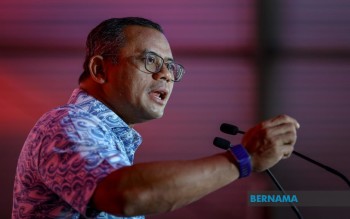
Menteri Besar Datuk Seri Amirudin Shari highlighted that the economic expansion was noteworthy not merely for its absolute size but for the margin by which it exceeded peer states. The increment in Selangor's economy was no less than double that recorded by any other region, positioning the state in a category of its own within Malaysia's economic hierarchy. The achievement also surpassed internal projections conducted jointly by Universiti Putra Malaysia and the Selangor Research Institute, which had forecast growth to approximately RM455.3 billion. This outperformance suggests underlying economic resilience and momentum that exceed even expert forecasts.
The state's economic dominance becomes even more apparent when compared directly to other major centres. Selangor's economy now stands at more than 1.7 times the size of Kuala Lumpur's and 2.7 times that of Johor's—the nation's second and third-largest economies respectively. Kuala Lumpur, despite recording solid growth of RM13.2 billion, expanded to RM265.1 billion, demonstrating that while the federal territory remains significant, Selangor's lead has widened considerably. This concentration of economic activity in the Klang Valley region has profound implications for infrastructure planning, urban development, and wealth distribution across the nation.
What distinguishes Selangor's performance is not merely the quantum of growth but the velocity at which it occurred. The state achieved a growth rate of 6.3 per cent in 2025, a full 1.1 percentage points above Malaysia's overall economic expansion of 5.2 per cent. This acceleration positions Selangor as a growth outlier, suggesting that regional economic policies, business confidence, and investment flows favour the state relative to the national average. For policymakers tracking sectoral performance, this divergence warrants examination of what specific factors or policies have enabled Selangor to outpace broader national trends.
The composition of this growth reveals a diversified economic base increasingly weighted towards high-value activities. The services sector contributed RM15.9 billion of the expansion, manufacturing added RM5.3 billion, and construction accounted for RM3.7 billion. This sectoral distribution reflects a state economy transitioning beyond simple assembly manufacturing towards professional services, finance, and technology-driven activities. Yet the sustained contribution from both manufacturing and construction demonstrates that Selangor has not abandoned traditional economic drivers, instead maintaining a balanced portfolio capable of weathering sectoral fluctuations.
Selangor's dominance in key national sectors underscores the state's role as a concentration point for Malaysia's productive capacity. The region accounts for 35.9 per cent of the country's construction activity—a remarkable share that reflects the ongoing urbanisation and infrastructure development across the Klang Valley. Manufacturing participation stands at 32.8 per cent of national output, while the services sector contribution reaches 27.1 per cent. These figures demonstrate that major resource flows, investment decisions, and employment opportunities in Malaysia are disproportionately channelled towards Selangor, with significant implications for regional inequality and labour migration patterns throughout the country.
Much of this recent success is attributed to the First Selangor Plan, the state government's strategic five-year socioeconomic development roadmap spanning 2021 to 2025. The plan appears to have delivered tangible results, with Selangor's economy expanding by a cumulative 33.94 per cent during the planning period—an increase exceeding one-third of its baseline size. In absolute terms, this represents an addition of RM116.6 billion to economic output, with the state's GDP rising from RM343.5 billion at the plan's inception to RM460.1 billion upon its conclusion. This trajectory suggests that coordinated state-level economic planning, when adequately resourced and implemented, can generate measurable outcomes that distinguish a region from national performance benchmarks.
The achievement has not gone unnoticed by investment promotion agencies. Invest Selangor noted that the state has become the first in Malaysia to exceed the RM400 billion GDP mark for two consecutive years, reaching RM406.1 billion in 2023 before climbing further in 2025. This consistency contrasts with economic volatility that characterised earlier periods, suggesting stabilisation and entrenchment of growth drivers. The agency's assessment reinforces government claims that Selangor has transitioned from cyclical growth dependent on external factors to more sustainable expansion rooted in diversified economic foundations.
Despite these accomplishments, state leadership has cautioned against complacency. Menteri Besar Amirudin emphasised that the administration aims for Selangor to become the first state achieving a RM500 billion economy, a target requiring sustained growth of similar magnitude. The next objective would demand an additional RM40 billion in economic output—a threshold requiring either acceleration of current growth rates or identification of new economic drivers. This articulated ambition signals that current performance is viewed as a stepping stone rather than a final destination, with implications for future policy emphasis and resource allocation within the state.
The broader challenge for state and federal authorities involves ensuring that economic expansion translates into meaningful improvements in living standards for ordinary Selangorians. Amirudin acknowledged this imperative, pledging that the administration would prioritise elevating residents' quality of life alongside continued economic growth. This commitment reflects recognition that GDP expansion, while economically significant, does not automatically distribute benefits evenly across populations. Housing affordability, wage growth, public service quality, and environmental sustainability must progress proportionally with economic output to validate the development model's legitimacy with constituents.
For Malaysia as a whole, Selangor's continued economic outperformance raises structural questions about national spatial development strategy. With the Klang Valley accounting for over one-quarter of national output, the concentration reflects decades of infrastructure investment, policy incentives favouring the western corridor, and agglomeration effects that draw talent and capital to established centres. Whether future policy will attempt to rebalance this geographic concentration or accept it as optimal remains a contested issue among planners and economists monitoring Malaysia's long-term development trajectory.
International investors monitoring the region will likely interpret Selangor's steady expansion as evidence of Malaysia's economic resilience and the state's continued attractiveness as a business destination. The diversified sectoral growth and outperformance relative to national averages suggest conditions remain favourable for companies considering regional headquarters or manufacturing facilities. However, rising land costs, labour tightness, and infrastructure congestion in the Klang Valley may increasingly encourage investors to examine alternative locations within Malaysia or Southeast Asia, creating pressure for Selangor to continuously upgrade its competitive proposition through technology adoption and service quality enhancement.
Looking forward, the trajectory set by the First Selangor Plan will shape expectations for the successor development roadmap. Achievement of the RM500 billion target would require not merely replication of recent success but identification and mobilisation of fresh growth catalysts. These might include acceleration of high-technology manufacturing, expansion of digital economy participation, enhanced regional trade and logistics hub development, or breakthrough sectors yet to emerge prominently in Selangor's current economic composition. The next chapter of the state's development will likely determine whether the region can sustain its current growth momentum or whether it will settle into a more moderate trajectory reflecting saturation of existing growth drivers and emerging constraints.

