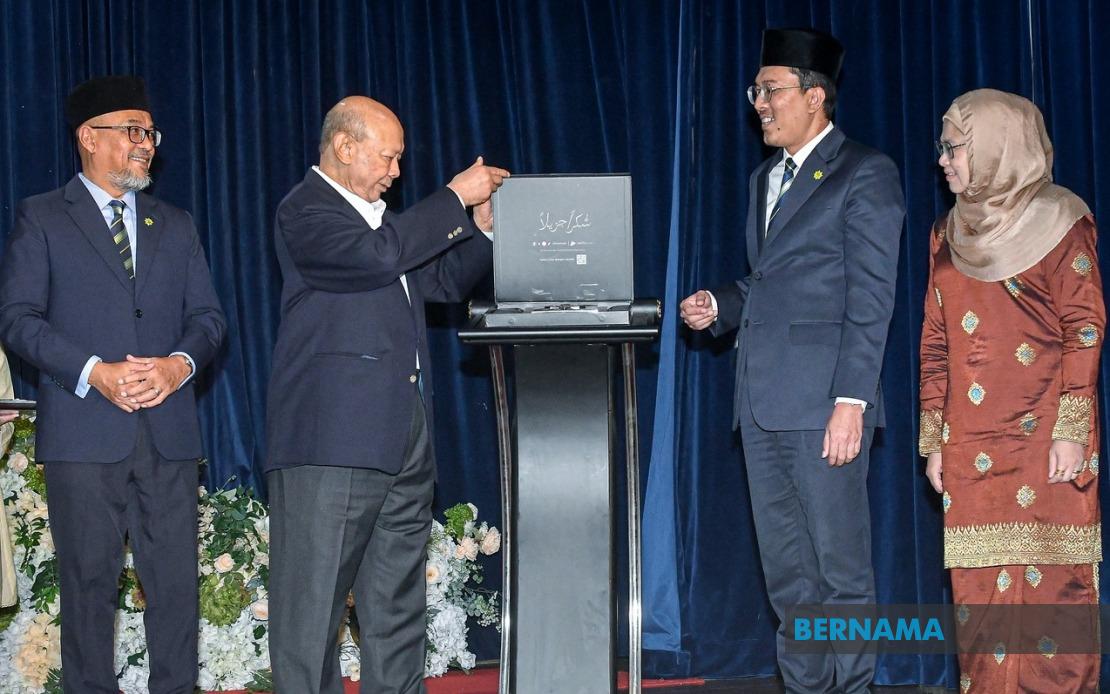
The Selangor Zakat Board introduced the Muzakki Zakat Selangor Recognition Initiative (IKTIRAF) at the Gemerlapan Rakan Strategik Zakat Selangor (GRASIAZ) 2026 event in Shah Alam on July 7, marking a significant step in formalising corporate religious compliance in Malaysia. This certification represents the nation's first structured programme specifically designed to publicly acknowledge and validate companies and organisations that consistently meet their business zakat commitments, signalling a shift towards integrating Islamic fiscal principles into mainstream corporate governance frameworks across the country.
According to Mohd Khaidzir Shahari, chief executive officer of Zakat Selangor, the programme addresses a critical gap in corporate awareness and motivation surrounding zakat obligations. Many Malaysian businesses remain uncertain about their zakat responsibilities or view them as peripheral to core operations rather than as fundamental expressions of corporate social responsibility aligned with Islamic values. By establishing IKTIRAF, the board seeks to transform perceptions of business zakat from a regulatory burden into a badge of corporate integrity and faith-based governance that resonates with Muslim consumers and stakeholders alike.
The certification architecture mirrors successful precedents like halal certification, creating immediate visual recognition that the public can instantly understand. Participating companies receive both an electronic certificate and digital label bearing unique serial numbers, which can be prominently displayed on products, packaging, business premises, and marketing materials. This branding component proves crucial because it creates tangible market incentives for participation; businesses benefit from enhanced reputation and potential consumer preference, while Muslim customers gain transparent information enabling them to support companies aligned with their values.
Transparency and verification mechanisms form the scheme's operational backbone. Members of the public can scan QR codes associated with IKTIRAF-certified businesses to confirm their participation status and zakat payment history, eliminating ambiguity and preventing fraudulent claims. This technological infrastructure ensures accountability while building public confidence in the certification's legitimacy and value. For multinational corporations and major domestic enterprises operating in Selangor, such verification capabilities matter substantially when competing for market share among conscientious Muslim consumers who prioritise ethical corporate behaviour.
The initial target of recognising approximately 1,000 existing business zakat payers during the first operational year reflects measured ambition tempered by realism. Rather than pursuing aggressive enrolment targets that might compromise programme integrity, Zakat Selangor has prioritised depth over breadth, recognising that sustainable corporate zakat adoption requires genuine commitment rather than superficial compliance. This philosophical approach acknowledges that zakat fundamentally differs from conventional regulatory requirements; it represents voluntary religious observance and cannot be meaningfully implemented through enforcement mechanisms alone.
Mohd Khaidzir emphasised that raising corporate consciousness about zakat obligations constitutes the initiative's paramount objective. Many companies, particularly smaller enterprises and those led by non-Muslim boards, remain unaware of their zakat liabilities on business income and retained earnings. Educational engagement with shareholders and boards of directors becomes essential for cultivating understanding and building institutional commitment to regular, consistent zakat payments rather than sporadic, ad hoc contributions. This deliberate, relationship-focused approach differs markedly from command-and-control regulatory strategies that often generate resistance and minimal genuine adoption.
The distinction between one-time zakat payments and sustained compliance carries profound implications for Selangor's Islamic financial ecosystem. Companies that pay zakat once to satisfy immediate religious impulses or public relations objectives may subsequently abandon the practice, creating irregular revenue patterns that complicates charitable distributions and social welfare programming. Conversely, businesses demonstrating consistent zakat commitment establish reliable contribution streams enabling Zakat Selangor to develop comprehensive poverty alleviation and community development initiatives with predictable funding bases.
The IKTIRAF initiative emerges within a broader regional context of Islamic finance and corporate governance innovation across Southeast Asia. Malaysia, home to the world's most sophisticated Islamic financial infrastructure, increasingly positions itself as a leader in integrating Shariah principles into corporate practice beyond banking and insurance. The Selangor scheme potentially establishes a template that other state zakat boards and Islamic authorities across the country might emulate, gradually normalising business zakat as a mainstream corporate governance expectation comparable to environmental, social, and governance considerations.
For multinational corporations operating manufacturing facilities, distribution networks, and service operations throughout Selangor, IKTIRAF certification offers strategic value extending beyond religious compliance. Companies seeking to deepen market penetration and build brand loyalty among Muslim-majority consumer bases can leverage IKTIRAF credentials in marketing communications, supplier relationships, and stakeholder engagement. The certification simultaneously signals ethical corporate citizenship and demonstrates respect for local Islamic values, potentially translating into competitive advantage in regional business contexts increasingly attentive to faith-based considerations.
The programme's success ultimately depends upon intensive engagement with corporate leadership across sectors. Zakat Selangor officials must effectively communicate IKTIRAF's rationale and benefits to chief financial officers, audit committees, and board directors accustomed to secular governance frameworks. Demonstrating that consistent zakat payment enhances corporate reputation, strengthens community relationships, and contributes meaningfully to Islamic social welfare objectives requires sustained dialogue and practical examples from companies already demonstrating commitment. Early adopters, presented with IKTIRAF plaques at the July 7 launch event, become crucial ambassadors whose visible participation encourages peer companies to follow suit.
The Business Zakat and Salary Deduction Scheme categories highlighted during the GRASIAZ 2026 event represent important programme pathways accommodating diverse corporate structures and practices. Some companies prefer systematic salary deductions funnelled toward zakat obligations, integrating Islamic financial principles directly into payroll administration. Others prefer consolidated annual zakat calculations based on business profits and retained earnings. Offering multiple compliance pathways increases accessibility and participation while acknowledging that corporations operate according to varying financial structures and administrative capacities.
Beyond individual corporate behaviour, IKTIRAF addresses systemic challenges within Malaysia's zakat ecosystem. Currently, business zakat collection remains substantially lower than potential, with many companies either unfamiliar with obligations or unable to calculate liabilities accurately. Fragmented state-level zakat administration sometimes creates conflicting guidance or inconsistent implementation, generating confusion among multistate enterprises. A nationally recognised certification standard, beginning in Selangor and potentially spreading nationwide, could standardise business zakat practices and significantly increase collection efficiency across Islamic authorities.
The initiative's true measure will emerge over subsequent years as accumulating data reveals sustained corporate participation rates and zakat revenue contributions. If IKTIRAF successfully reaches and exceeds its 1,000-company target while generating consistent year-over-year revenue growth, the scheme demonstrates that corporate zakat adoption flourishes through recognition and incentive rather than regulation. Conversely, disappointing adoption rates would indicate deeper structural barriers requiring different interventions. Selangor's deliberate, cautious approach to implementation creates space for organic programme evolution informed by real-world corporate responses and market dynamics.

