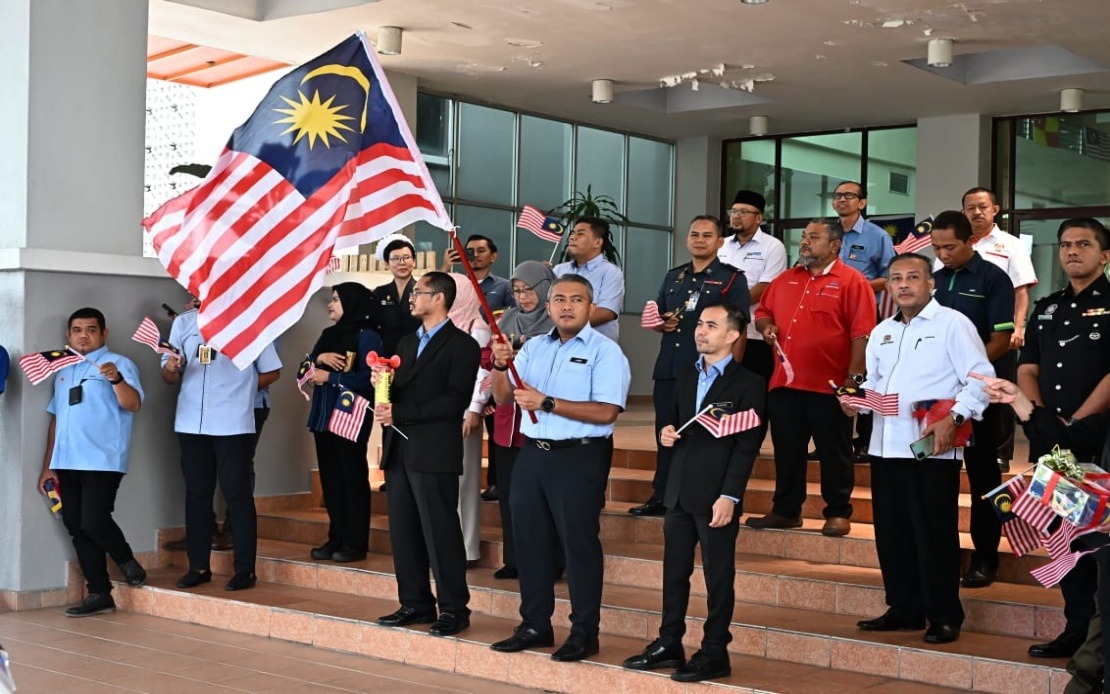
Efforts to cultivate patriotism across Selangor have taken on a distinctly collaborative character, with multiple government agencies and private organisations pooling resources and expertise to amplify messages of national pride ahead of 2026. The Kembara Merdeka Jalur Gemilang (KMJG) X Arena Penggerak Komuniti (JAGO) 2026 initiative, headquartered in Shah Alam, reflects a broader strategic pivot towards inclusive, multi-stakeholder approaches to celebrating Malaysia's identity during the critical National Day and Malaysia Day (HKHM) period.
The initiative draws particular significance from its emphasis on shared responsibility. According to Herlina Ainizawati Zakaria, Assistant Director of the Selangor Information Department's Cyber Media Branch, the programme demonstrates that fostering patriotism transcends institutional boundaries and demographic divisions. Her remarks underscore an important shift in how government communicates national narratives—moving away from top-down messaging towards dialogue-based engagement that acknowledges community participation as essential rather than supplementary.
At its operational core, KMJG X JAGO Selangor 2026 revives an established tradition of physically transporting the Jalur Gemilang from one location to another across selected zones. This symbolic gesture carries deeper meaning than ceremonial parade work. The flag's journey through multiple pit stops and communities serves as a tangible reminder of national continuity, while creating numerous touchpoints where citizens can interact with patriotic messaging and engage in commemorative activities. For many Malaysians, particularly those in urban settings, such direct engagement with national symbols remains limited to designated months, making these coordinated efforts crucial for sustaining civic consciousness.
The programme's geographic focus on Klang's Central Zone during its launch phase encompasses three strategically chosen venues: Wisma Persekutuan Klang, the Klang District and Land Office, and AEON Bukit Tinggi Shopping Centre. The selection of these locations reveals sophisticated campaign planning. Government administrative centres ensure institutional participation and credibility, whilst retail environments like shopping malls provide high-footfall opportunities to reach ordinary citizens conducting their daily routines. This geographical and demographic spread maximizes visibility and inclusivity, avoiding the pitfall of patriotic campaigns that typically concentrate in official venues and reach primarily already-engaged segments of society.
The mobilisation of approximately 50 participants drawn from 10 different government agencies and private-sector organisations reflects extensive coordination. Participating institutions include the Klang Selatan District Police Headquarters, Klang Utara Police District, Klang Royal City Council, and the Klang District Civil Defence Force, among others. This cross-sectoral composition matters significantly for Southeast Asian context, where bureaucratic silos and inter-agency coordination challenges frequently undermine policy implementation. The successful assembly of such diverse institutional players suggests either exceptional planning or perhaps growing recognition among Malaysian administrators that patriotic messaging gains credibility when delivered through multiple institutional voices rather than singular government channels.
Central to the initiative's messaging framework is the One House One Jalur Gemilang (1R1JG) campaign, which aims to establish the national flag as a permanent fixture in Malaysian households throughout National Month. This represents a modest but meaningful ambition—transforming the flag from ceremonial object displayed during prescribed periods into an everyday symbol of national identity. For Malaysian households and their residents, consistent exposure to national symbols contributes subtly to identity formation and civic consciousness, particularly among younger family members. The campaign's emphasis on flag display acknowledges that patriotism, whatever its political dimensions, finds expression through visible, tangible acts that citizens can perform independently within their private spaces.
Herlina's articulation of communication strategy emphasises three overlapping objectives: inclusivity, creativity, and measurable impact. These criteria suggest the initiative moves beyond generic flag-waving into more sophisticated engagement design. Malaysian media environments have become increasingly fragmented, with citizens accessing information through diverse channels and experiencing varying degrees of exposure to official narratives. By foregrounding inclusive communication, the initiative attempts to reach across these fragmentations, whilst creativity acknowledges that patriotic messaging risks appearing stale or propagandistic if delivered through repetitive, conventional means. The emphasis on impact measurement indicates an intention to evaluate programme success through metrics beyond mere event attendance—presumably including social media engagement, household adoption of flag displays, or community sentiment shifts.
The timing of these efforts, with 2026 on the horizon, carries strategic weight. Malaysia approaches its 69th independence anniversary with complex political and social dynamics requiring periodic renewal of national consensus and unity messaging. Patriotic campaigns, when executed thoughtfully, create space for citizens to express national identity in ways transcending party politics or cultural divisions. The KMJG X JAGO initiative's multi-agency structure and community emphasis suggest conscious effort to position patriotism as a unifying rather than divisive force, though the ultimate success of such initiatives depends on how community members receive and internalise these messages.
For regional observers, Selangor's coordinated approach offers instructive lessons about how Southeast Asian democracies navigate national identity reinforcement through bureaucratic and community channels. The programme's mechanics—symbolic flag journeys, retail-space engagement, household display campaigns, and multi-agency participation—employ proven communication tactics whilst adapting them to Malaysian institutional contexts and media environments. Whether such carefully orchestrated efforts substantially influence citizen attitudes remains contested among scholars studying national identity formation, yet the apparent investment of resources and coordination suggests Malaysian policymakers view strategic patriotic messaging as worthwhile investment in social cohesion during critical national moments.

