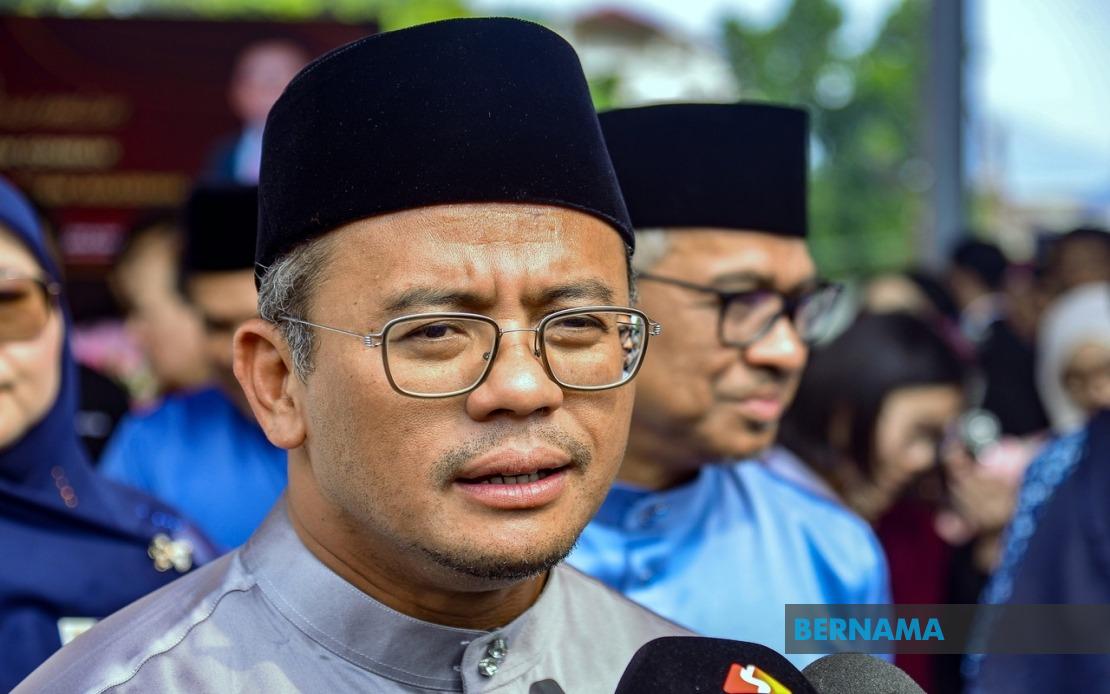
Selangor's government has signalled a significant commitment to educational development, announcing that the 2027 State Budget will centre on bolstering support structures for students and widening access to Science, Technology, Engineering and Mathematics programmes. Menteri Besar Datuk Seri Amirudin Shari revealed these priorities following the opening of Gombak Form Six College, underscoring the administration's determination to channel resources into areas that will directly enhance learning outcomes across the state's vast student population.
The strategic thrust reflects recognition that Selangor's approximately one million students represent both an opportunity and a responsibility for policymakers. When scaled across such numbers, improvements in academic performance and skills development translate into tangible benefits for the broader economy and society. Amirudin articulated this rationale plainly, observing that elevating achievement levels among this cohort would generate positive ripple effects throughout the state and contribute to national progress. This perspective positions education not merely as a social service but as a foundational investment in Malaysia's future competitiveness.
Within the education portfolio, the state plans to strengthen mechanisms supporting academic excellence while simultaneously expanding avenues for meaningful participation in STEM disciplines. These dual objectives suggest recognition that traditional examination success must be complemented by exposure to fields increasingly central to employment prospects and innovation. The government intends to create pathways enabling students to acquire knowledge and skills applicable to community engagement and service, potentially through internships, mentorship schemes, or project-based learning tied to real-world challenges.
Regarding infrastructure modernisation, the state government remains in preliminary stages, with officials currently compiling comprehensive data on schools' physical requirements before finalising spending allocations. Amirudin indicated that detailed assessments would be concluded by September or October, suggesting a methodical approach rather than ad-hoc facility upgrades. This timeline allows for prioritisation based on genuine needs rather than political convenience, though it also means schools may experience further delays in receiving necessary improvements.
A notable initiative already underway is Himpunan Pelajar Tingkatan Enam Selangor, or HIPSTERS, which functions as a support ecosystem for upper secondary students preparing for tertiary education. The programme distributes book vouchers and complimentary internet data, recognising that digital connectivity and learning materials remain barriers for some households despite Malaysia's development status. The 2026 iteration reached 10,000 Form Six recipients, marking expansion from an earlier phase that primarily served university cohorts.
The strategic shift to include Form Six students reflects evolving policy thinking about intervention points in the educational trajectory. By providing support at the pre-university stage, the state aims to strengthen foundations and increase likelihood of successful transition to higher education. This preventative approach potentially reduces dropout rates and improves completion outcomes, benefiting individual students while reducing pressure on tertiary institutions and social support systems downstream.
Amirudin's comments about potential programme expansion signal openness to scaling successful initiatives. However, resource constraints invariably complicate such ambitions, and the government's willingness to assess demand and capacity before committing further funding indicates fiscal prudence. Scaling HIPSTERS to additional Form Six schools would require budgetary provision, staff capacity, and logistical coordination across Selangor's diverse geography and institutional landscape.
The emphasis on STEM reflects broader regional and global trends. Southeast Asian economies are increasingly competing for talent in technology-intensive sectors, with Malaysia positioning itself to capture investment in semiconductor manufacturing, digital services, and advanced manufacturing. Cultivating a pipeline of STEM-literate graduates becomes strategically important in this context, and Selangor, as Malaysia's most populous state and an economic driver, bears particular responsibility for nurturing such talent pools.
For Malaysian observers, Selangor's budgetary priorities carry significance beyond state boundaries. As the richest and most developed state by revenue, Selangor's policy choices often influence other administrations' approaches. If the 2027 budget's education initiatives yield measurable improvements in achievement, retention, or STEM participation, other states may adopt similar frameworks, creating a demonstration effect that strengthens education outcomes nationwide.
The commitment to supporting one million students also highlights demographic pressures on Malaysia's education system. Population growth, particularly in urban centres like Selangor, strains facilities and teacher availability. Addressing these challenges requires sustained investment and innovative approaches to resource deployment, and the state government's budget allocation will be scrutinised for whether it adequately meets escalating demand.
Looking ahead, the effectiveness of these initiatives will depend on implementation quality, follow-through funding across multiple budget cycles, and genuine collaboration between state agencies, schools, and communities. Budget announcements often generate optimism, but translating intentions into classroom reality demands persistence and adaptive management as challenges emerge. For Malaysian families and employers, the question now becomes whether Selangor's declared priorities will materialise into improved educational outcomes and better-prepared graduates entering the workforce.

