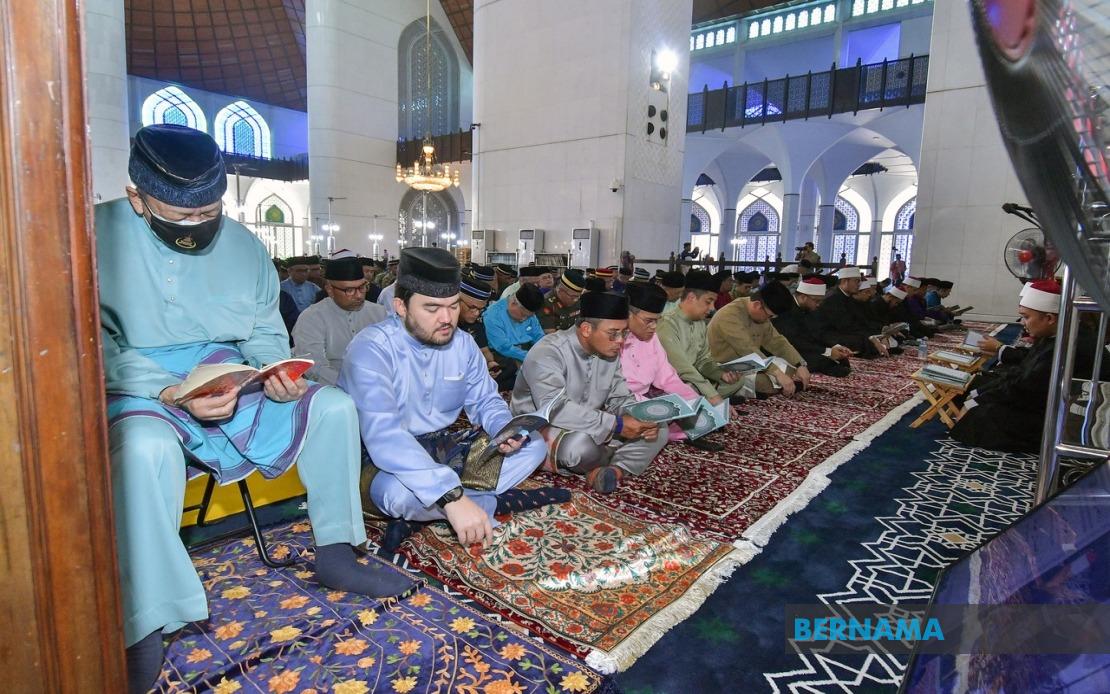
Sultan Sharafuddin Idris Shah, the reigning Sultan of Selangor, presided over a significant religious gathering on Wednesday at Masjid Sultan Salahuddin Abdul Aziz Shah in Shah Alam, participating in Surah Yassin recitation and tahlil (remembrance of God) sessions. The occasion reflected the state's tradition of marking the days preceding Merdeka with spiritual observances that underscore the role of Islam and national values in Malaysian public life.
The Raja Muda of Selangor, Tengku Amir Shah Sultan Sharafuddin Idris Shah, accompanied the Sultan throughout the proceedings, reinforcing the royal family's engagement with religious and community activities. Upon arrival at the mosque, the Sultan was received by Selangor Menteri Besar Datuk Seri Amirudin Shari and Dr Mohammad Fahmi Ngah, chairman of the State Islamic Affairs and Innovation Culture Committee, signalling the coordination between the state's political and religious leadership in organising the event.
Senior officials from Selangor's Islamic administration attended the gathering, including Datuk Mohd Shahzihan Ahmad, director of the Selangor Islamic Religious Department (JAIS), and Datuk Salehuddin Saidin, chairman of the Selangor Islamic Religious Council (MAIS). Their presence demonstrated the institutional importance placed on such religious observances within the state's governance framework, particularly during periods associated with national reflection and celebration.
Approximately 1,000 worshippers participated in the Surah Yassin recitation, a substantial turnout that included members of the security forces stationed throughout Selangor. This broad representation underscored how religious observances in Malaysia often transcend purely spiritual dimensions to become occasions for civic participation and communal bonding across different sectors of society. The inclusion of uniformed personnel highlighted the integration of state institutions in these culturally significant moments.
Following the recitation, Sultan Sharafuddin led Friday prayers at the mosque, with the Grand Imam Muhammad Farhan Wijaya delivering a sermon carrying the title "Merdeka Daripada Belenggu Kerakusan"—translating to "Freedom from the Shackles of Greed." The sermon's theme demonstrated a deliberate effort to connect spiritual and moral teachings with contemporary social values, positioning the Independence Day period as an opportunity for deeper reflection on national character and ethical governance beyond ceremonial commemorations.
The mosque's Grand Imam, who also led the congregational prayers, selected sermon content that resonated with the introspective dimension of National Day observances. Rather than focusing exclusively on historical narratives of independence, the emphasis on freedom from material excess pointed toward ongoing national conversations about equity, social responsibility, and the principles underlying Malaysia's vision for shared prosperity. Such thematic choices at state-sanctioned religious events often signal broader policy directions and values that the government wishes to emphasise.
The Selangor Sultan's participation in mid-week religious observances preceding National Day reflects a broader pattern across Malaysian states, where royal patronage of spiritual activities serves multiple functions: reinforcing the constitutional role of the monarchy in Islam, demonstrating religious commitment among the ruling elite, and providing platforms for moral and civic messaging. For Selangor, a state with significant demographic diversity and economic importance, such occasions carry particular weight in projecting inclusive governance.
The state's National Day celebrations themselves will culminate at Kajang Stadium on Sunday, August 30, commencing at 8 pm. Organised under the state-level theme "Malaysia MADANI: Kesejahteraan Dinikmati"—meaning "Malaysia MADANI: Enjoying Shared Prosperity"—the event aligns with the federal government's MADANI framework, which emphasises equitable development and social wellbeing. By prefacing these celebrations with religious observances emphasising moral discipline and freedom from avarice, state authorities attempt to ground the prosperity theme in ethical and spiritual foundations.
The coordination between the pre-celebration religious event and the formal National Day festivities illustrates how Malaysian state governance integrates multiple institutional and cultural spheres. Religious observances, political leadership, community participation, and national commemorations function as interconnected elements within a broader framework of state identity and citizen engagement. The transition from mid-week mosque gatherings to weekend stadium celebrations demonstrates the diverse mechanisms through which Malaysia approaches nation-building and public participation.
For Southeast Asian observers, Selangor's approach reflects wider patterns in how Muslim-majority nations balance secular governance frameworks with religious observances and moral education. The Sultan's leadership in framing independence celebrations through both spiritual and material prosperity lenses speaks to enduring questions across the region about development, identity, and the relationship between religious institutions and state functions. The emphasis on ethical restraint amid celebrations of prosperity also subtly addresses concerns about inequality and social cohesion that transcend Malaysia's borders.
The gathering at Masjid Sultan Salahuddin Abdul Aziz Shah, one of Malaysia's largest and most symbolically significant mosques, carried particular resonance given its architectural prominence and historical role as a venue for state religious observances. By selecting this venue for pre-Merdeka spiritual engagement, authorities reinforced connections between architectural legacies, institutional Islam, and national identity. The mosque's scale and capacity to accommodate large congregations made it ideal for demonstrating both the religious commitment of leadership and the breadth of public participation possible around national moments.

