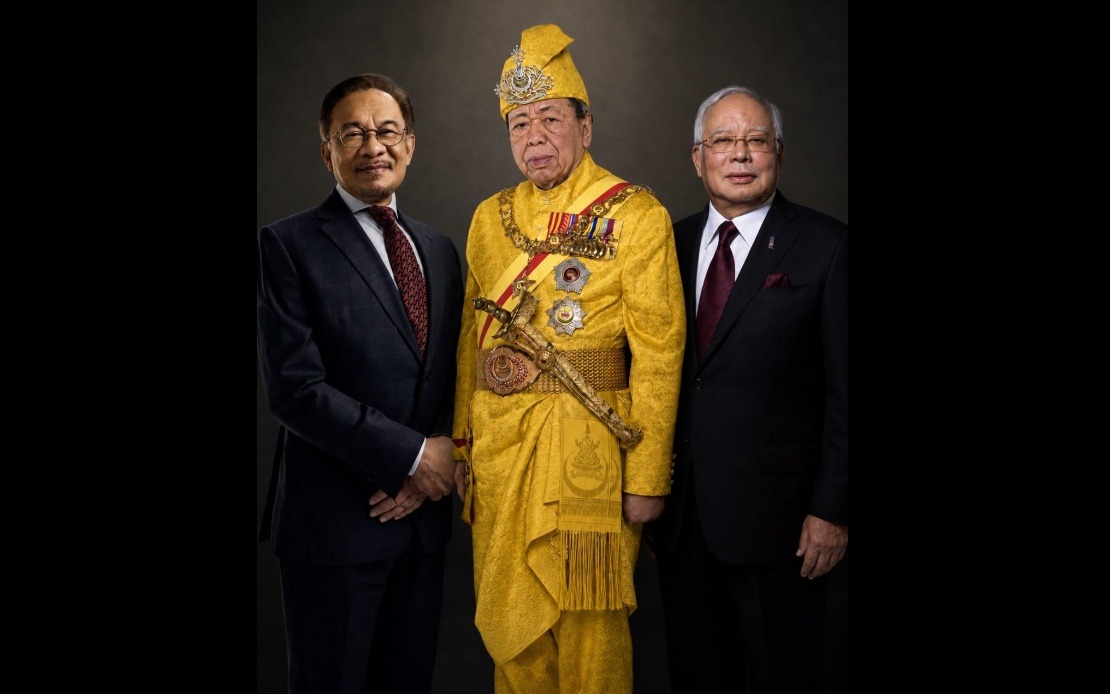
The Sultan of Selangor, Sultan Sharafuddin Idris Shah, has publicly acknowledged Prime Minister Datuk Seri Anwar Ibrahim's role in successfully bringing the Shah Alam Line LRT3 to completion, with the railway system commencing passenger services on Monday. In a statement released on Tuesday, the royal ruler expressed his gratitude that Anwar, who took office as Prime Minister and Finance Minister in 2022, moved decisively to resurrect the project after it had suffered years of stagnation and reduction in scope.
One of Anwar's most significant contributions, according to the Sultan, was the restoration of five stations that had been eliminated during the project's troubled period. Beyond restoring these critical transit points, the Prime Minister also championed an initiative to develop affordable housing in close proximity to LRT3 stations, addressing concerns about accessibility and housing affordability for commuters who would depend on the new rail corridor. The Sultan's statement emphasised that these decisions reflected a commitment to practical governance centred on meeting public needs rather than pursuing grand infrastructural vanity projects.
The genesis of the LRT3 project lay in tangible grievances raised by ordinary Selangor residents, particularly housewives who complained about their husbands struggling to return home at reasonable hours due to the severe traffic gridlock that plagued the region. This ground-level feedback prompted discussions with the government, leading initially to former Prime Minister Datuk Seri Najib Tun Razak to green-light the rail connection scheme. At that time, Klang faced a critical bottleneck, with only two bridges crossing the Klang River, exacerbating congestion during peak commuting hours. To provide immediate relief, Najib's administration abolished the Batu Tiga and Sungai Rasau toll plazas in 2018, though this measure alone proved insufficient without a longer-term transport solution.
The project's path to completion proved extraordinarily fraught with interruptions. Following the change of government in 2018, the LRT3 faced a suspension lasting more than eighteen months as the incoming administration reviewed ongoing infrastructure commitments. This initial delay was compounded by an even more severe disruption caused by the COVID-19 pandemic, which halted construction and planning for a further nineteen months until 2021. During this extended hiatus, project specifications were downgraded substantially. Station dimensions were reduced to cut costs, the number of train coaches allocated to the line was trimmed, and crucially, five proposed stations along the planned route were cancelled entirely, substantially diminishing the project's reach and utility.
When Anwar assumed power, he inherited a project that had been hollowed out and was at serious risk of further deterioration. The decision to reinstate the five cancelled stations represented a meaningful reversal of that pessimistic trajectory and signalled confidence in the project's long-term value. More broadly, the reinstatement demonstrated a willingness to invest in regional connectivity and people-centred infrastructure despite the fiscal pressures facing the national government. This approach contrasted sharply with the previous administration's tendency toward cost-cutting measures that would have diminished the line's utility for the commuters it was designed to serve.
Crucially, the Sultan took pains to emphasise that the LRT3 should never be understood as a prestige project designed to burnish any government's reputation or engineering credentials. Rather, he framed it explicitly as an essential service initiative rooted in addressing the genuine mobility challenges faced by ordinary Selangor residents, particularly those in Shah Alam, Klang and the surrounding districts. This framing matters significantly in the Malaysian political context, where infrastructure projects have sometimes been criticised as vehicles for political patronage rather than public benefit. The Sultan's insistence that the project's purpose was fundamentally utilitarian—serving commuters and easing congestion—reinforced that the priority was outcomes for ordinary people rather than symbolic or political gain.
The Sultan also explicitly cautioned against any individual or political party attempting to monopolise credit for the project's success. He stressed that the LRT3 represented the accumulated result of sustained planning, commitment, and inter-governmental cooperation across multiple administrations extending back over years. This statement reflected a sophisticated understanding of how infrastructure projects actually materialise in complex political systems, where continuity of vision and commitment across changing administrations often proves as important as individual leadership decisions. By resisting the temptation to assign exclusive credit to any single leader or government, the Sultan reinforced that major public projects belong to the nation and its people rather than to political actors.
The transportation benefits promised by the LRT3 extend far beyond simple congestion relief. The Sultan expressed confidence that the new rail corridor would substantially improve commuters' experience by offering them a faster, more comfortable, and safer alternative to the severely congested road network. For the substantial workforce that commutes between Klang, Shah Alam, and Kuala Lumpur, the availability of a direct rail link promises to reclaim significant time that was previously lost to traffic delays—time that can be redirected toward family, rest, or productive activity. This quality-of-life improvement, while not easily quantified in economic statistics, represents the genuine value of the infrastructure investment from the perspective of the people who will use it daily.
Beyond immediate commuting benefits, the Sultan anticipated that the LRT3 would catalyse broader economic development across the corridor. Improved transit connectivity typically stimulates commercial activity in surrounding areas and attracts investment to the regions served. By linking Kuala Lumpur's economic core with key secondary growth centres in Petaling Jaya, Shah Alam, and Klang, the rail line promises to strengthen the integration of Selangor's economy with the national economy. This connectivity enhancement could support more balanced regional development by making it easier for workers and businesses to operate across the wider metropolitan area rather than concentrating exclusively in Kuala Lumpur.
The Sultan placed particular emphasis on the responsibility of Prasarana Malaysia Bhd, the state-owned operator responsible for managing the LRT3, to maintain the system reliably once it enters full service. He stressed that maintaining consistent, efficient operations was essential for the line to fulfil its intended purpose of serving the public effectively. This focus on post-launch maintenance and operational excellence reflects an understanding that infrastructure value depends as much on reliable, competent management over time as on the initial engineering and construction. The public will judge the LRT3 ultimately not by the grandeur of its opening ceremony but by whether trains run punctually and safely for years to come.
The completion of the Shah Alam Line LRT3 represents a significant milestone for Selangor and a validation of Anwar's approach to infrastructure governance. By demonstrating the political will to restore previously cancelled elements of the project and commit additional resources to housing development near stations, the Prime Minister signalled that his administration's infrastructure priorities are aligned with genuine public needs rather than mere fiscal constraint. For Malaysian readers, the LRT3's successful completion offers a tangible example of how persistent advocacy for public services, combined with competent political leadership, can overcome substantial obstacles and deliver real improvements in living standards. As the line enters operation, its performance over the coming months will provide important evidence about whether such inter-governmental cooperation and commitment can consistently produce reliable outcomes for Malaysian commuters and contribute to more sustainable urban development patterns.

