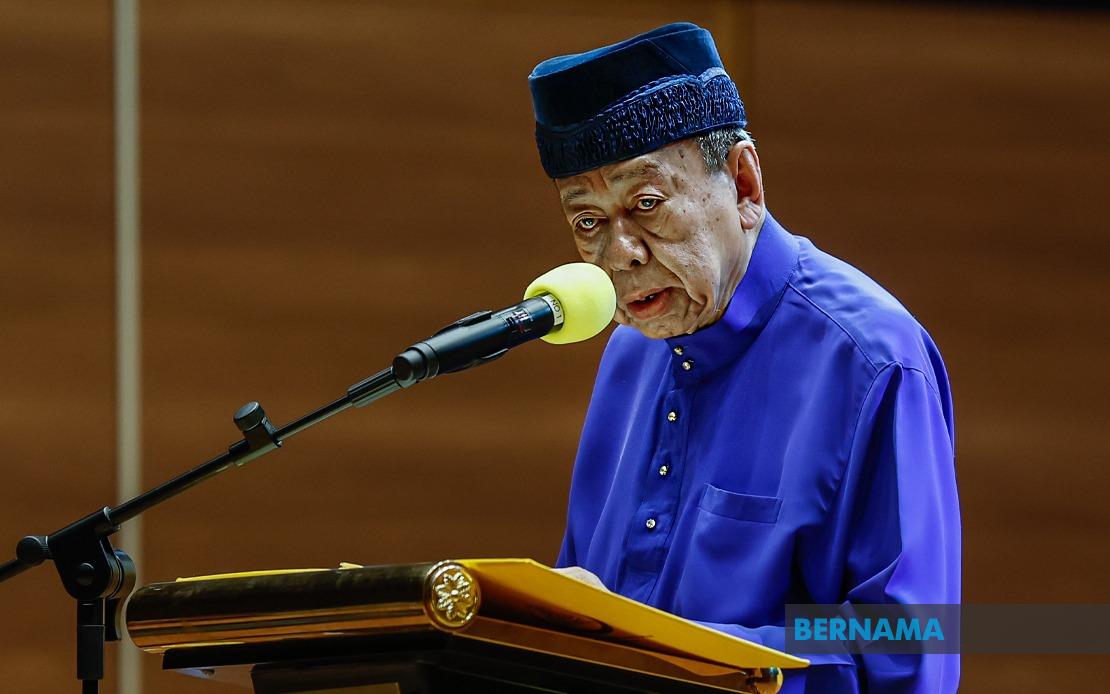
The Sultan of Selangor, Sultan Sharafuddin Idris Shah, has pressed Universiti Teknologi MARA (UiTM) to keep its academic programmes aligned with rapidly evolving global conditions, arguing that institutional relevance is now the decisive factor separating successful graduates from those struggling in competitive job markets. Speaking at UiTM's Royal Address 2026 at the Seri Budiman Concert Hall in Shah Alam, the Sultan reframed the contemporary challenge facing Malaysian higher education: where access to university places was once the primary barrier for aspiring students, the real contest today hinges on whether graduates possess the skills, knowledge and adaptability demanded by employers operating in an increasingly complex economic landscape.
The Sultan identified specific domains where UiTM must strengthen its offerings to maintain institutional relevance and graduate competitiveness. Digital technology, artificial intelligence, advanced scientific disciplines, engineering, medicine, finance, accounting, law and the burgeoning creative industries sector emerged as priority areas requiring continuous curriculum refinement. Beyond these established fields, the Sultan underscored the critical importance of UiTM anticipating and developing programmes in emerging sectors that will shape Malaysia's economic trajectory over the next decade. This forward-looking perspective reflects broader concerns across Southeast Asia regarding whether universities are sufficiently agile in responding to technological disruption and shifts in labour market demands.
Central to the Sultan's message was a deliberate tension he sought to articulate: UiTM can simultaneously honour its foundational mission of advancing Malay and Bumiputera representation in professional and academic spaces while pursuing institutional excellence that meets international standards. The Sultan explicitly rejected any framing suggesting these objectives are mutually exclusive. Rather, he contended that upholding UiTM's original mandate does not justify complacency or institutional myopia regarding competitive weaknesses. This nuanced position carries particular significance in Malaysian political discourse, where debates surrounding affirmative action policies and merit-based advancement often become polarized. The Sultan's framing attempts to establish common ground: strengthening Bumiputera educational outcomes and pursuing global competitiveness are complementary rather than contradictory goals.
Recognizing UiTM's documented success in producing influential professionals, corporate leaders and national figures, the Sultan nevertheless pivoted toward articulating a more ambitious vision for the institution's future contribution to Malaysia's development. The quantifiable evidence of UiTM's capacity to generate Bumiputera professionals, he suggested, provides a foundation upon which to build rather than a plateau upon which to rest. This distinction matters considerably for understanding the Sultan's intervention: he was not questioning UiTM's past achievements but challenging the institution to expand its scope and ambition in ways commensurate with Malaysia's positioning within the regional and global economy.
A particularly noteworthy dimension of the Sultan's address concerned the economic roles he envisioned UiTM graduates occupying. Beyond producing job seekers qualified to fill positions within existing corporate hierarchies, the Sultan emphasized the necessity of cultivating entrepreneurs, business owners, industrial leaders and innovators capable of creating economic value rather than merely consuming employment opportunities. This reflects a broader Southeast Asian preoccupation with moving beyond dependency on foreign direct investment and imported expertise toward developing indigenous innovation ecosystems. For Malaysia specifically, where concerns about brain drain and over-reliance on multinational corporations persist, the Sultan's emphasis on producing wealth creators rather than merely wealth earners represents a strategic reorientation worthy of institutional attention.
The Sultan also advocated for substantive engagement between UiTM and Malaysia's industrial and commercial sectors, warning against the production of graduates holding credentials while lacking practical capabilities employers actually require. Citing deficiencies in technical skills, professional confidence, language proficiency, analytical capacity and sector-specific competencies, the Sultan outlined a gap between academic preparation and workforce readiness that many Malaysian educators recognize as a persistent challenge. This disconnect has spawned concern among employers across the region that university degrees increasingly function as basic entry-level qualifications rather than reliable indicators of capability. The Sultan's call for stronger industry-university collaboration aligns with international best practices in higher education but requires UiTM to restructure institutional relationships and curriculum development processes.
Language proficiency emerged as a specific focus within the Sultan's intervention. He urged every UiTM student and graduate to achieve fluency in at least two additional languages beyond Malay, framing linguistic capability as essential for competing within international professional environments. This recommendation reflects broader patterns across Southeast Asia where English proficiency has become almost mandatory for career advancement in knowledge-intensive sectors, yet many graduates from regional universities struggle with communicative competence. The Sultan's emphasis on multilingualism acknowledges that UiTM's graduate population operates within increasingly interconnected regional and global economies where cross-cultural communication constitutes a fundamental professional requirement.
The Sultan devoted substantial attention to establishing the constitutional and legal foundations underpinning UiTM's institutional identity and mandate. He referenced the Universiti Teknologi MARA Act 1976 (Act 173), particularly Section 1A, and Article 153 of the Federal Constitution, emphasizing that UiTM's role in advancing Malay and Bumiputera education rests upon clear constitutional provision rather than arbitrary administrative policy. This constitutional grounding matters significantly because it positions any fundamental alteration to UiTM's founding objectives as a constitutional matter requiring consideration within broader constitutional frameworks, rather than a routine administrative adjustment. The Sultan's legal argumentation thereby elevated and protected UiTM's institutional mission against casual political or policy modification.
However, the Sultan deliberately balanced his constitutional defense of UiTM's Bumiputera-focused mandate with acknowledgment of educational rights across Malaysia's diverse population. He stressed that defending UiTM does not entail denying educational opportunities to other communities, noting that Malaysia's higher education landscape encompasses multiple institutions serving all citizens. This careful distinction reflects sensitivity to tensions that have historically characterized Malaysian debates regarding affirmative action and educational access. The Sultan's position suggests that UiTM's role in addressing historical educational inequalities among Malays and Bumiputera populations constitutes a distinct and ongoing mandate rather than a historical artifact no longer requiring institutional attention.
The Sultan also articulated a temporal dimension to UiTM's founding mission: as long as educational and socioeconomic disparities affecting Malays and Bumiputera communities persist, the institution's original mandate remains incomplete and continues demanding institutional commitment. This framing effectively counters arguments that UiTM's foundational purpose has been superseded by contemporary conditions, instead positioning ongoing Bumiputera advancement as a continuing national objective requiring sustained institutional focus. The speech thus balanced progressive educational ambitions—producing global competitors and economic innovators—with steadfast commitment to UiTM's historically rooted mission of narrowing educational gaps within specific population groups.
The presence of Higher Education Minister Datuk Seri Dr Zambry Abd Kadir at the address suggests the government is aligning with the Sultan's vision for institutional evolution. The thematic focus on excellence in educational institutions as foundations for national development indicates broader policy direction emphasizing how universities must contribute to Malaysia's competitive positioning within the region and globally. For UiTM specifically, the Sultan's address establishes clear expectations that the institution must simultaneously advance on multiple fronts: maintaining educational access and opportunity for Bumiputera populations, developing cutting-edge programmes in emerging fields, strengthening employer connections, and producing graduates capable of competing and succeeding internationally.

