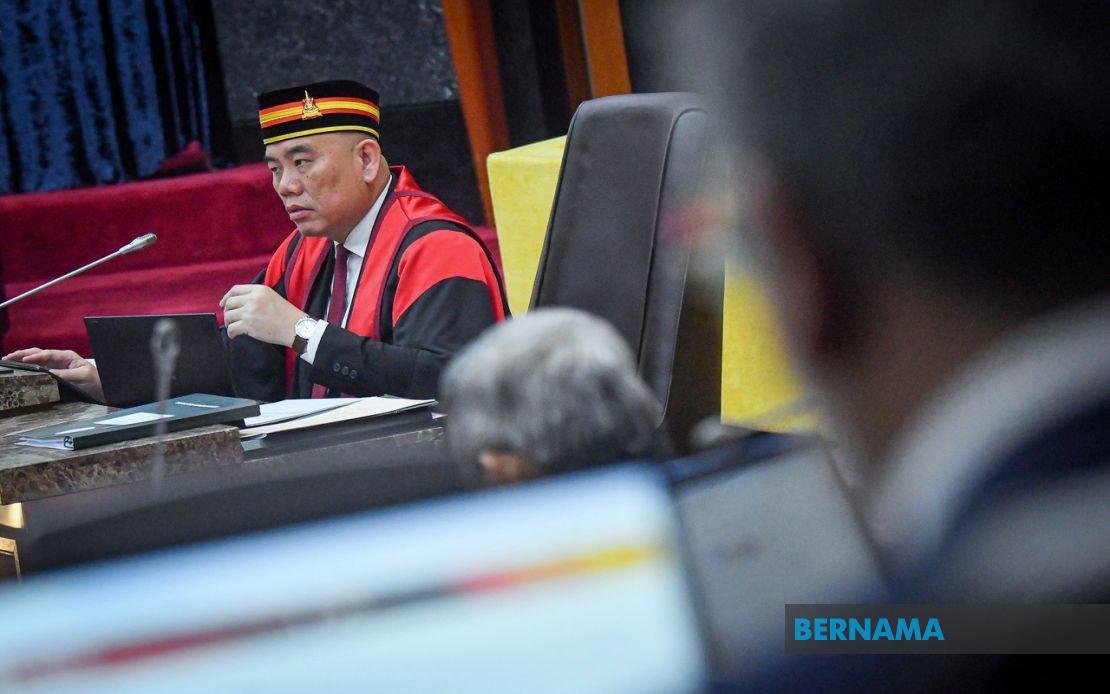
Selangor State Legislative Assembly Speaker Lau Weng San has indicated that a comprehensive review examining the standing of all state assemblymen remains underway, with the outcome potentially determining whether vacant seats will be declared in the state legislature. Speaking at Wisma Dewan Negeri Selangor in Shah Alam on August 3, Lau emphasised that the thorough investigation encompasses members from every political party and all constituencies across the state, reflecting the significance of ensuring constitutional compliance and factual precision before any formal action is taken.
The Speaker's examination process is designed to verify compliance with attendance requirements stipulated in the Selangor State Constitution. Under these constitutional provisions, any assemblyman who accumulates an absence spanning six consecutive months without securing prior permission or submitting official notification faces the prospect of having his seat declared vacant. This criterion serves as a critical mechanism for maintaining assembly functionality and ensuring legislators fulfil their fundamental parliamentary obligations.
Lau declined to specify a completion timeline for the ongoing examination, stating only that further information would be released once all necessary verification procedures had been concluded. The Speaker's cautious approach reflects the complexity inherent in assessing multiple cases, each potentially involving distinct circumstances and legitimate reasons for absence that require individual consideration before determinations are finalised.
Addressing speculation surrounding absences observed during today's assembly sitting, Lau cautioned against premature conclusions. He pointed out that the absence of one or two members does not automatically indicate they face constitutional difficulties, noting that assemblymen may miss sessions for reasons entirely unrelated to the status review, including personal scheduling conflicts, health concerns, or official duties elsewhere. This measured stance underscores the importance of distinguishing between routine absences and those that potentially contravene constitutional attendance mandates.
Several assemblymen have already submitted formal correspondence to the Speaker's office documenting their absences and providing explanations for their non-attendance at proceedings. The Speaker indicated that many of these absences are attributable to health-related circumstances, demonstrating that individual cases require nuanced assessment. Each submission will undergo detailed evaluation to determine whether it satisfies constitutional requirements for approved or justified absence before any determinations regarding seat status are pronounced.
Meanwhile, Selangor Menteri Besar Datuk Seri Amirudin Shari signalled that the review process is approaching a critical juncture. He anticipated that a definitive determination regarding at least one assembly seat would materialise during the current week, representing a significant step toward resolution of the ongoing constitutional matter. This timeline indicates momentum within the review process despite the Speaker's reluctance to specify firm completion dates.
The Menteri Besar's statement reveals an interconnected sequence of governmental procedures that must unfold in prescribed order. The state government is currently awaiting formal notification from the Speaker concerning seat status determinations. Simultaneously, the state's legal advisory body is preparing necessary documentation that will subsequently be transmitted to relevant authorities, including the Election Commission, which holds responsibility for determining whether any resulting vacancies should trigger by-election processes.
This procedural framework demonstrates the institutional separation of powers and the coordinated interaction between legislative, executive, and electoral authorities. The Speaker operates independently in assessing constitutional compliance and determining seat status, while the state legal apparatus prepares requisite documentation, and the Election Commission will ultimately determine the constitutional and electoral mechanics for addressing any declared vacancies.
For Malaysian observers, the Selangor assembly review carries broader implications regarding legislative governance and constitutional accountability mechanisms. The state legislature serves as an important testing ground for how parliamentary institutions manage attendance standards and seat vacancy procedures, with precedents established potentially influencing practices elsewhere in the federation. The meticulous approach adopted by Speaker Lau suggests an institutional commitment to ensuring that any vacancy declarations rest upon demonstrable constitutional violations rather than political expedience.
The review also reflects evolving dynamics within Selangor's political landscape, where coalition arrangements and party affiliations have shifted significantly in recent political cycles. By explicitly indicating that the examination encompasses all parties without discrimination, the Speaker underscores the non-partisan character that constitutional procedures must maintain, thereby enhancing institutional legitimacy regardless of the eventual outcomes.
From a Southeast Asian perspective, Malaysia's experience with legislative attendance requirements and seat vacancy procedures offers insights into how jurisdictions with Westminster-derived constitutional systems manage parliamentary discipline while respecting members' rights and circumstances. The Selangor case demonstrates institutional mechanisms designed to balance accountability with fairness, ensuring that constitutional rules are enforced while acknowledging legitimate reasons for absence.
The coming week will prove pivotal as the review crystallises into formal determinations and subsequent electoral procedures potentially commence. How this process unfolds will inform understanding of Selangor's institutional capacity to manage constitutional matters transparently and how Malaysian state legislatures navigate the intersection of parliamentary procedure, electoral law, and individual circumstances that shape the composition and continuity of elected assemblies.

