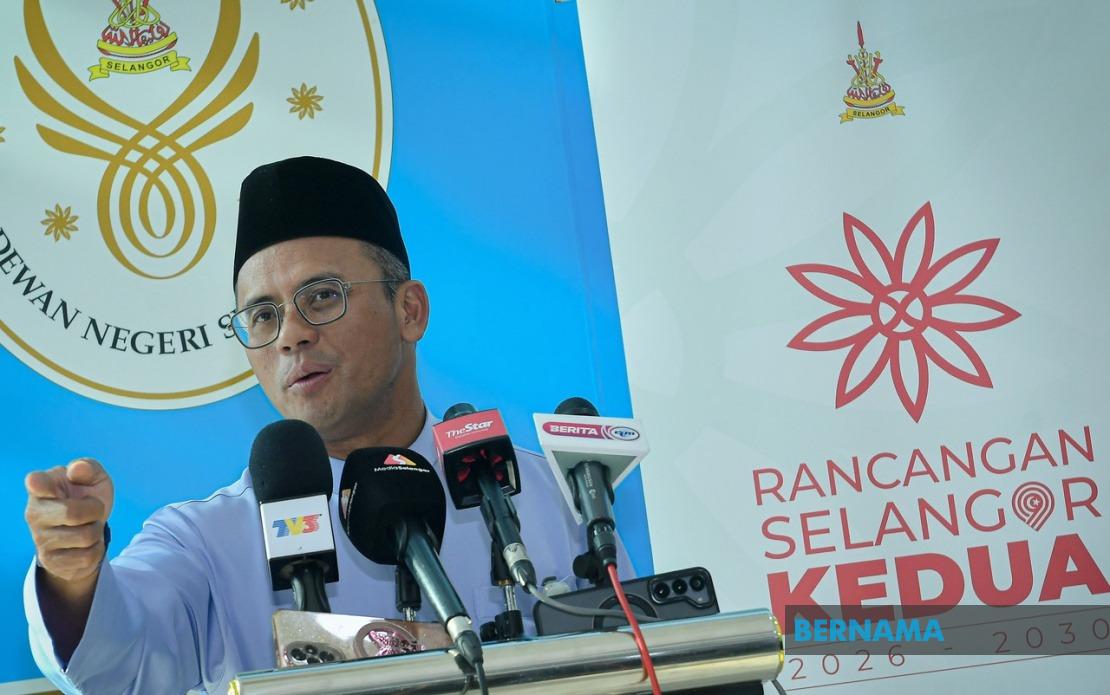
Selangor's ambitious housing drive represents one of Malaysia's most significant efforts to tackle affordability constraints that have squeezed middle and lower-income earners out of the property market. Menteri Besar Datuk Seri Amirudin Shari announced the comprehensive residential target during the state legislative assembly session, positioning the initiative as a cornerstone response to Selangor's acute shortage of properties accessible to ordinary workers. The 200,000-unit goal reflects the scale of demand in the country's most populous state, where rapid urbanisation and employment growth have created enormous pressure on available housing stock.
Progress on the ground has been substantial. To date, the Selangor government has delivered 64,188 completed units, whilst a further 69,014 remain actively under construction. These figures demonstrate momentum in the development pipeline, bringing cumulative achievements to 133,202 units—approximately two-thirds of the eventual target. The pace of delivery suggests the state expects to reach its goal within a reasonable timeframe, though broader economic conditions and construction constraints could affect final timelines. For comparison, Malaysia's total housing production across all categories has struggled to match demand, making Selangor's focus particularly noteworthy.
The RS-2 scheme goes beyond traditional homeownership models by incorporating a rental pathway that recognises the financial realities facing many Malaysians. The Selangor Housing and Property Board (LPHS) will retain 30 per cent of tenants' monthly rental payments and accumulate these as a housing deposit, converting rental expenditure directly into equity for future purchase. This mechanism addresses a persistent barrier: many aspiring homeowners accumulate little savings because rental outgoings consume most disposable income. By capturing this portion automatically, the scheme creates a forced savings vehicle that simultaneously provides affordable housing access and a gateway to ownership.
This rental-to-ownership innovation carries significant implications for rental market dynamics in Selangor. Traditional landlords may face pressure as the state actively competes in the rental sector, potentially moderating private rental rates whilst establishing transparent, regulated alternatives. Residents gain security through formal agreements and predictable pathways to ownership, departing from informal arrangements that often characterise affordable housing markets. The psychological dimension matters equally—tenants viewing rental payments as investments toward homeownership report greater satisfaction and stability than those without ownership prospects.
Selangor's commitment to integrated urban planning distinguishes this programme from conventional housing schemes. New developments designated as Rumah Selangorku Harapan and Rumah Selangorku Idaman must incorporate bus stops, embedding public transport access into neighbourhood design. This requirement reflects lessons learned from earlier schemes where housing affordability gains were offset by transportation costs consuming substantial household budgets. Workers in Selangor's manufacturing, services, and logistics sectors often travel significant distances; inaccessible residential estates effectively inflate the true cost of living below the negotiated property price.
Frequency improvements in LRT and MRT services form another pillar of accessibility enhancement. The state government recognises that affordable housing loses its advantage when transit connections remain infrequent or poorly integrated. Planning for covered walkways at transit stations addresses climate considerations critical to the Malaysian context—protection from equatorial rain and sun improves station usage and encourages modal shifts away from private vehicles. For lower-income households, eliminating motorbike or car usage generates monthly savings comparable to housing payment reductions.
The proposed household wellbeing index represents a deeper governmental commitment to outcomes-based policy rather than simple unit delivery counts. Evaluated at 12-month and 24-month intervals, this framework will track whether residents' overall circumstances genuinely improve following housing provision. The index addresses a gap in Malaysian housing policy where occupancy statistics often mask underlying hardship—residents might obtain affordable homes yet face transportation, childcare, or employment accessibility challenges that perpetuate financial strain. Systematic evaluation creates accountability for holistic impact.
Selangor's approach carries strategic importance for Malaysia's broader economic competitiveness. Neighbouring Singapore and advanced Thai cities have demonstrated that housing affordability directly influences talent retention and productivity. Engineering firms, technology companies, and medical facilities increasingly compete for skilled workers unwilling to commute hours or consume wages on housing costs. Selangor's programme essentially invests in workforce stability and sectoral attractiveness, making the initiative a labour supply strategy alongside social provision.
The technology integration component—using data analytics to identify high-traffic areas, gathering points, and housing estate locations for transit planning—signals modernisation of Malaysian governance. Rather than relying on anecdotal observations or political pressure, Selangor proposes evidence-based infrastructure deployment. This approach could reduce costly misallocations common when bus routes or transit stops are placed without rigorous demand analysis. However, the state's implementation capacity will determine whether technology becomes a genuine decision-making tool or merely another bureaucratic requirement.
Regional implications extend across Southeast Asia, where Malaysian states increasingly compete with Bangkok, Ho Chi Minh City, and Manila for investment and skilled migration. Affordable housing availability functions as a competitive variable alongside tax regimes and infrastructure quality. Selangor's prominent push positions the state as taking housing equity seriously, potentially enhancing its regional brand. Other Malaysian states and Southeast Asian jurisdictions monitoring Selangor's RS-2 outcomes will calibrate their own programmes accordingly.
Challenges remain substantial. Land acquisition costs in desirable Selangor locations continue climbing, potentially restricting where affordable units can be constructed. Developers require adequate profit margins; overly aggressive affordability mandates risk reducing supply or quality. Construction labour shortages and material cost volatility add uncertainty to project timelines and final delivery. Additionally, maintaining affordability across homeownership transitions—ensuring second-hand markets don't rapidly inflate prices beyond target demographics—requires ongoing policy attention.
The 200,000-unit target ultimately reflects political will to acknowledge that market mechanisms alone have failed Malaysia's working classes. By combining delivery ambition with innovative financing, integrated planning, and outcome measurement, Selangor attempts a more holistic response than earlier subsidised housing initiatives. Success requires sustained funding, political continuity across electoral cycles, and genuine commitment to serving lower-income populations rather than deploying programmes purely for announcement value.

