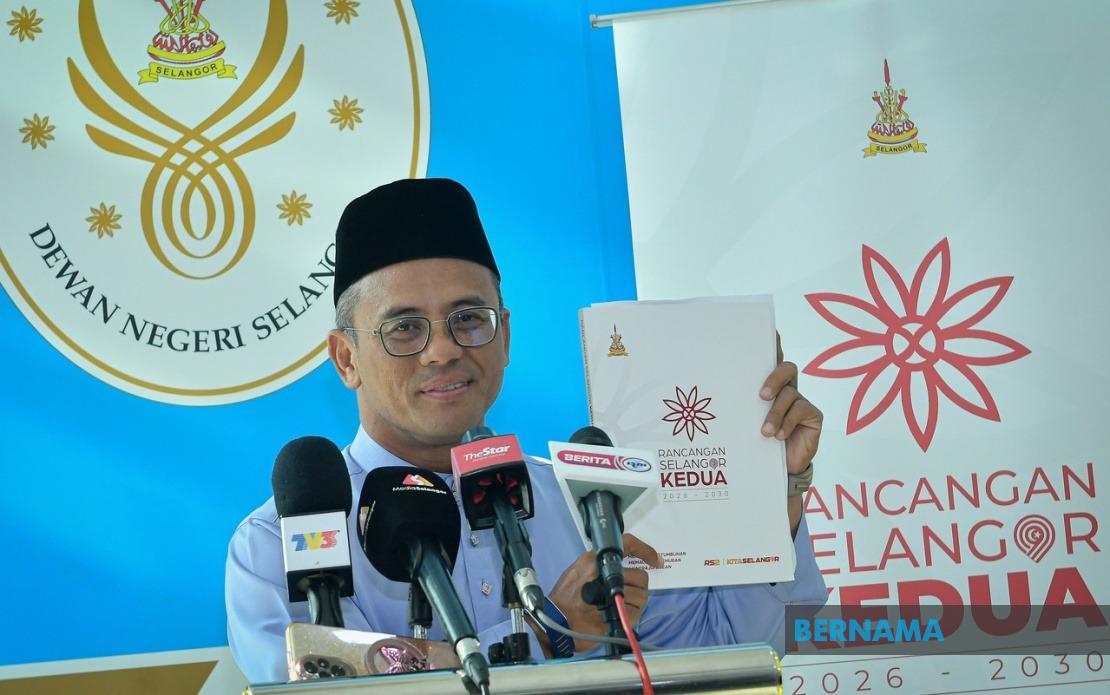
Menteri Besar Datuk Seri Amirudin Shari has set a demanding new benchmark for Selangor's local government system, requiring all 48 municipal and district councils across the state to attain a 95 per cent performance score under the PBT Star Rating System (SPB-PBT) within the next six years. The announcement, made during tabling of the Second Selangor Plan (RS-2) at the state legislative assembly in Shah Alam, represents a significant escalation in accountability measures aimed at narrowing performance gaps between high-performing and underperforming authorities.
The target underscores the state government's philosophy that service quality should not be a privilege confined to affluent or well-managed areas. Currently, performance varies considerably across Selangor's diverse local authorities, from highly urbanised councils managing Kuala Lumpur's outer suburbs to rural districts with more limited resources. By enforcing a uniform 95 per cent threshold, the administration signals its intention to level the playing field and ensure that residents in every jurisdiction—regardless of local economic conditions or administrative capacity—receive comparable standards of waste management, licensing, development control, and public amenities.
The 95 per cent benchmark aligns with international best practice metrics used in developed nations for local government performance assessment. This places Selangor among the first Malaysian states to articulate such a specific, measurable, and time-bound service standard for its entire PBT network. The state's choice of 2030 allows a six-year implementation window, providing authorities with sufficient time to address operational deficiencies, invest in infrastructure, and upskill personnel—though critics may argue the timeline remains tight given existing resource constraints in smaller councils.
Parallel to this, Amirudin outlined an aggressive digital transformation programme targeting 85 per cent adoption of End-to-End Digital Government Service Sharing across all platforms. This initiative seeks to streamline interactions between residents and local authorities by consolidating permit applications, rate payments, complaint lodgement, and service requests into integrated digital ecosystems. The emphasis on digital service delivery reflects recognition that modern residents increasingly expect seamless online experiences comparable to private sector standards, particularly in a state where urban populations are tech-savvy and accustomed to e-commerce convenience.
The digital push carries implications for smaller PBTs lacking robust IT infrastructure. Implementation will likely require substantial central government funding and technical support to upgrade legacy systems, train frontline staff, and establish cybersecurity protocols. Selangor's relatively stronger fiscal position compared to other states positions it better to absorb such costs, though questions remain about whether federal grants will supplement state resources to achieve equitable digital access across all 48 councils.
Crucially, Amirudin emphasised that PBT leadership must treat public feedback as actionable intelligence rather than administrative burden. Whether complaints arrive through traditional channels, social media platforms, or direct citizen engagement, authorities must investigate thoroughly and implement corrective measures. This governance principle addresses a chronic weakness in Malaysian local government culture, where public grievances sometimes languish unresolved or receive perfunctory acknowledgment. By mandating documented response protocols, the state hopes to inject genuine accountability into the PBT system and rebuild public confidence in local institutions.
Beyond operational improvements, the RS-2 grapples with Selangor's structural revenue vulnerability. The state currently derives approximately 75 per cent of its income from land-related sources—premiums on development rights and rental revenues from state-owned properties. This dangerous concentration exposes state finances to property market fluctuations and limits funding flexibility during economic downturns. The government-linked company (GLC) sector represents the proposed lever for diversification, with plans to establish a comprehensive State Investment Holding company that will consolidate existing subsidiary enterprises and potentially generate new revenue streams through equity appreciation and dividend flows.
Integrating GLCs into RS-2 objectives aims to eliminate functional duplication while channelling reinvestment into technology-enabled services and high-value sectors. Selangor's GLCs currently operate across diverse portfolios including property development, water management, waste treatment, and tourism. A centralised holding company structure would theoretically improve governance, reduce administrative overhead, and align corporate objectives with state development priorities. However, this restructuring carries execution risks—complex reorganisations often encounter resistance from entrenched management, staff redundancies trigger industrial relations complications, and operational disruptions can temporarily degrade service quality during transition periods.
The revenue diversification strategy reflects sophisticated fiscal thinking unusual in Malaysian state governance. Rather than pursuing incremental efficiency gains, Amirudin's administration acknowledges that sustainable revenue growth requires deliberate economic structural transformation. This aligns with Selangor's positioning as a knowledge economy hub, where technology services, creative industries, and financial technology constitute faster-growing sectors than traditional property development. By channelling GLC resources and private sector partnerships into these domains, the state hopes to gradually reduce dependence on land-based revenues and build more resilient income foundations.
For Malaysian local government observers and Southeast Asian governance specialists, Selangor's RS-2 represents a noteworthy attempt at comprehensive PBT reform. The combination of specific performance metrics, digital modernisation, systematic feedback mechanisms, and fiscal innovation addresses multiple dimensions of local government effectiveness simultaneously. However, success hinges on political consistency across electoral cycles, sustained resource allocation despite competing spending priorities, and genuine behavioural change among PBT administrators accustomed to more lenient performance expectations.
The international dimension warrants attention as well. Selangor's experience with PBT Star Rating implementation and digital service integration will likely inform policy discussions across ASEAN, where numerous countries grapple with similar challenges of improving local government responsiveness and efficiency. If Selangor achieves meaningful results by 2030, its methodology could offer replicable lessons for urban-heavy states in Indonesia, Thailand, and Vietnam wrestling with explosive metropolitan growth and citizen expectations for transparent, efficient municipal governance.

