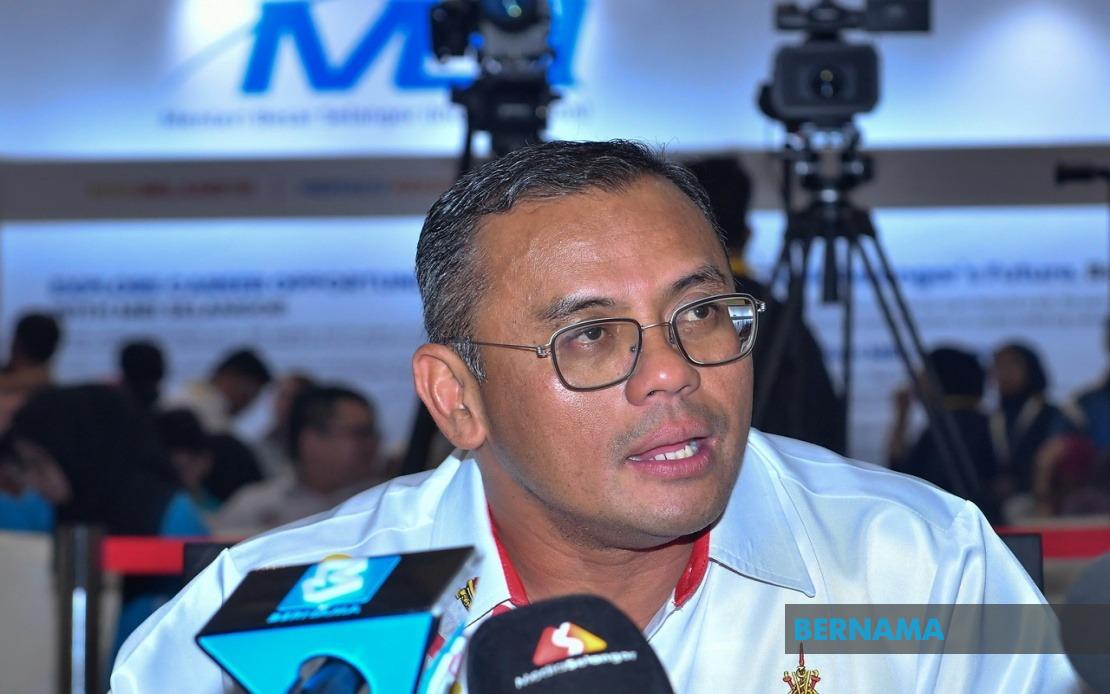
The Selangor state government is mobilising resources to cushion the impact on workers facing redundancy following Panasonic Malaysia Sdn Bhd's decision to halt television production operations at its Kuala Lumpur facility by the end of March next year. Menteri Besar Datuk Seri Amirudin Shari announced that state officials will convene with the affected workforce next week to explore concrete assistance measures and employment alternatives, signalling the administration's commitment to mitigating the fallout from the closure affecting approximately 400 employees.
The planned intervention reflects a broader recognition in Malaysia's manufacturing sector that factory closures carry significant social consequences, particularly in industrial hubs like Selangor where thousands depend on mass-production employment. By arranging early engagement with workers and social security agencies, the state hopes to prevent prolonged periods of joblessness and the associated household financial strain that typically follows sudden retrenchments in the electronics sector.
State Human Resources, Poverty Alleviation, Indigenous & Minority Affairs Committee chairman V. Papparaidu will spearhead the government's response, working alongside representatives from the Social Security Organisation (PERKESO) to gather detailed information from affected workers about their circumstances, qualifications, and employment preferences. This collaborative approach positions social security expertise alongside state employment resources, creating a more comprehensive support framework than either agency could provide independently.
The immediate relief measures being considered include provision of food baskets to affected households, acknowledging that the transition period between job loss and new employment creates genuine hardship. However, the state government is framing these interventions as stepping stones rather than permanent solutions, with emphasis on active job-seeking facilitation and sustainable reemployment in alternative sectors.
PERKESO's involvement introduces a newly expanded safety net that appears tailored to precisely this scenario. The agency's retrenchment protection scheme provides staged income replacement, beginning at 80 per cent of a worker's salary in the first month following job loss, declining to 50 per cent in the second month and 30 per cent thereafter. This declining structure incentivises relatively swift reemployment while offering meaningful financial protection during the vulnerable early months of unemployment. For many production workers in Selangor's manufacturing base, such a backstop could prove transformative in avoiding debt accumulation or housing insecurity.
The Panasonic closure arrives as Selangor's labour market continues absorbing workforce transitions in the consumer electronics sphere. The company's announcement to cease operations in this segment reflects broader structural shifts within the manufacturing industry, where production decisions increasingly centralise in lower-cost jurisdictions or shift toward higher-value manufacturing segments. Understanding these dynamics helps contextualise why state-level intervention focuses on retraining and placement rather than attempting to preserve operations that have become economically unviable.
Concurrently, the state is showcasing employment alternatives through the Selangor Mega Jobcare 2026 programme, which assembled 147 employers offering over 11,000 vacancies across diverse sectors. Significantly, 62.2 per cent of advertised positions command monthly salaries exceeding RM3,000, suggesting that job market alternatives for production workers exist within reasonable reach. The career fair's targeting of participants aged 18 to 60 reflects recognition that retrenchment affects workers across career stages, from mid-career employees to those nearing retirement, each facing distinct challenges in securing comparable replacement positions.
For Malaysian policymakers, the Panasonic situation illustrates tensions inherent in maintaining competitive electronics manufacturing. Malaysia's value proposition rests partially on relatively stable labour costs and business continuity, yet global supply chain pressures and technological evolution regularly compel factory closures. The state's proactive engagement demonstrates how administrative systems can soften such transitions, though structural limitations remain: no amount of job-seeking allowances fully replace lost tenure, seniority benefits, or the stability that long-term employment provides.
The meeting scheduled for next week represents a critical juncture for translating government commitments into concrete pathways for affected workers. Success will ultimately be measured not merely by attendance or the generosity of announced assistance, but by actual job placements achieved, the wage comparability of new positions, and whether workers can maintain established living standards in Selangor communities where they have established roots and social networks.
This intervention also carries implications for Southeast Asia's broader manufacturing ecosystem. As countries compete for electronics production operations, post-closure worker support becomes an increasingly visible competitive factor. States that demonstrate capacity to manage transition crises effectively may gain reputational advantage in attracting subsequent manufacturing investment, signalling that workforce stability extends beyond employment terms to include community resilience.
Moving forward, the effectiveness of Selangor's approach will likely influence how other Malaysian states and ASEAN neighbours structure their own industrial adjustment policies. The combination of immediate relief, income protection, and active labour market intervention represents a model that acknowledges both humanitarian and economic imperatives in managing manufacturing transition.

