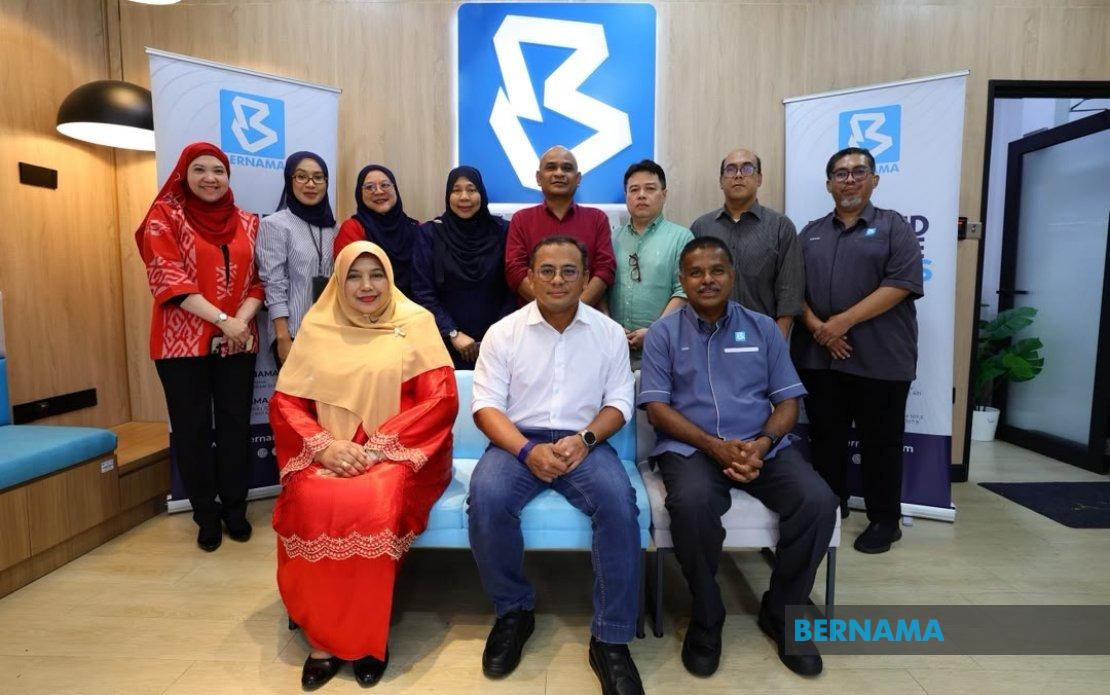
Selangor Menteri Besar Datuk Seri Amirudin Shari made an unscheduled visit to the Malaysian National News Agency's Negeri Sembilan bureau on July 20, where he observed the organisational machinery driving media coverage of the 16th Negeri Sembilan state election. The visit, conducted in his capacity as Pakatan Harapan's election director, underscored the significance both political leadership and news organisations place on systematic election reporting during high-stakes state campaigns in Malaysia.
The Selangor leader arrived at the Bernama facility at 2 pm, where he was received by chief executive officer Datin Paduka Nur-ul Afida Kamaludin and editor-in-chief Arul Rajoo Durar Raj. The presence of senior management, including deputy editor-in-chief of News Services Mohd Shukri Ishak and Negeri Sembilan bureau chief Nursyabiha Sukri, reflected the importance of the occasion. Such high-level engagements between political figures and news agencies illustrate how Malaysian state elections generate broader institutional attention across government and media infrastructure.
During the visit, Amirudin received a detailed briefing from Negeri Sembilan election coverage coordinating editor Mohd Hisham Abdul Rafar on the agency's operational approach to the polls. This marked the third day of the campaign period, a stage when news organisations typically consolidate their reporting strategies and assess coverage gaps. The briefing likely covered distribution channels, story prioritisation, interview scheduling, and the coordination mechanisms between Bernama's various bureaus to ensure comprehensive statewide election coverage.
The structure of Bernama's election operations room reflects broader patterns in Malaysian media management during electoral periods. News agencies establish dedicated command centres to streamline reporting across multiple constituencies, coordinate interviews with candidates and officials, and ensure balanced coverage reaches diverse audiences through print, broadcast, and digital platforms. Such centralised operations rooms have become standard practice in Southeast Asian democracies, enabling news organisations to manage the logistical complexity of covering dozens of electoral contests simultaneously.
Beyond the standard operational briefing, Amirudin was scheduled to participate in a Bernama TV interview session to discuss election developments. This arrangement demonstrates how political leaders and news organisations choreograph engagement during campaigns, with media outlets securing exclusive commentary from prominent figures while politicians gain controlled access to audiences. For Malaysian readers, such interviews typically provide insight into opposition perspectives on state governance, economic management, and local policy priorities that distinguish regional contests from national politics.
The timing of the visit conveyed additional significance. With early voting scheduled for July 28 and polling day set for August 1, the campaign had entered a critical phase where media narrative influence peaks. Amirudin's inspection of Bernama's operations signalled confidence in the agency's institutional capacity to manage election coverage fairly, while simultaneously providing his coalition with visibility into editorial processes. Such transparency visits have become routine among Malaysian political leaders seeking to shape media perception of electoral fairness.
Negeri Sembilan state elections carry particular weight within Malaysia's political economy. As a Pahang-adjacent state with significant tin-mining heritage and growing suburban development linked to Kuala Lumpur's expansion, Negeri Sembilan's electoral outcomes often signal broader trends in Klang Valley politics and Selangor-Negeri Sembilan regional dynamics. A Pakatan Harapan coalition director personally monitoring media coverage in the state underscores the competition's intensity and the coalition's determination to influence messaging in this strategically important jurisdiction.
The election itself reflects Malaysia's complex multi-level governance structure. State elections, though administratively distinct from federal politics, remain deeply influenced by national party dynamics and federal-state fiscal relationships. Negeri Sembilan voters, like their counterparts across Malaysia, frequently cast ballots influenced by assessments of both state and national performance, making comprehensive election coverage essential for informed democratic participation. Bernama's role in providing reliable factual reporting thus extends beyond journalistic duty to supporting voters' capacity to engage meaningfully with the electoral process.
For Malaysian newsrooms and political observers, Bernama's election operations room represents an institutional model balancing multiple stakeholder interests. The agency operates under charter obligations to serve public information needs while maintaining the editorial independence necessary for credibility. Amirudin's visit acknowledged this dual role, recognising both Bernama's institutional importance and the agency's responsibility to cover all political contestants with consistent standards.
The visit also illustrated Malaysia's particular approach to election administration and coverage coordination. Unlike some democracies where news organisations maintain strict separation from electoral authorities, Malaysian media institutions frequently collaborate with the Election Commission and engage directly with political parties during campaigns. This model assumes mutual understanding of democratic norms and institutional responsibility, though it occasionally generates debate about editorial boundaries and perceived favouritism.
Looking forward, the Negeri Sembilan election results will likely influence calculations about opposition performance in the Klang Valley region and beyond. Media coverage quality during the campaign period significantly shapes voter perceptions of candidate viability and coalition competence. Amirudin's personal engagement with Bernama's coverage operations reflected his coalition's understanding that institutional arrangements determining what stories reach voters, how prominently they appear, and in what narrative context ultimately influence electoral outcomes.
The Malaysian political calendar includes frequent state elections across different regions, yet each contest generates distinctive local dynamics and involves distinct stakeholder coalitions. Negeri Sembilan's 16th state election, scheduled to conclude August 1, represents one data point in the continuous process through which Malaysia's voters periodically assess state governments' performance and regional representatives' capacity to serve constituent interests. Bernama's systematic coverage approach, overseen by the agency's management and observed by the Selangor Menteri Besar, contributed to ensuring that voters received the information necessary to exercise their democratic choice.

