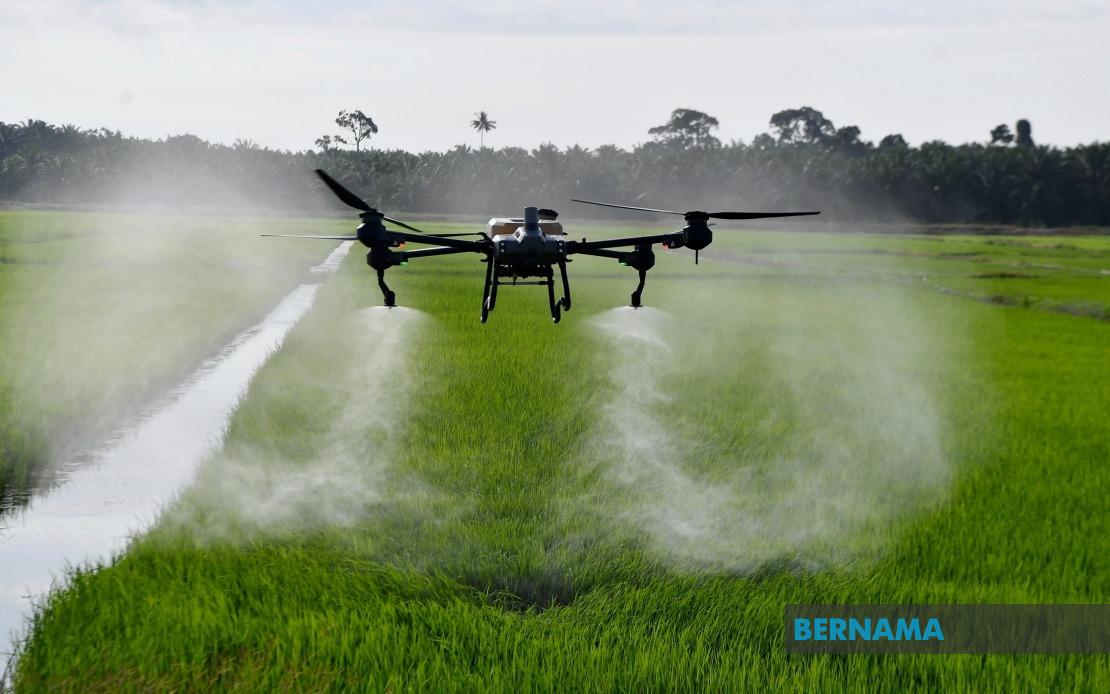
Selangor is doubling down on its ambitions to become a regional hub for unmanned aerial vehicle technology, allocating RM500,000 to accelerate development of the state's drone ecosystem and supporting infrastructure. The investment, announced at the pre-launch ceremony of Droneport-1000 at Universiti Selangor, represents a strategic pivot toward high-technology sectors as part of the state's broader economic diversification agenda heading into 2027.
Dr Mohammad Fahmi Ngah, who chairs Selangor's Islamic Affairs and Innovation Culture Committee, emphasized that this funding injection exceeds previous allocations and targets completing critical infrastructure upgrades while establishing collaborative programmes with the private sector. The commitment reflects growing recognition that drone technology extends far beyond the manufacture of hardware itself, encompassing software engineering, artificial intelligence applications, and semiconductor chip production—sectors already emerging in areas like Puchong.
The Droneport-1000 project itself represents an ambitious undertaking, designated as Malaysia's largest controlled airspace corridor spanning 24 square kilometres with operational altitude reaching 1,000 metres. Currently working toward full certification from the Civil Aviation Authority of Malaysia, the facility positions Selangor to compete with regional counterparts and attract international investment in what officials regard as a transformative technology domain.
To stimulate participation from both domestic and foreign enterprises, Selangor is preparing incentive packages including matching grants that would offset initial development costs for companies establishing operations within the state's drone technology framework. This approach mirrors successful models elsewhere in Southeast Asia where government-backed financing mechanisms have accelerated cluster development and attracted multinational technology firms seeking manufacturing and innovation bases.
The project's potential economic impact extends beyond traditional commercial applications. Officials point to substantial utility in environmental monitoring, where drone-based surveillance coupled with artificial intelligence could more effectively detect forest reserve encroachment, track coastal erosion patterns, and identify bund breaches across the state's monitoring zones—areas covering up to ten times the landmass of Singapore. This surveillance capability reduces dependence on labour-intensive manual inspection while enabling faster response times to emerging environmental challenges.
Leading the charge are partnerships between the state government subsidiary and Geospatial SmartSel, supported by established technology firms including Aerodyne. This ecosystem approach, bridging government, academia, and private enterprise, recognizes that sustainable sector growth requires collaboration rather than isolated initiatives. Universiti Selangor's role as a physical and intellectual anchor provides research capacity and early-stage talent development essential for long-term competitiveness.
Zannifa Azura Ahmad, chief executive of Selangor Aviation & Technology Innovation, framed Droneport-1000 as a critical bridge between academic research and commercial reality. The facility aims to connect emerging talent with industry practitioners while facilitating the transition of prototype technologies into market-ready products—a gap that has historically constrained Malaysian tech sectors from achieving global scale.
The timing of this investment reflects broader regional dynamics shaping Southeast Asian technology policy. As countries including Singapore and Thailand expand their unmanned systems capabilities, Selangor faces pressure to establish competitive advantages quickly or risk losing both investment and talent to neighbouring jurisdictions. The drone sector specifically offers lower barriers to entry than semiconductor manufacturing or aerospace assembly, making it an attractive pathway for state governments seeking rapid technology sector development.
For Malaysian firms, the initiative provides access to testing grounds and certification infrastructure that previously required overseas partnerships or international relocation. This domestication of capacity carries implications throughout the supply chain, from component suppliers to software developers to logistics providers integrating drone deliveries into last-mile operations.
The RM500,000 allocation, while modest compared to international counterparts' investments in emerging technologies, signals commitment and establishes foundational infrastructure for larger subsequent rounds of funding and private capital attraction. The state's ability to secure full regulatory certification from CAAM will prove decisive in demonstrating to international firms that Selangor offers genuinely functional operational environments rather than theoretical frameworks.
Beyond Selangor's borders, this development carries implications for Malaysia's positioning within ASEAN's technology landscape. Successful cultivation of a viable drone industry cluster could anchor broader expertise in autonomous systems, artificial intelligence, and sensor technology—domains increasingly central to regional economic competition and technological sovereignty.

