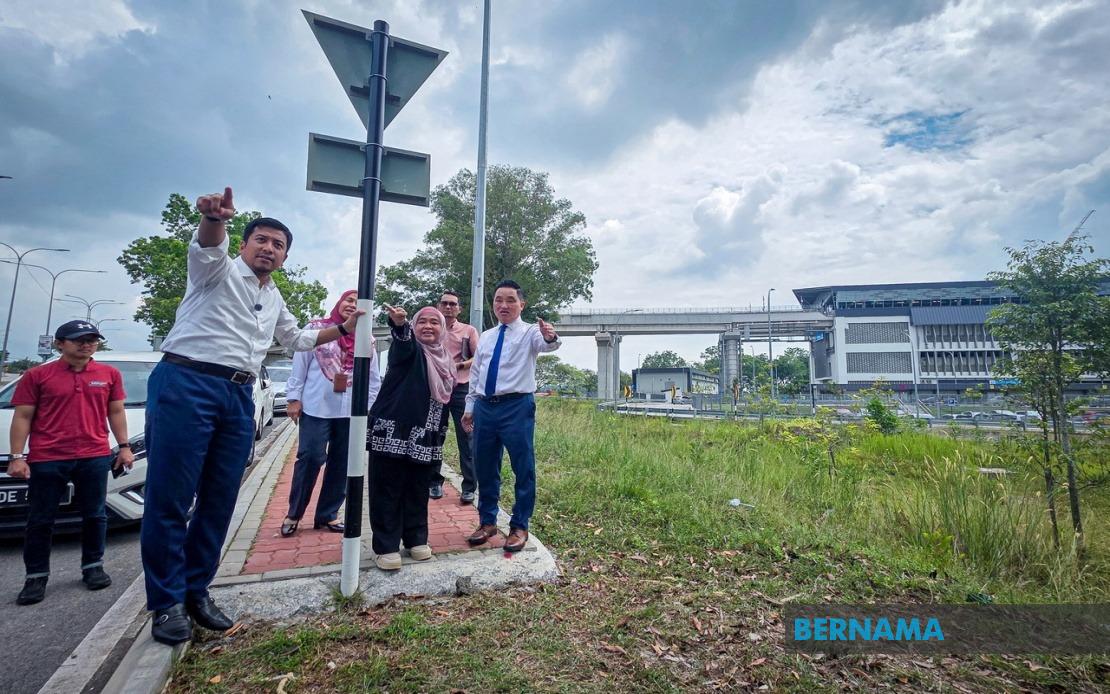
The Selangor State Government has pledged to expedite improvements to accessibility infrastructure surrounding the Shah Alam Line LRT3 stations, recognising that several critical facilities remain incomplete despite the rail line's operational launch. State Local Government and Tourism Exco Datuk Ng Suee Lim outlined the administration's plans to prioritise connectivity enhancements that will benefit the growing number of daily commuters relying on this vital public transportation corridor.
There are two primary problem areas commanding immediate attention. At Dato' Menteri Station, the focus centres on administrative and permitting obstacles that have delayed the installation of essential pedestrian infrastructure. Datuk Ng indicated that Prasarana Malaysia has received clear instructions to finalise these outstanding facilities within a two-month window, suggesting that bureaucratic hurdles rather than technical challenges are the primary constraint. This timeline indicates a pragmatic approach, acknowledging that certain approvals and regulatory clearances cannot be rushed but can be prioritised through high-level government intervention.
The situation at Shah Alam Stadium Station presents a more complex scenario, as the government must coordinate with private developers undertaking adjacent commercial or residential projects. The tender process governing these private sector improvements introduces variables beyond direct government control, creating longer timelines than initially anticipated. Nevertheless, Datuk Ng emphasised that the state administration maintains active oversight of these developments, signalling that officials will not allow private interests to indefinitely delay public amenities. This collaborative but vigilant approach reflects the practical realities of modern urban development in Malaysia, where public and private infrastructure frequently intersect.
The acknowledgement of shortcomings in the original project completion demonstrates a degree of transparency that increasingly characterises Malaysian governance discourse. Rather than deflecting responsibility, Datuk Ng openly conceded that newly operational transport systems typically require post-launch refinements as real-world usage patterns reveal design gaps not apparent during planning stages. This candid assessment extends the accountability cycle beyond the initial commissioning phase, embedding ongoing improvement as a government responsibility rather than treating infrastructure as static once handed over to operators.
The Shah Alam City Council (MBSA) will assume a coordinating role in monitoring progress across multiple improvement initiatives, bringing local government closer to the implementation process. This decentralisation of oversight responsibilities distributes accountability across multiple administrative layers, potentially accelerating responsiveness. Additionally, a forthcoming coordination meeting with relevant developers signals an attempt to align private construction timelines with public infrastructure priorities, recognising that seamless connectivity depends on synchronised completion of interconnected projects.
The government's directive to all Local Authorities (PBT) operating LRT3 stations within their respective jurisdictions to conduct comprehensive reviews addresses a systemic issue rather than isolated problems. By institutionalising regular assessments of connectivity facilities, the administration creates a standardised accountability mechanism applicable across all stations on the Shah Alam Line. This comprehensive approach prevents ad hoc problem-solving and establishes proactive rather than reactive maintenance cultures within local authorities.
Engagement with elected representatives, including state assemblymen and municipal councillors, represents an attempt to decentralise feedback mechanisms. By tasking these elected officials with gathering grassroots information about connectivity shortcomings, the government taps into local knowledge networks that formal inspections might overlook. This inclusive approach acknowledges that commuters and residents often identify problems before they become formally documented, leveraging their experiential insights to guide improvement priorities.
For Malaysian commuters, particularly in the Klang Valley region where LRT3 serves multiple residential and commercial hubs, these commitments carry practical implications. Enhanced pedestrian infrastructure directly improves accessibility for non-motorised trips to and from stations, potentially increasing overall ridership and reducing urban congestion. Safe, well-designed crossings and walkways are essential components of sustainable transport systems, transforming rail connectivity from a single corridor benefit into a broader urban mobility solution.
The two-month deadline for Dato' Menteri Station and the parallel efforts at Shah Alam Stadium Station represent a test case for Selangor's infrastructure governance. How efficiently the state administration navigates permitting delays and private sector coordination will establish precedents for managing future transport projects. This particular situation exemplifies challenges that Malaysia will repeatedly encounter as public transit networks expand across the Klang Valley and other metropolitan regions, making the outcomes instructive for broader urban planning discourse.
The government's willingness to publicly acknowledge gaps and commit specific timelines also reflects evolving expectations among Malaysian urban populations regarding transport infrastructure quality. As living standards rise and regional competition intensifies—with neighbouring Thailand and Singapore showcasing highly polished transit systems—Malaysian authorities face increasing pressure to deliver comparable standards. The Selangor government's proactive stance on LRT3 connectivity improvements responds to these competitive dynamics while attempting to rebuild public confidence in state-managed infrastructure delivery.
The broader context suggests that Malaysia's rapid urban expansion continues outpacing institutional capacity to deliver fully integrated transport systems. Rather than viewing this as failure, recent government communications frame it as an iterative process where continuous improvement replaces the outdated model of complete solutions at launch. This philosophical shift, though pragmatic, depends on genuine follow-through to maintain credibility.

