Selangor's emerging strategy to dominate rail transportation reflects a deliberate pivot toward positioning the sector as a significant engine for long-term economic growth and employment. With between 63 and 67 percent of Malaysia's rail operations and administrative headquarters concentrated within the state's borders, policymakers recognise an exceptional opportunity to build competitive advantage in a field that will shape Southeast Asian urban mobility for decades. The state government is now channelling substantial resources into education and training infrastructure to ensure this geographical advantage translates into sustainable human capital development rather than becoming merely a logistics hub dependent on imported expertise.
Mentri Besar Datuk Seri Amirudin Shari articulated this vision at an official ceremony in Sungai Buloh on Wednesday, 19 August, where he inaugurated the rebranding of Metro System Academy (MSA UTHM) to RailX. His presence at Universiti Tun Hussein Onn Malaysia underscored the state government's direct commitment to embedding rail sector training within the institutional fabric of Selangor's technical education ecosystem. The rebranding exercise signals more than a cosmetic refresh; it represents a conscious effort to elevate the academy's profile and clarify its specialised mission within the broader landscape of Malaysian vocational and tertiary education.
The centrepiece of the academy's renewed focus is cultivating what Amirudin termed "local experts who can drive the industry forward." This framing acknowledges a critical gap in Malaysia's rail sector: while infrastructure projects like LRT3, ECRL, and MRT expansions have attracted international investment and expertise, the long-term sustainability and innovation capacity of these systems depends on developing indigenous talent pools capable of managing operations, maintenance, and future innovation. Rather than accepting permanent reliance on foreign technical expertise, Selangor's approach invests heavily upstream in education to shift this dependency curve over time.
Central to this strategy is the establishment of the Selangor State Rail Council, a governance mechanism designed to map the industry's skill requirements and structural needs comprehensively. Such councils serve as critical intermediaries between employers, educational institutions, and policymakers, creating feedback loops that allow training programmes to remain responsive to evolving market demands. In a sector as capital-intensive and technically specialised as rail transport, this institutional alignment prevents the common problem where graduates emerge with outdated or misaligned competencies.
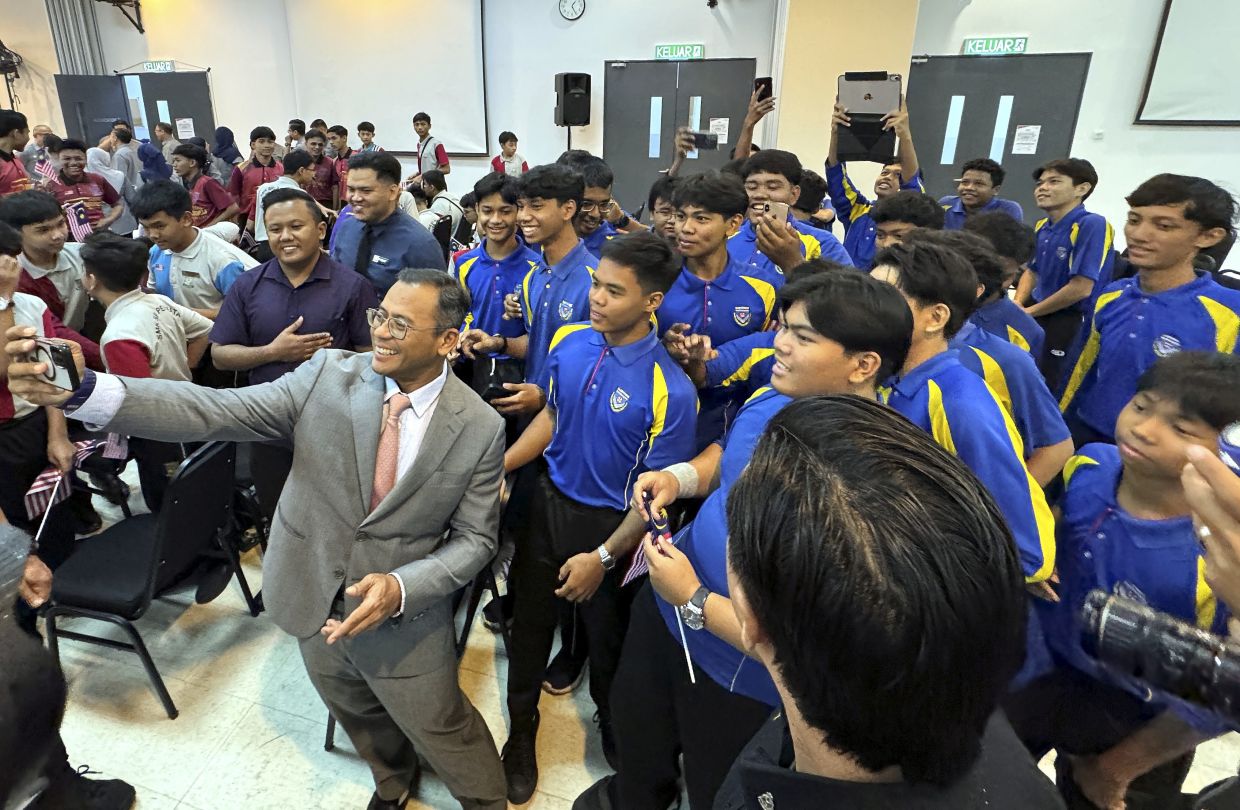
A significant outreach component involves RailX's newly launched treasure hunt programme, which will engage secondary school students across ten districts through interactive experiences at multiple MRT stations including those in Gombak, Petaling, Hulu Langat, Sepang, Klang, Sabak Bernam, and Kuala Selangor. While such initiatives might appear ancillary, they serve crucial functions in introducing younger Malaysians to rail sector career pathways before educational choices harden. Early exposure shapes aspirations and informs subject selection at secondary school, establishing pipelines that feed into tertiary technical programmes.
MSA UTHM itself represents a sophisticated partnership model between Universiti Tun Hussein Onn Malaysia and Mass Rapid Transit Corporation (MRT Corp), integrating practical industry requirements directly into academic programming. Rather than universities designing curricula in isolation, this arrangement ensures that students engage with contemporary systems, contemporary challenges, and contemporary professional standards from the outset. The partnership also extends to Rapid Rail, expanding the institutional network through which Selangor coordinates its rail sector development.
Amirudin explicitly positioned these initiatives within Malaysia's broader Education Plan 2026–2035, establishing that Selangor's rail strategy aligns with national educational aspirations. This framing matters because it legitimises state-level investment in the eyes of federal policymakers and signals that Selangor's approach contributes to national human capital development rather than pursuing narrow regional interests. It also suggests that curriculum innovations piloted through RailX may eventually diffuse across Malaysia's TVET system.
The Selangor Technical Skill Development Centre (STDC) functions as a foundational component within this comprehensive ecosystem. By concentrating basic and intermediate technical training at STDC, while reserving diploma and bachelor-level instruction for UTHM, the state creates clear articulation pathways that prevent redundancy and allow students to progress based on aptitude and aspiration. This stratification reflects international best practice in technical education, where clear progression routes from primary vocational training through to advanced degree-level study increase completion rates and employment outcomes.
The scale of infrastructure projects driving demand is substantial. LRT3, ECRL, and MRT expansions represent hundreds of millions of ringgit in capital investment that will generate sustained operational and maintenance requirements for decades. Each of these systems requires engineers, technicians, operations specialists, project managers, and administrative professionals. By building a training apparatus now, Selangor positions itself to capture employment and skills development benefits that might otherwise flow to imported labour or competing jurisdictions.
For Malaysian readers monitoring state-level economic diversification, Selangor's rail strategy illustrates how geography combined with deliberate policy can create competitive advantage. The state's existing concentration of rail infrastructure was not inevitable; it resulted from historical infrastructure investment decisions. However, converting this concentration into sustainable economic advantage requires precisely the kind of integrated approach Amirudin outlined: coordinating government policy, university research and teaching capacity, and industry partnerships into a coherent system.
The broader implications extend beyond Selangor itself. As Malaysia pursues regional integration through land transport corridors and as Southeast Asian economies collectively upgrade urban mobility infrastructure, demand for rail expertise will intensify across the region. A well-developed Selangor rail training ecosystem could position the state as a regional hub for rail sector knowledge, potentially exporting expertise to neighbouring countries and creating additional value through consulting, training services, and professional mobility.
The challenge ahead involves translating these structural initiatives into tangible employment opportunities and wage improvements for graduates. Success requires not merely training capacity but also sustained business confidence and hiring among rail operators and related sectors. It demands that the triple helix of government, universities, and industry remains aligned even as market conditions and political priorities shift. Selangor's approach is intellectually sound, but its true measure will emerge only as the first cohorts of RailX-trained professionals enter the workforce.

