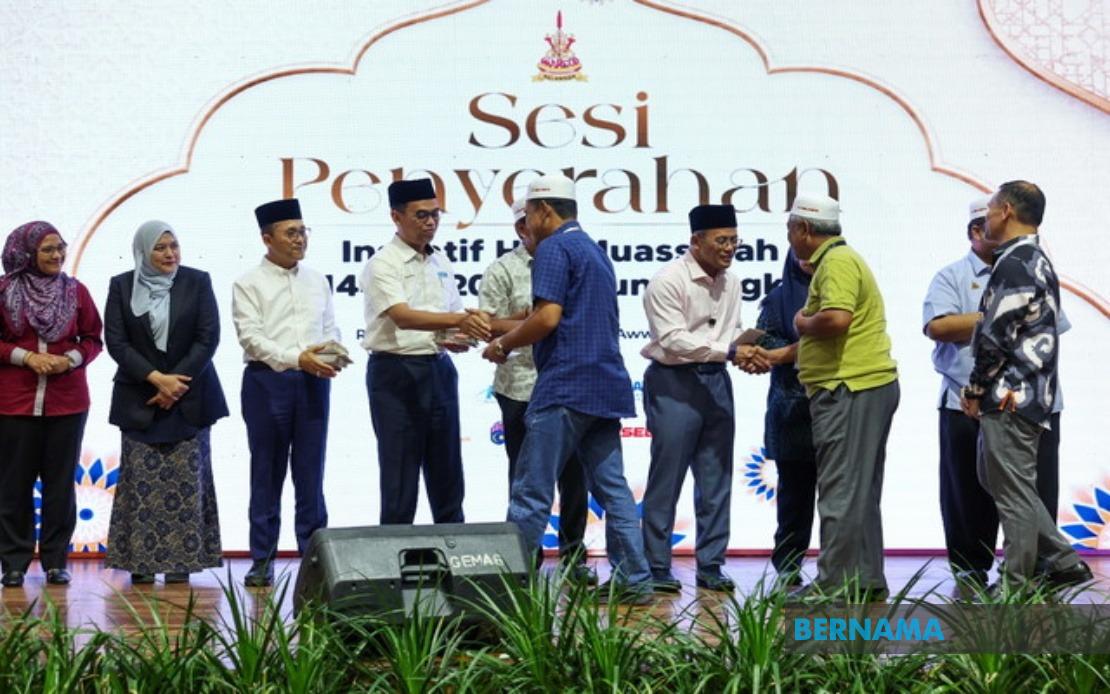
The Selangor state government is on track to complete its 2026 Muassasah Haj Incentive Programme by early September, with Menteri Besar Datuk Seri Amirudin Shari confirming that nearly 80 per cent of intended recipients have already collected their assistance. As of late August, some 4,800 pilgrims from the targeted cohort of 6,000 had received the financial support, with remaining disbursements focused on locating and contacting the outstanding applicants to finalise the handover process.
The financial commitment behind this initiative reflects Selangor's recognition of the substantial costs associated with undertaking the haj pilgrimage. Through the Selangor Menteri Besar Incorporated Foundation, known as Yayasan MBI, the state mobilised RM9 million to deliver this assistance across the entire state. Each recipient receives RM1,500 to address the immediate financial pressures of preparing for this religious obligation, with funds specifically earmarked for religious equipment, prescribed medications, appropriate clothing, and other practical necessities that pilgrims require before departure.
The Dengkil constituency ceremony at Putra Perdana Community Hall in Puchong represented one phase of a broader rollout across Selangor's various electoral divisions. That particular event saw 259 recipients formally receive their allocation, demonstrating the substantial scale of the programme's implementation infrastructure. The presence of Deputy Housing and Local Government Minister Datuk Aiman Athirah Sabu, who also holds the Sepang parliamentary seat, underscored the cross-level governmental cooperation supporting the initiative.
Amirudin articulated an ambitious forward trajectory for the programme, revealing ambitions to increase the per-recipient allocation to RM2,000 in subsequent years. He suggested that 2027 or 2028 might represent realistic timelines for enhancement, contingent upon the state's fiscal position and economic circumstances at that juncture. This conditional language reflects the fiscal prudence required of state administrators, acknowledging that budgetary constraints or unforeseen financial challenges could necessitate programme adjustments.
The RM1,500 allocation addresses practical realities of haj preparation that Malaysian pilgrims commonly encounter. Beyond the core pilgrimage fees administered through national systems, individual pilgrims face genuine expenses acquiring appropriate garments, obtaining vaccinations and medications specific to their health profiles, purchasing prayer items, and arranging various logistical elements. For many middle and lower-income households, these supplementary costs present genuine obstacles to participation, making state-level assistance programmes meaningful enablers of religious practice.
The rollout timeline itself carries significance within Malaysia's administrative context. Achieving near-complete disbursement within two months demonstrates effective coordination between state agencies and grassroots implementation mechanisms. However, the ongoing challenge of locating and contacting the remaining 1,200 recipients hints at administrative complications common to large-scale welfare distribution—ensuring comprehensive coverage requires sustained effort beyond initial announcements. The state's confidence in September completion reflects either strong operational momentum or potentially optimistic timelines, both worth monitoring.
For Southeast Asian observers, Selangor's approach illustrates how subnational governments within federal systems can deploy discretionary fiscal resources to support citizens' religious observance. The programme sits at the intersection of welfare policy and religious accommodation, demonstrating state recognition that enabling pilgrimage participation constitutes legitimate governance activity. This contrasts with some jurisdictions where such support might be characterised as inappropriate state involvement with religious matters.
The expansion ambitions flagged by Amirudin merit particular attention. Increasing assistance to RM2,000 per recipient would represent a 33 per cent funding enhancement across the entire 6,000-person cohort, translating to an additional RM3 million annual commitment at current programme scale. Such expansion decisions typically reflect political calculations about voter expectations, religious community satisfaction, and relative budget priorities—considerations that will shape Selangor's fiscal trajectory regardless of formal financial projections.
This programme also reflects broader patterns across Malaysian state governments competing to demonstrate responsiveness to constituent needs. Selangor's considerable fiscal capacity relative to other states positions it advantageously for welfare innovation, though political pressure exists to match or exceed neighbouring states' commitments. The RM9 million allocation, while substantial, remains modest relative to Selangor's total budget, suggesting room for expansion if political will materialises.
The timing of this initiative—targeting 2026 pilgrims and announced in 2024—reflects forward-looking planning that contrasts with purely reactive governance. This suggests administrative systems capable of multi-year programme design and implementation sequencing. For Malaysian citizens planning their haj journey, such advance notice permits financial preparation and integration into broader household budgeting decisions.
Looking ahead, success in completing the 2026 disbursement cycle will likely establish precedent for future programme iterations. Should the September completion target prove realistic, Selangor's experience may prompt other states to examine similar initiatives. Conversely, delays or implementation challenges could dampen expansion enthusiasm. The programme's sustainability ultimately depends on whether Selangor's economic growth trajectory sustains the fiscal space for both maintaining current RM1,500 allocations and incrementally expanding support over coming years.

