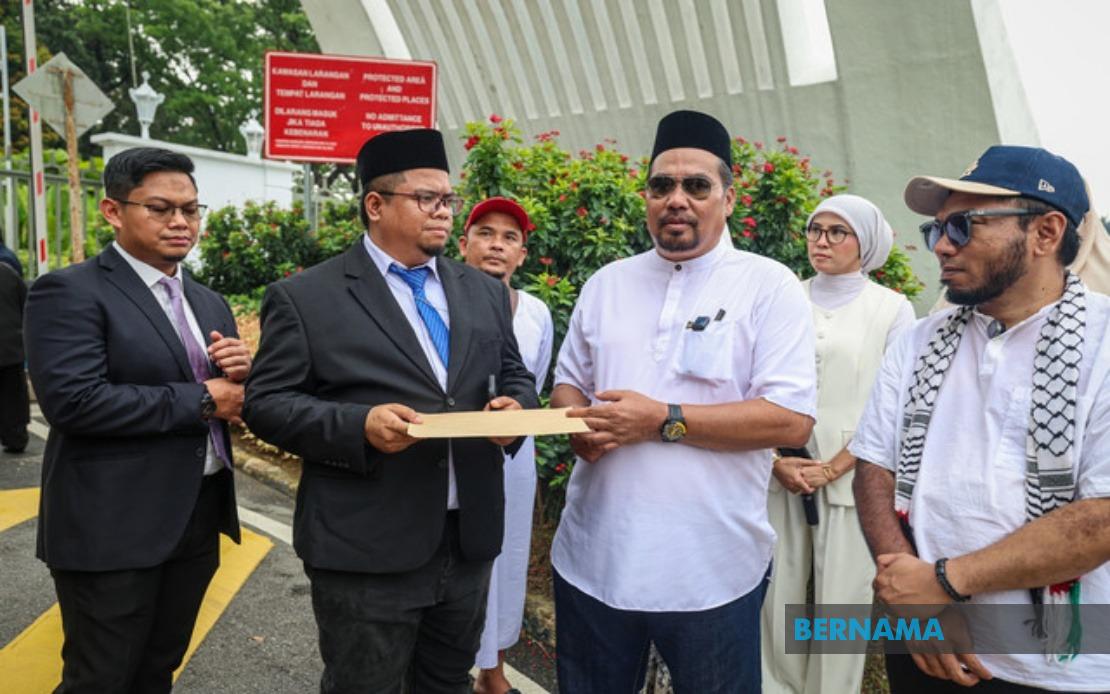
Social media activist group SEKPUR has intensified pressure on the government to pursue accountability for failures at Tabung Haji, delivering a formal memorandum to Parliament that demands swift and decisive action against those implicated in the institution's governance crisis. The submission came during a peaceful demonstration held at Parliament's main entrance, where representatives handed the document to the Prime Minister's office for forwarding to the Minister handling religious affairs matters.
The Royal Commission of Inquiry report, which became public on July 29, paints a troubling picture of systemic weaknesses spanning the period between 2014 and 2020. The 211-page document identifies persistent management and operational deficiencies that have left Malaysia's premier Islamic pilgrimage financing institution vulnerable. Tabung Haji's challenges strike at the heart of Muslim and Malay community interests, managing savings for millions of Malaysians who depend on the institution to fulfil their religious obligations while maintaining financial security.
Mohd Yani Alias, SEKPUR's secretary, stressed that the government must act without regard to political affiliation or individual status. His statement reflects growing frustration among civil society that accountability measures should transcend party lines and personal connections. The memorandum explicitly references the Yang di-Pertuan Agong's directive that those responsible must face justice and be pursued to the fullest extent of the law. This royal emphasis underscores the seriousness with which Malaysia's highest authority regards the institutional failure.
The timing of SEKPUR's action coincided with a special parliamentary session convened to allow the minister to brief lawmakers on the RCI findings and detail initiatives aimed at restoring Tabung Haji's financial footing. This parliamentary engagement demonstrates that the issue has transcended academic investigation and entered the realm of active governance response. However, SEKPUR's intervention suggests that civil society actors remain unconvinced that government measures are sufficiently robust or that implementation timelines are appropriately urgent.
Among the broader concerns raised in the memorandum, financial stability ranks prominently. Tabung Haji must maintain sufficient liquidity and reserves to guarantee competitive hibah distributions—the profit-sharing dividends that depositors receive on their savings. Erosion of these returns would directly impact the retirement security and hajj planning of ordinary Malaysians. The institution's financial health therefore extends beyond institutional governance to affect personal family finances across the Muslim community.
The rising cost of performing the hajj pilgrimage represents another dimension highlighted by SEKPUR. Escalating expenses place genuine burdens on lower and middle-income families striving to fulfil this Islamic pillar. When an institution designed to facilitate hajj access becomes itself a source of financial strain, it undermines its foundational mission. The memorandum calls for greater scrutiny of how hajj quotas are managed and allocated, suggesting concerns that the distribution system may lack adequate transparency or equitable principles.
Regarding implementation status, Tabung Haji has moved relatively quickly on the RCI's recommendations, with three-quarters of the 25 proposed improvements already enacted by late July. This statistic offers some reassurance that the institution is responding to the inquiry's findings. However, the pace and substance of implementation remain matters requiring independent verification. Whether the adopted measures address root causes or merely constitute surface-level adjustments will determine whether Tabung Haji can genuinely restore stakeholder confidence and institutional integrity.
For Malaysian policymakers and religious authorities, the SEKPUR intervention reflects broader societal expectations that institutional failures must trigger genuine consequences, not merely procedural reviews. The social media activism group's mobilization demonstrates that constituencies deeply invested in Tabung Haji's wellbeing—particularly the Muslim and Malay communities who form its core stakeholder base—are monitoring government response with sustained attention. Perceived leniency toward offenders could undermine public trust in regulatory frameworks governing Islamic institutions.
The convergence of civil society pressure, royal directive, parliamentary engagement, and the RCI report creates a critical juncture for Malaysia's governance architecture. How effectively the government pursues accountability, implements reforms, and restores Tabung Haji's operational resilience will signal the nation's commitment to institutional integrity and rule of law. For regional observers, the handling of this case offers insights into whether Malaysia can move beyond political considerations to enforce accountability mechanisms, a challenge many Southeast Asian democracies continue navigating.

